
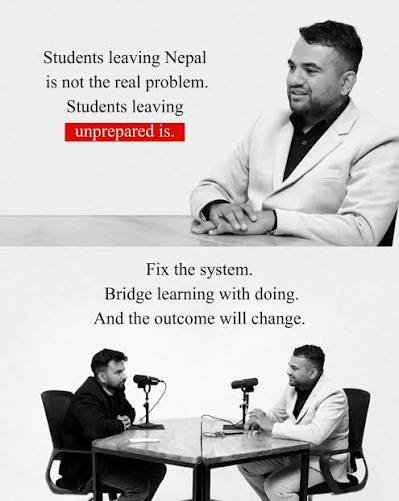
Why Do Students Study for Years but Still Feel Unprepared for Real Jobs?
Focus Keyphrase: students feel unprepared for jobs
SEO Title: Students Feel Unprepared for Jobs: Why Does It Happen?
Slug: students-feel-unprepared-for-jobs
Meta Description: Why do students feel unprepared for jobs after years of study? Learn what may be missing and how to build practical career skills.
Introduction
Many students feel unprepared for jobs even after spending years in school or college. They attend classes, complete assignments, pass exams, and earn certificates. However, when it is time to apply for a job, they may still wonder whether they have the skills needed to work in a real company.
This does not always mean that their education was useless. Instead, it often shows that academic learning and workplace learning are different.
The good news is that students can start closing this gap before graduation.
Why Do Students Feel Unprepared for Jobs?
College can teach students important knowledge. However, most jobs also require people to apply that knowledge to real situations.
For example, a computer science student may learn programming concepts in class. Yet, a company may expect the student to work on an existing codebase, find bugs, use version control, communicate with teammates, and solve problems independently.
As a result, knowing the theory is only one part of being ready for work.
Studying for Exams Is Different From Preparing for Work
Exams usually have a clear structure. Students study specific topics, practice questions, and prepare for a test.
Work can be very different.
At a job, there may not be a textbook showing exactly what to do. A problem may have several possible solutions. Employees may need to ask questions, research information, test ideas, and make decisions.
Therefore, students should practice applying what they learn instead of preparing only for exams.
Students May Know Theory but Lack Practical Experience
One common reason students feel unprepared for jobs is limited practical experience.
A student may understand what a database, API, programming language, or cloud platform is. However, understanding a concept and using it in a project are different experiences.
For example, reading about APIs can teach the basic idea. Building a small application that uses an API teaches students how requests, responses, errors, and authentication work in practice.
In addition, practical projects give students something specific to discuss during interviews.
Why Projects Matter for Job Preparation
Projects turn learning into something students can demonstrate.
A project does not have to be large. A student could build:
- A simple website
- A mobile application
- A data analysis project
- An automation tool
- A small cybersecurity lab
- An AI-based application
- A personal portfolio website
The important part is understanding what was built and why.
Students should also be able to explain the problems they faced, the tools they used, and how they solved those problems.
For more information, read Why Students Need Proof of Work, Not Just Certificates.
Students Often Learn Skills Without Using Them
Watching tutorials and completing courses can feel like progress.
However, learning becomes stronger when students use the knowledge.
For example, someone learning Python could spend weeks watching Python tutorials. Instead, they could build a small program after learning each major concept.
Similarly, a student learning web development could create a simple website rather than only watching videos about HTML, CSS, and JavaScript.
Therefore, a useful rule is:
Learn → Practice → Build → Improve.
This approach helps students turn information into usable skills.
Why Communication Skills Matter at Work
Technical knowledge is not the only thing companies use at work.
Employees also need to explain ideas, ask questions, write messages, discuss problems, and work with other people.
A student might build a good project but struggle to explain what they created. In an interview, that can make it harder to show what they actually know.
For this reason, students should practice explaining their projects and technical ideas in simple language.
You can also read Communication Skills for Students to explore this skill further.
How Internships Help Students Prepare for Jobs
Internships can give students a chance to experience how professional work operates.
They may learn how teams communicate, how tasks are assigned, how deadlines work, and how people solve problems together.
Even a small internship experience can teach students that workplace problems are often less predictable than classroom exercises.
However, students should not wait for an internship before gaining practical experience. Personal projects, open-source contributions, college projects, and volunteer work can also provide useful practice.
Students looking for opportunities can explore Internships for College Students.
Why Certificates Alone May Not Make Students Job-Ready
Certificates can show that a student completed a course or passed an assessment.
However, a certificate usually does not show everything a student can actually do.
For example, two students may have the same certificate in web development. One may have only completed the course, while the other has also built three websites and can explain how they work.
The second student has more practical evidence to discuss.
Therefore, students can combine certificates with projects, portfolios, internships, and proof of work.
How Students Can Build Job-Ready Skills
Students do not need to master everything at once.
Instead, they can follow a simple plan.
Choose One Useful Skill
Start with one skill related to your career goal.
Learn the Basics
Use courses, books, documentation, and other reliable learning resources.
Build Small Projects
Apply the skill immediately instead of waiting until you feel completely ready.
Solve Real Problems
Try to build something that solves a problem rather than making projects only for practice.
Document Your Work
Keep your projects on a portfolio, GitHub repository, or another suitable platform.
Practice Explaining Your Work
Be ready to explain what you built, what went wrong, and how you fixed it.
Keep Improving
After each project, identify one thing you can do better next time.
What Should Students Start Doing Before Graduation?
Students do not need to wait until their final semester to prepare for work.
During college, they can gradually build:
- Technical skills
- Communication skills
- Problem-solving skills
- Projects
- Internship experience
- A professional portfolio
- Interview skills
- Proof of work
Even one small project completed each semester can create a useful body of work by graduation.
For students who want to build a portfolio without professional experience, see How to Build a Portfolio Without Work Experience.
What If Students Still Feel Unprepared?
Feeling unprepared does not mean that a student has failed.
Career preparation is a process.
If you discover that you are weak in programming, communication, problem-solving, or another area, use that information to decide what to practice next.
For example, a student who struggles with coding interviews can practice one problem each day. Someone who struggles with communication can explain one technical topic aloud every day.
Small improvements can become significant over time.
The Goal Is Not to Know Everything
No student can know everything before starting their first job.
Companies also expect employees to learn new tools, processes, and technologies.
The goal is therefore not to become perfect before graduation.
Instead, students should develop the ability to learn, practice, solve problems, communicate, and adapt.
These skills can help them continue learning after they enter the workplace.
Final Thoughts
Many students feel unprepared for jobs because education often focuses heavily on academic knowledge, while workplaces require students to apply that knowledge in practical situations.
The solution is not to study endlessly.
Instead, students can combine their education with projects, internships, communication practice, problem-solving, and real-world learning.
A degree can show that you completed your education. A portfolio, project, or piece of proof of work can show what you can actually do.
Start small, build something, learn from mistakes, and keep improving before graduation.
Internal Links
- Why Students Need Proof of Work, Not Just Certificates
- How to Build a Portfolio Without Work Experience
- Communication Skills for Students
- Problem-Solving Skills for Students
- Internships for College Students
- Technical Interview Preparation
Outbound Links
- U.S. Bureau of Labor Statistics
- U.S. Department of Labor
- National Association of Colleges and Employers
Featured Image SEO
Image filename: students-feel-unprepared-for-jobs.jpg
Image alt text: Students feel unprepared for jobs after college
Image title: Why Students Feel Unprepared for Jobs
Featured image prompt:
A realistic editorial photograph of a college student sitting at a desk with a laptop, resume, college textbooks, project notes, and a graduation certificate nearby. The student looks thoughtful and slightly uncertain while preparing for a first job, modern study environment, natural lighting, realistic Indian college student, professional education and career theme, no logos, no watermark, 16:9 landscape.