Communication skills for students are essential for academic learning, teamwork, internships, and future careers. Students need to communicate their ideas clearly, listen to others, ask questions, and work effectively with people in different situations.
Communication skills for students are therefore not simply an additional skill. They are an important part of learning, personal development, and career preparation.
Why Communication Skills for Students Matter
A student may have excellent technical knowledge but struggle to explain what they know. Another student may have a good idea but hesitate to share it because they are not confident communicating with others.
Strong communication can help students express their thoughts, ask questions, participate in discussions, and build better relationships with classmates, teachers, mentors, and professionals.
Communication is not about speaking perfect English or using complicated words. It is about making your message clear and understanding what others are trying to communicate.
Communication Is More Than Speaking
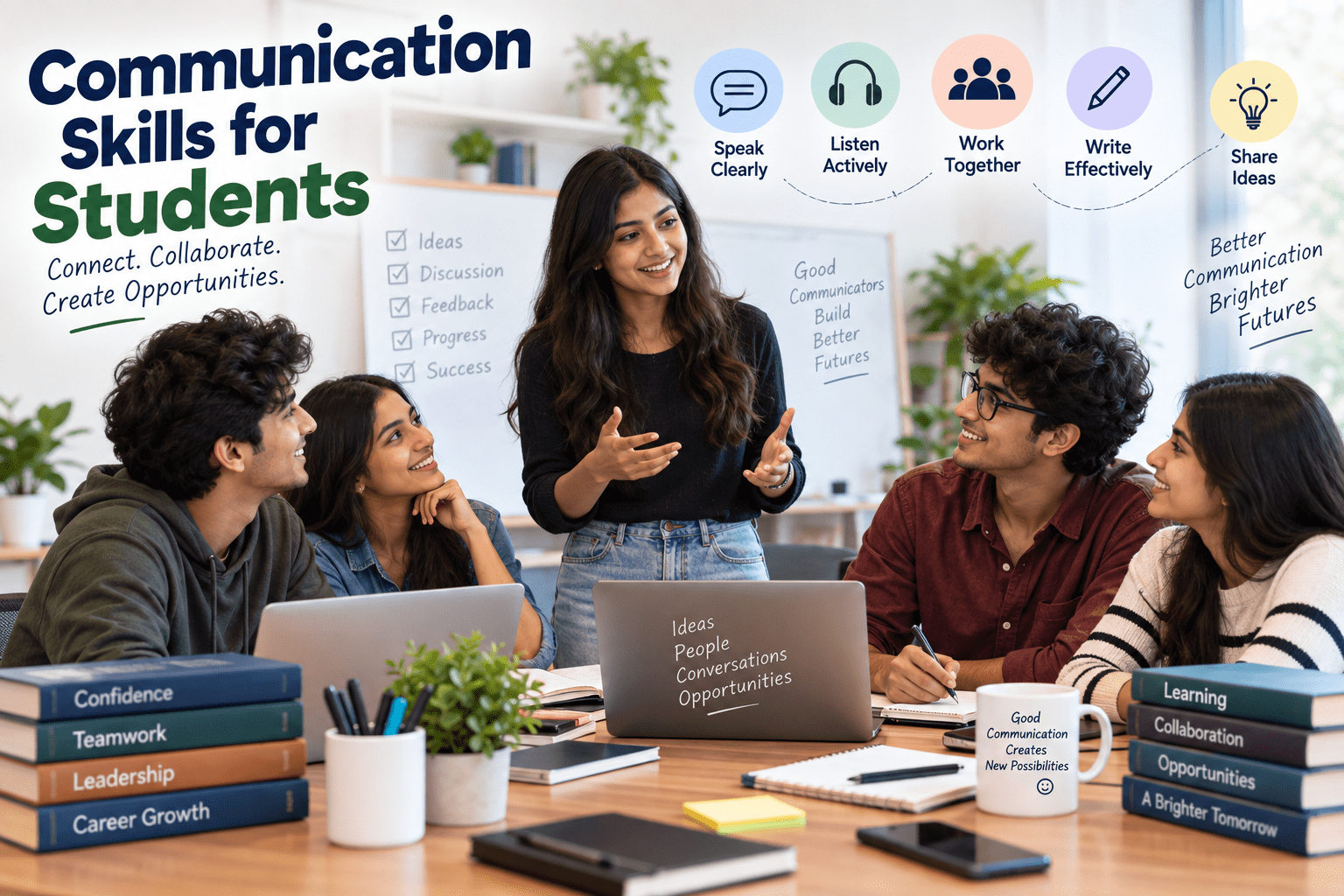
When people hear the word communication, they often think about speaking. However, effective communication involves several abilities.
Students need to develop:
- Speaking clearly
- Active listening
- Writing
- Asking relevant questions
- Explaining ideas
- Understanding feedback
- Non-verbal communication
- Professional communication
These abilities work together. A student who speaks well but does not listen may still struggle to communicate effectively.
Why Listening Is an Essential Student Skill
Good communication starts with listening.
Students who listen carefully can understand instructions, identify problems, learn from feedback, and participate more effectively in group discussions.
For example, during a project, a student may have a strong idea for solving a problem. However, listening to teammates may reveal another requirement that needs to be considered.
Listening does not mean simply waiting for your turn to speak. It means trying to understand the information before responding.
How Communication Improves Classroom Learning
Communication can make classroom learning more interactive.
Students who feel comfortable asking questions are more likely to clarify concepts when they do not understand something. Participating in discussions can also help them look at a subject from different perspectives.
Instead of silently memorizing information, students can discuss ideas, explain concepts to others, and learn through interaction.
Communication Skills and Teamwork
Most meaningful projects require collaboration.
Whether students are working on an academic assignment, technical project, competition, or internship task, they may need to divide responsibilities, discuss progress, solve disagreements, and coordinate deadlines.
Clear communication helps team members understand who is responsible for what and reduces unnecessary confusion.
A technically strong student who can also collaborate effectively can become a valuable member of a team.
Why Students Need Strong Written Communication
Communication is not limited to conversations.
Students regularly use written communication for emails, resumes, project documentation, reports, presentations, applications, and professional messages.
A well-written message can communicate an idea quickly and clearly. Poorly structured writing, on the other hand, can make even a good idea difficult to understand.
Students can improve their writing by practicing clear sentences, organizing their thoughts, checking grammar, and avoiding unnecessary complexity.
Communication Skills in Projects and Internships
Practical experiences often require students to communicate with people who have different levels of knowledge.
During an internship, for example, a student may need to explain a technical issue to a teammate, ask a mentor for clarification, provide an update, or discuss a completed task.
These situations require more than technical knowledge. Students need to understand what to communicate, whom to communicate with, and how much information is necessary.
Practical experience therefore provides an excellent environment for developing communication skills.
How Communication Affects Career Opportunities
Communication can influence several stages of a student’s career journey.
A student may need communication skills while:
- Writing a resume
- Sending a professional email
- Introducing themselves
- Explaining a project
- Answering interview questions
- Participating in group discussions
- Speaking with recruiters
- Working with colleagues
Strong communication does not guarantee a job, but it can help students present their knowledge and abilities more effectively.
Building Confidence Through Better Communication
Communication and confidence often develop together.
A student who regularly practices speaking, presenting, and explaining ideas may gradually become more comfortable expressing opinions.
Confidence does not mean speaking without mistakes. It means being willing to communicate even when you are still improving.
Students should therefore focus on progress rather than trying to become perfect communicators immediately.
How Students Can Improve Communication Skills
Students can improve communication through regular practice.
Some practical approaches include:
- Speak about a topic for a few minutes every day.
- Practice explaining technical concepts in simple language.
- Participate in classroom discussions.
- Read regularly to improve vocabulary and understanding.
- Write professional emails and messages.
- Practice presentations with friends.
- Listen carefully during conversations.
- Ask for feedback from teachers, mentors, or teammates.
- Record yourself speaking and identify areas to improve.
Small, consistent practice can gradually make communication more natural.
The Role of Communication in Leadership
Leadership is not only about making decisions. It also involves helping people understand a goal and encouraging them to work together.
Students who develop communication skills can take greater responsibility in group projects, student organizations, competitions, and other activities.
A good leader needs to explain expectations, listen to different opinions, handle disagreements, and communicate decisions responsibly.
Using Communication Skills to Create Positive Impact
Communication can also help students contribute beyond their own academic and career goals.
Students can use their communication abilities to share knowledge, mentor others, create awareness, explain useful information, and collaborate on community projects.
An idea becomes more useful when people can understand it and work together to act on it.
How Vyasa Nexus Supports Holistic Student Development
At Vyasa Nexus, student development goes beyond academic knowledge. Learning becomes more valuable when students can connect knowledge with practical skills, projects, collaboration, and career preparation.
Communication plays an important role in that journey because students need to explain what they learn, work with others, present their ideas, and communicate their abilities in professional environments.
Developing both technical and communication skills can help students become more prepared for the opportunities and challenges ahead.
What Students Can Start Doing Today
Students do not need to wait for an internship or their first job to improve communication.
They can start today by choosing one small activity.
Explain something you learned to a friend. Participate in a discussion. Write a short professional email. Present a project idea. Ask a thoughtful question in class.
Every opportunity to communicate is an opportunity to improve.
Final Thoughts: Learn to Communicate, Learn to Connect
Knowledge gives students a foundation, but communication helps them share that knowledge with others.
Communication skills for students can support academic learning, teamwork, practical projects, interviews, internships, and long-term career development.
Students do not need perfect communication from the beginning. They need the willingness to practice, listen, learn from feedback, and keep improving.
Learn clearly. Communicate confidently. Work together. Create meaningful impact.
Outbound Links
Students can explore how communication, collaboration, and other human skills are becoming important in the changing workplace.
The report provides insights into graduate employability and the skills valued by employers.
Internal Links
Students can improve their interview readiness by practicing how to explain their technical knowledge clearly.
Understanding employer expectations can help students identify the skills they need for professional growth.
Practical projects give students opportunities to communicate ideas, collaborate, and solve problems.
Online learning can help students develop knowledge and skills beyond the traditional classroom.