
Introduction
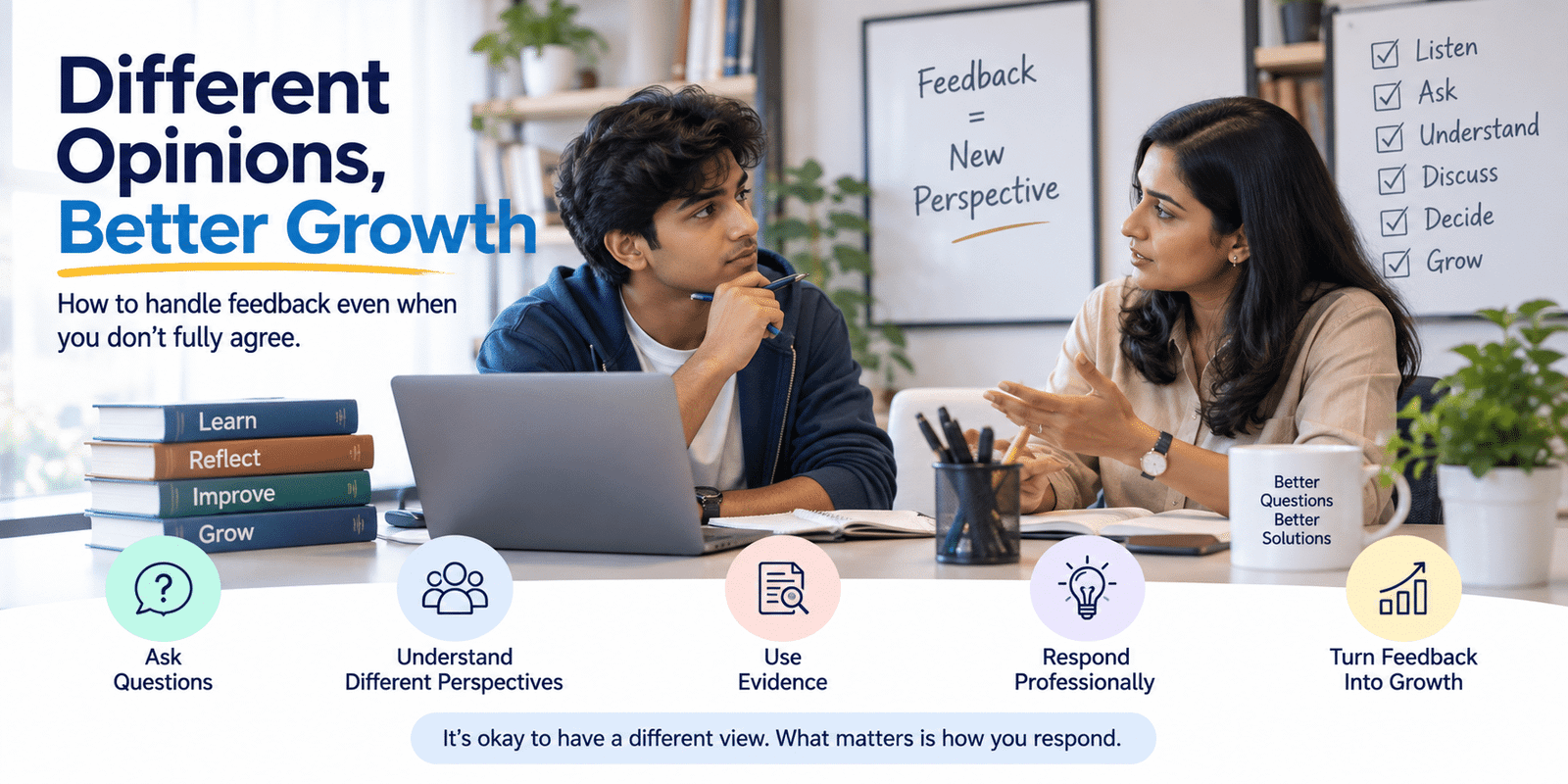
Students may disagree with feedback when they believe their work has been misunderstood or when they have a different perspective on how something should be done. A teacher, mentor, teammate, or internship supervisor may suggest a change that the student does not think is necessary. In these situations, disagreeing with feedback is not necessarily a problem. What matters is how students respond.
Instead of immediately defending their work, students can pause, listen, and understand why the feedback was given. Harvard Business Review recommends taking time to understand feedback, asking clarifying questions, and considering whether the feedback reflects something others may also notice.
Learning how to handle disagreement professionally can help students during college projects, presentations, internships, interviews, and future workplace situations.
Why Students May Disagree With Feedback
Feedback is based on someone’s observation or perspective. Therefore, the person giving feedback may not always have the complete context.
For example, a professor might suggest changing the structure of a project report. The student may believe the existing structure is easier to understand because they designed it around their research process.
Similarly, an internship mentor might recommend a different technical approach from the one a student selected.
In these situations, the first step is not to prove that the other person is wrong. Instead, students should understand the reasoning behind the feedback.
Do Not React Immediately
Receiving unexpected feedback can create an emotional reaction. Students may feel frustrated, embarrassed, or defensive, especially when they have spent significant time working on something.
However, responding immediately can make a small disagreement more difficult.
A better approach is to take a moment and think about what was actually said. Harvard Business Review recommends not reacting immediately to feedback that you disagree with and instead taking time to understand the message.
Students can simply say:
“Thank you for the feedback. Let me think about it and understand what you mean.”
This gives them time to process the information before responding.
Ask Questions Before Disagreeing
One of the simplest ways to handle disagreement is to ask questions.
Instead of saying:
“I don’t think that is correct.”
Students can ask:
“Could you explain which part you think needs improvement?”
Or:
“What made you feel that this approach could be improved?”
These questions can reveal information that the student may not have considered.
Sometimes students discover that they misunderstood the feedback. In other cases, they may learn that the person giving feedback has a different expectation or perspective.
Understand the Reason Behind the Feedback
Students should try to understand the problem the feedback is addressing.
For example, suppose a student is told:
“Your presentation needs to be simpler.”
Instead of immediately disagreeing, the student can ask:
“Which parts felt difficult to follow?”
The answer might reveal that the presentation contains too much technical information, lengthy explanations, or unnecessary slides.
Now the student has something specific to evaluate.
Feedback becomes more useful when students understand what needs to change and why.
When the Feedback Is Based on a Different Perspective
Not every disagreement has a simple right or wrong answer.
A design student may prefer one visual approach while a mentor prefers another. A programmer may choose one technical solution while a reviewer recommends another. Two students working on the same project may have different opinions about how the final presentation should look.
In these situations, students can explain their reasoning respectfully.
For example:
“I understand your suggestion. I chose this approach because it makes the process easier for users to follow. Would it make sense to compare both approaches before deciding?”
This keeps the discussion focused on the work instead of turning it into a personal disagreement.
Use Evidence When Necessary
If students believe their approach is appropriate, they can support their position with evidence.
For example, a student might explain:
- Why they selected a particular technology
- What research supports their approach
- What results they achieved
- What requirements influenced their decision
- What constraints affected the project
This is different from simply saying, “I think my way is better.”
Evidence allows both sides to examine the decision more objectively.
What Students Should Do When They Still Disagree With Feedback
Sometimes students may listen carefully, ask questions, and still disagree.
That is possible.
Students can respectfully explain their perspective while acknowledging the other person’s point.
For example:
“I understand why you suggested this change. However, based on the project requirements, I believe the current approach works better because…”
This demonstrates that the student has listened rather than simply rejected the feedback.
The goal is not to agree with every piece of feedback. The goal is to respond thoughtfully and professionally.
When Students Should Ask Someone Else
If the feedback is unclear or students are unsure whether it is reasonable, they can seek another perspective.
For example, a student working on a technical project could discuss the issue with:
- Another professor
- A project mentor
- An experienced teammate
- A senior student
- A professional in the relevant field
Harvard Business Review also recommends seeking perspectives from trusted people when evaluating feedback, particularly when one person’s feedback may not provide the complete picture.
However, students should avoid asking only people who will automatically agree with them.
The purpose should be to understand the situation better.
What If the Feedback Feels Unfair?
Students may sometimes receive feedback that they believe is unfair or based on incomplete information.
In such cases, they can calmly ask for specific examples.
For example:
“Could you share an example of where you noticed this issue?”
Specific examples can help students understand whether there is a genuine improvement area or whether there has been a misunderstanding.
If the concern remains serious, students can discuss it with an appropriate teacher, mentor, coordinator, or other responsible person rather than turning the disagreement into an argument.
How Feedback Can Help Students Improve
Even when students disagree with feedback, it can still provide useful information.
Someone may notice something the student has never considered before.
For example, a student may believe their presentation is clear because they understand the topic deeply. However, an audience member may struggle to follow the explanation.
The feedback does not necessarily mean the student’s knowledge is incorrect. It may indicate that the knowledge needs to be communicated differently.
That distinction is important.
Feedback Is Not Always a Final Verdict
Students should remember that feedback is information to consider, not automatically a final judgment about their ability.
A single comment does not define a student’s skills.
Instead, students can look for patterns.
If one person says a presentation is difficult to follow, the student can consider it. If several people independently mention the same issue, it may provide stronger evidence that the communication could be improved.
This approach helps students avoid both extremes: rejecting all feedback and accepting everything without thinking.
How Students Can Learn When They Disagree With Feedback
A disagreement can become a learning opportunity when students approach it with curiosity.
They can ask themselves:
- What exactly is the person suggesting?
- Why do I disagree?
- What evidence supports my position?
- Could I be missing something?
- Have other people noticed the same issue?
- What can I test or improve?
- What would happen if I tried their suggestion?
These questions encourage students to think instead of reacting.
Common Mistakes Students Should Avoid
When students disagree with feedback, they should avoid:
- Interrupting the person immediately
- Becoming defensive
- Saying “You’re wrong” without evidence
- Taking professional feedback personally
- Ignoring the feedback completely
- Asking friends only for confirmation
- Turning a discussion into an argument
- Making changes without understanding the reason
Instead, students can listen, ask questions, evaluate the information, and then decide what action makes sense.
A Simple 5-Step Approach
Students can remember this simple process:
1. Listen
Allow the person to finish explaining the feedback.
2. Clarify
Ask questions if something is unclear.
3. Reflect
Think about whether the feedback applies to your work.
4. Discuss
Explain your perspective respectfully if you still disagree.
5. Act
Decide what you will change, test, or improve.
This approach helps students handle disagreement without turning every difference of opinion into conflict.
What Students Can Start Doing Today
The next time a teacher, mentor, or teammate gives feedback that you disagree with, don’t immediately reject it.
Instead, ask one simple question:
“Can you help me understand why you think this should be changed?”
That question can turn a disagreement into a conversation.
Students can also keep short notes about feedback they receive and review them later. Over time, they may notice repeated patterns in areas such as communication, technical work, teamwork, presentations, or time management.
Final Thoughts: Disagree Professionally, Learn Continuously
Students do not need to agree with every piece of feedback they receive.
What matters is learning how to listen without immediately reacting, ask questions, consider different perspectives, explain their reasoning, and make thoughtful decisions.
Disagreement can be part of learning. When handled respectfully, it can help students understand their own work better and become more comfortable with the kind of conversations they may experience during internships and professional careers.
The goal is not to accept every opinion. The goal is to become thoughtful enough to know what to accept, what to question, and what to learn from.
Outbound Links
Students can learn more about handling feedback and responding thoughtfully through this guidance from Harvard Business Review.
Feedback can also become an opportunity for self-reflection and improvement, as discussed by Harvard Business Review.
Internal Links
Learning how to communicate ideas clearly can help students handle difficult conversations more effectively.
Students can also strengthen their decision-making skills by learning how to evaluate different perspectives before making a choice.
Practical projects give students opportunities to receive feedback, improve their work, and develop real-world skills.