
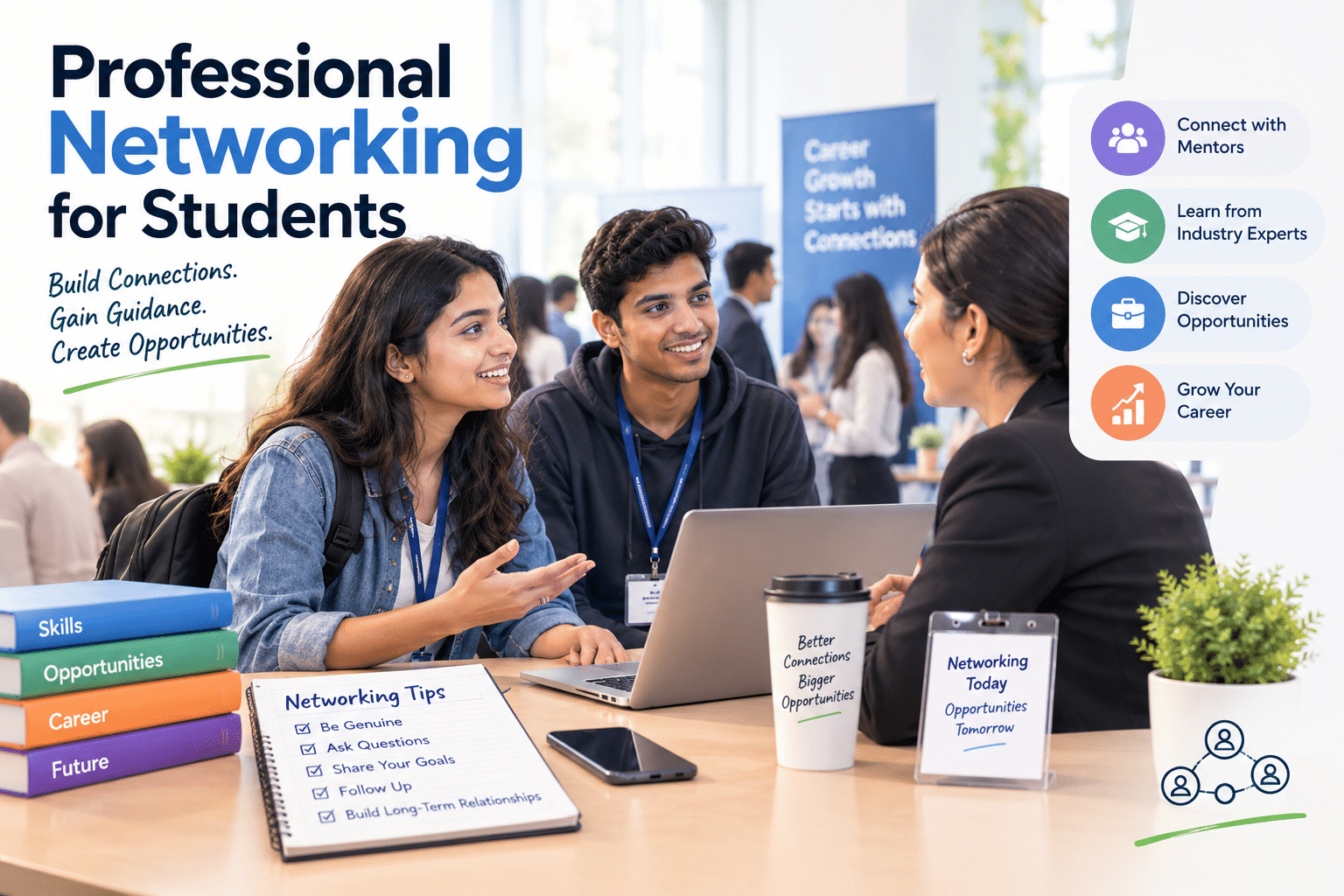
Professional Networking for Students: Why It Matters
Professional networking for students helps learners build meaningful relationships with mentors, classmates, and industry professionals before graduation. These connections can provide career guidance, introduce students to different industries, and help them understand the skills required in the workplace. By developing professional relationships early, students can explore opportunities and prepare more confidently for their future careers.
Professional networking for students means developing genuine relationships with teachers, classmates, mentors, industry professionals, and other people who can share knowledge and career guidance. These connections can help students understand different career paths, learn about industry expectations, and discover opportunities to develop their skills.
Networking is not about asking everyone for a job or collecting as many contacts as possible. It is about building meaningful relationships through communication, mutual respect, curiosity, and a willingness to learn.
In this article, we will explore why networking matters, how students can start professional conversations, and practical ways to build valuable relationships before graduation.
1. Why Professional Networking for Students Matters
Students often concentrate on examinations, courses, certifications, and projects while preparing for their careers. Although these activities are important, interacting with people who have relevant experience can provide additional insights into professional life.
For example, a student interested in software development may connect with a developer to learn which skills are commonly used in real projects. A student interested in marketing may speak with a professional to understand how campaigns are planned, measured, and improved.
These conversations can help students understand the difference between academic learning and workplace expectations.
Professional networking for students can also introduce learners to new perspectives, useful resources, and opportunities they may not have discovered independently.
However, networking does not guarantee internships or jobs. Its main value is helping students learn, build relationships, and become better informed about their career options.
2. What Is Professional Networking?
Professional networking is the process of creating and maintaining relationships with people who share professional interests or can exchange useful knowledge and experiences.
For students, networking can happen in many settings. It may begin with a conversation with a teacher, a discussion with a senior student, participation in a college event, or an interaction with a professional at an industry session.
Online platforms also allow students to connect with professionals, follow industry discussions, and learn from people working in their chosen fields.
Good networking involves more than sending connection requests. Students should communicate respectfully, show genuine interest, ask relevant questions, and appreciate the time others spend helping them.
For example, after attending a career talk, a student could send a short message thanking the speaker and mentioning one useful lesson from the session.
Small, thoughtful interactions can be the starting point for long-term professional relationships.
3. Why Students Should Build Relationships Before Graduation
Waiting until graduation to meet professionals can mean missing valuable opportunities to learn about careers while still studying.
Building relationships early gives students time to explore different industries, understand job requirements, and identify the skills they need to develop.
For example, a student who speaks with professionals in several fields may discover that a preferred career requires additional practical experience or a particular technical skill. This information can help the student plan relevant courses and projects before applying for jobs.
Connections with classmates and seniors can also be useful. Students can exchange learning resources, discuss projects, share experiences, and support one another during internship and job applications.
Building relationships gradually also makes professional conversations feel more natural. Students can learn how to introduce themselves, ask questions, and communicate confidently without waiting until an important interview.
4. How to Find Mentors and Industry Professionals
A mentor is someone who shares guidance, experience, or feedback to help another person learn and develop. Students do not need to find a formal mentor immediately; they can begin by learning from people whose experience relates to their interests.
Here are some practical ways to find professionals to learn from.
Start With Teachers and College Seniors
Teachers and senior students may have useful knowledge about courses, internships, projects, and career paths. Ask specific questions about your interests and listen carefully to their suggestions.
Attend Career Events and Workshops
Career fairs, guest lectures, technical workshops, and industry sessions provide opportunities to meet people working in different fields.
Prepare a short introduction and one or two relevant questions before attending.
Explore Professional Communities
Join appropriate student groups, professional associations, online communities, or technical forums. Participate constructively by asking relevant questions and contributing when you have something useful to share.
Learn From Professionals Online
Follow professionals whose work interests you. Read their posts, articles, or project explanations to understand their experience and areas of expertise.
If you decide to contact someone, make your message specific and respectful rather than sending a generic request for help.
5. How to Start a Professional Conversation
Starting a conversation with an unfamiliar professional can feel uncomfortable, especially for students who have limited experience.
The easiest approach is to begin with a genuine reason for contacting the person. You might have attended their presentation, read an article they shared, or noticed a project related to your interests.
A simple introduction can include who you are, what you are learning, and why you wanted to connect.
For example:
“Hello, I am a computer science student currently learning web development. I found your discussion about building practical software projects helpful. I would like to learn more about the skills that are useful for someone starting in this field.”
This message explains the context and makes the purpose of the connection clear.
During a conversation, ask one or two thoughtful questions and give the other person time to respond. Avoid immediately requesting a job referral or expecting a lengthy mentoring commitment.
Professional conversations work best when they are respectful, focused, and considerate of everyone’s time.
6. How LinkedIn Can Help Students Build Connections
LinkedIn can help students create a professional presence and connect with people in their areas of interest.
Students can start by completing their profiles with accurate education details, relevant skills, project experience, and career interests. A clear profile helps others understand their background when they receive a connection request.
Students can follow companies, join relevant professional discussions, and connect with alumni or professionals whose work relates to their goals.
When sending a connection request, include a brief personal message explaining why you want to connect. After connecting, avoid repeatedly asking for favors. Instead, engage thoughtfully with useful content and continue learning about the person’s field.
Students should also protect their privacy and avoid sharing sensitive personal information publicly.
For more guidance on developing a consistent professional identity, read our article on personal branding for students.
Remember that LinkedIn is only one networking option. Meaningful relationships can also develop through college activities, internships, volunteering, and face-to-face conversations.
7. How College Events and Internships Create Networking Opportunities
College events and internships give students opportunities to interact with people in practical settings.
During workshops, students can ask speakers about industry challenges, learning resources, and the skills required for entry-level roles. At career fairs, they can learn about organizations and understand the types of opportunities available.
Internships provide another valuable setting for building relationships. Students may work with supervisors, teammates, and experienced professionals who can explain workplace processes and provide feedback.
To make the most of these experiences, students should participate actively, communicate professionally, and follow through on their responsibilities.
For example, after completing an internship task, a student could thank the supervisor for the guidance received and ask what skills would be useful to develop next.
Students can also build relationships by contributing reliably to group projects and college activities. Being respectful, dependable, and willing to learn can help create a positive professional impression.
8. Common Networking Mistakes to Avoid
Networking becomes more effective when students focus on genuine communication instead of treating every interaction as a way to obtain an immediate benefit.
Asking for a Job Immediately
Starting a conversation by requesting employment can feel transactional. First establish the context, learn about the person’s experience, and understand whether there is a relevant opportunity to discuss.
Sending Generic Messages
Messages that contain no personal context are less likely to start meaningful conversations. Mention a specific presentation, project, article, or shared interest when appropriate.
Contacting People Only When Help Is Needed
Healthy professional relationships involve respectful interaction over time. Do not contact someone only when you need a referral, recommendation, or urgent assistance.
Ignoring Professional Boundaries
People may be busy or unable to respond. Avoid repeated messages, respect their time, and accept that not every connection will develop into a conversation.
Misrepresenting Your Experience
Be honest about your skills, education, and accomplishments. Genuine curiosity and a willingness to learn are more appropriate than pretending to have experience you do not possess.
Collecting Contacts Without Building Relationships
A large contact list is not necessarily useful. Focus on a smaller number of relevant connections and interact with them thoughtfully.
9. Practical Ways to Build Meaningful Professional Relationships
Students can develop networking habits through small actions that fit naturally into their academic routines.
Set a clear learning goal. Choose a field, role, or skill you want to understand better. This gives your conversations a useful purpose.
Prepare thoughtful questions. Ask about career paths, practical skills, industry challenges, or learning resources rather than requesting broad advice without context.
Introduce yourself clearly. Practice explaining your background, interests, and current learning goals in a few sentences.
Attend relevant events. Participate in workshops, seminars, career fairs, and student activities that align with your interests.
Follow up politely. After a helpful conversation, send a brief thank-you message and mention something useful you learned.
Share useful work when appropriate. A project, article, or portfolio can provide a natural starting point for discussing your interests and abilities.
Offer help when you can. Share relevant resources, contribute to group activities, or support classmates when appropriate. Networking should not be only about receiving benefits.
Maintain connections respectfully. Stay in touch occasionally when you have a meaningful update, question, or relevant contribution.
These actions can help students build professional relationships gradually without making networking feel forced.
10. How Networking Supports Career Development
Professional relationships can help students understand the skills, responsibilities, and expectations associated with different careers.
Conversations with experienced professionals may reveal useful learning resources, practical project ideas, or industry developments. Feedback from mentors and peers can also help students identify areas where they need more practice.
Networking may introduce students to internships, events, or job openings, although opportunities depend on many factors and are never guaranteed.
The relationships students build can also support confidence and communication skills. By speaking with people from different backgrounds, students learn to introduce themselves, ask questions, listen carefully, and explain their interests.
Networking works best when it complements other career preparation activities, such as gaining practical experience, developing relevant skills, and preparing a professional portfolio.
Our guide on skills recruiters look for in freshers explains additional qualities that can help students prepare for entry-level opportunities.
11. How to Maintain Professional Relationships Over Time
Building a connection is only the beginning. Maintaining professional relationships requires communication, respect, and genuine interest over time.
Students can stay in touch by sharing an occasional meaningful update, thanking someone for useful advice, or asking a thoughtful follow-up question after applying a suggestion.
For example, if a professional recommends a project to help develop a skill, the student could later share what they learned from completing it.
Students should not feel that they need to message every contact frequently. The purpose is to maintain useful relationships naturally, not to create unnecessary conversations.
It is also important to respect boundaries. Some people may be available for occasional advice, while others may prefer limited interaction.
As students gain experience, they can also support classmates and junior learners by sharing resources, explaining concepts, and offering constructive feedback.
Professional relationships become more valuable when they are built on mutual respect and a willingness to learn from one another.
12. Frequently Asked Questions
What is professional networking for students?
Professional networking for students involves building relationships with teachers, mentors, classmates, alumni, and industry professionals to exchange knowledge, receive guidance, and learn about career opportunities.
Why is networking important before graduation?
Networking helps students explore career paths, understand industry expectations, learn from experienced people, and discover relevant resources or opportunities while they still have time to prepare.
How can students network without work experience?
Students can begin with college events, academic projects, teachers, seniors, student communities, volunteering, and professional platforms. Genuine curiosity and a willingness to learn are enough to start.
How can students approach professionals on LinkedIn?
Students should write a short, personalized message explaining who they are and why they want to connect. They should communicate respectfully and avoid immediately asking for a job or referral.
Does networking guarantee an internship or job?
No. Networking may help students learn about opportunities and build professional relationships, but selection depends on factors such as skills, qualifications, requirements, and the hiring process.
How often should students contact their professional connections?
There is no fixed schedule. Students can stay in touch when they have a meaningful update, relevant question, useful contribution, or reason to thank someone for guidance. They should respect each person’s time and preferences.
Final Thoughts
Professional networking for students is about building genuine relationships that support learning, career exploration, and personal development.
Students do not need to know many influential people or have extensive experience to begin. They can start by speaking with teachers, participating in college events, connecting with professionals in their areas of interest, and asking thoughtful questions.
The most important habits are being respectful, staying curious, communicating honestly, and following through on commitments.
Start with one small step: attend a relevant event, introduce yourself to a professional, or reconnect with someone who has helped you learn. Over time, these meaningful interactions can help you understand your career options and prepare more confidently for life after graduation.
Outbound links
Students can explore LinkedIn to connect with professionals, follow industry discussions, and learn about career opportunities.