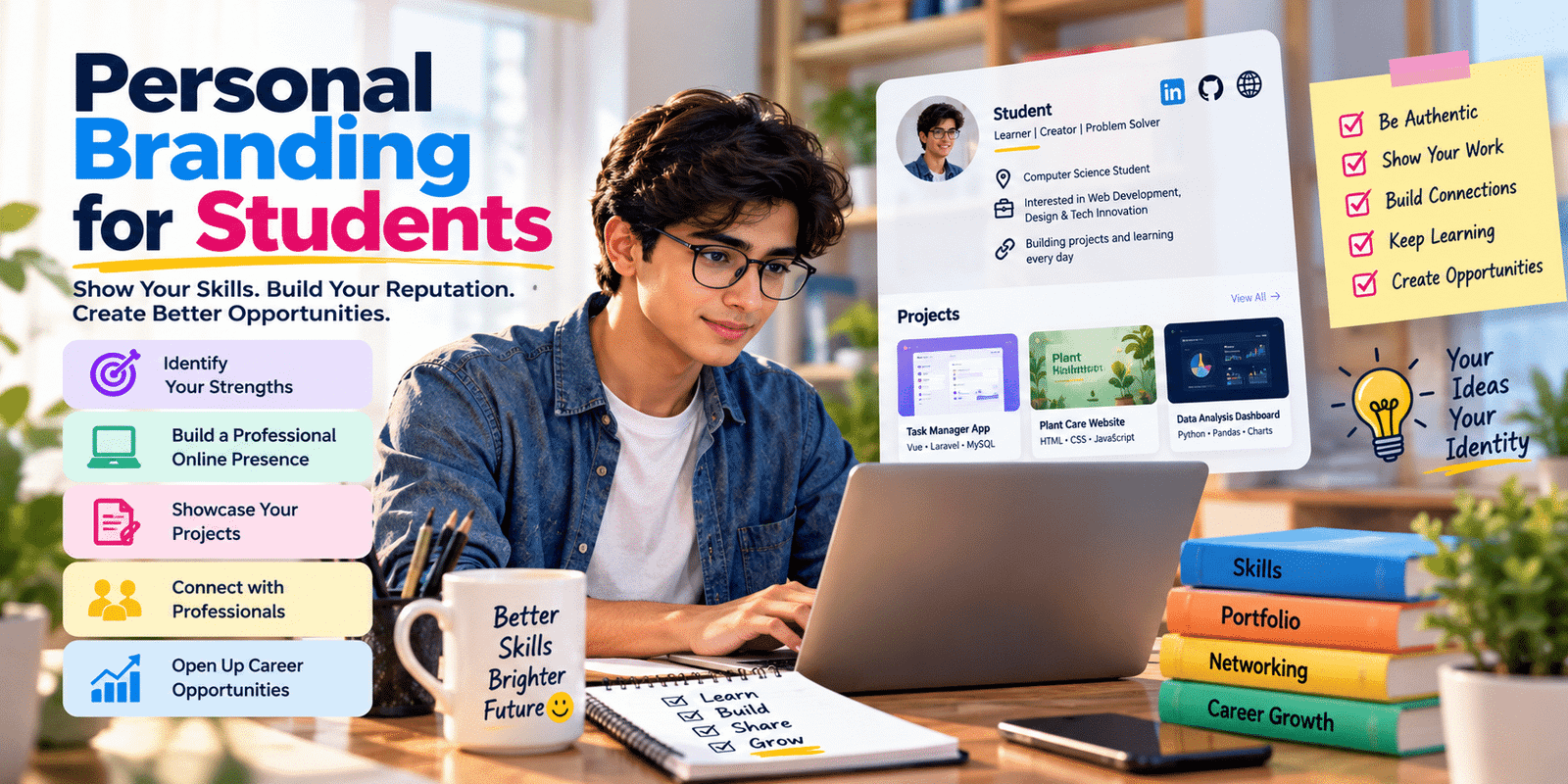
Personal Branding for Students: Build Your Reputation
In today’s competitive environment, having knowledge and qualifications is important, but how students present their skills, experiences, and interests also matters. Recruiters, mentors, and professional connections often look for evidence of what a person can do and how they communicate their strengths.
Personal branding for students is the process of building a clear and authentic professional identity. It helps students communicate their interests, showcase their work, and develop a positive reputation before graduation.
Personal branding does not mean pretending to be someone else or promoting every achievement online. It means presenting your real skills, values, and experiences consistently so that others can understand what you offer.
In this article, we will explore why personal branding matters, how students can build a professional identity, and practical steps to improve their visibility and prepare for future career opportunities.
1. Why Personal Branding for Students Matters
Students often begin thinking about their professional reputation only when they start applying for jobs. However, building a positive identity can begin much earlier through projects, internships, academic activities, and professional interactions.
Personal branding helps students communicate what they are learning, which subjects interest them, and what skills they are developing. It can also make it easier for others to understand their career interests and areas of expertise.
For example, a student interested in graphic design can share selected design projects, explain the thinking behind each project, and maintain a portfolio that demonstrates their progress.
This approach gives others a clearer picture of the student’s abilities than a list of qualifications alone.
Personal branding for students also encourages self-awareness. When students think about how they want to be known professionally, they can identify their strengths, set development goals, and choose experiences that support their ambitions.
2. What Is Personal Branding?
Personal branding is the way a person communicates their professional identity through their skills, work, values, communication, and online presence.
For students, it can include a professional profile, a portfolio, project descriptions, internship experiences, and the way they interact with classmates, mentors, and potential employers.
A strong personal brand should be authentic. Students do not need to present themselves as experts when they are still learning. They can communicate their current abilities honestly and show how they are improving.
For example, a beginner in web development might describe themselves as a student learning frontend development and building practical projects. As their skills grow, they can update their profile to reflect their experience.
The goal is to create a consistent and credible impression that accurately represents who you are and what you can contribute.
3. Why Students Should Build Their Reputation Before Graduation
Building a professional reputation takes time. Waiting until graduation to create a profile, organize projects, or communicate career interests can leave students with limited evidence of their abilities.
Starting early allows students to develop their professional identity gradually. They can document academic projects, participate in relevant communities, learn from mentors, and build relationships with people who share their interests.
These activities can also reveal gaps in their knowledge. For example, a student who begins documenting projects may realize that they need to improve their technical explanations or presentation skills.
A positive reputation is not created through online activity alone. It also depends on reliability, respectful communication, honesty, and the quality of work a student produces.
By developing these habits during college, students can prepare for professional opportunities with greater confidence.
4. How to Identify Your Strengths and Unique Value
Before building a personal brand, students should understand what they want to communicate about themselves.
Start by considering the subjects you enjoy, the tasks you perform well, and the skills you are currently developing. Think about your academic projects, extracurricular activities, volunteer work, and other experiences.
Ask yourself a few questions:
- Which subjects or professional areas interest me most?
- What skills have I already developed?
- Which projects demonstrate my abilities?
- What do I want to learn next?
- What kind of opportunities am I preparing for?
The answers can help you identify a professional direction.
For example, a student interested in data analysis might highlight analytical thinking, spreadsheet skills, data visualization projects, and a willingness to learn new tools.
You do not need a unique skill that nobody else possesses. Your combination of interests, experiences, working style, and learning goals can help communicate your individual professional identity.
5. How Students Can Build a Professional Online Presence
An online presence can help students make their work and professional interests easier to discover. However, every profile does not need to be active on every platform.
Start with platforms that support your goals. A professional networking profile can communicate your education, skills, and interests, while a portfolio or code repository can demonstrate practical work.
Keep important information accurate and consistent. Use a clear profile description, list relevant skills, and include projects that show what you can do.
Students should also review public posts, comments, and profile information to ensure that their online presence reflects the professional impression they want to create.
Privacy matters as well. Avoid sharing sensitive personal information, confidential project details, or information belonging to other people without permission.
The aim is not to make your entire life public. It is to create an appropriate professional presence that supports your goals while protecting your privacy.
6. Why LinkedIn and Professional Portfolios Matter
Professional platforms and portfolios help students present their abilities in ways that are easy for others to understand.
A LinkedIn profile can summarize education, skills, interests, certifications, and relevant experiences. Students can also connect with professionals, follow industry discussions, and learn about career opportunities.
A professional portfolio serves a different purpose: it provides examples of work.
For instance, a software development portfolio might include project descriptions, technologies used, important challenges, and links to demonstrations or source code when appropriate.
A design portfolio may showcase selected designs and explain the purpose and process behind each project.
Students can read our guide on building a professional portfolio before graduation for more guidance on presenting practical work.
Both professional profiles and portfolios should be updated as students gain new experience. Quality and relevance matter more than adding a large number of incomplete or unrelated items.
7. How Projects and Achievements Support Personal Branding
Projects provide concrete evidence of a student’s knowledge and abilities. They help turn general claims such as “I am good at problem-solving” into examples that demonstrate how the student approaches challenges.
For each project, explain the problem, your role, the tools or skills you used, and the result. If you worked in a team, clearly describe your individual contribution.
For example, a student who developed a college event website could explain how they organized the information, created the interface, tested the website, and addressed usability issues.
Achievements can also support a personal brand, but they do not need to be limited to awards or competition results. Completing a meaningful project, contributing to a team, or improving a skill can also demonstrate progress.
Be honest about your involvement and avoid exaggerating results. Credibility grows when the information you share accurately reflects your work.
8. Common Personal Branding Mistakes to Avoid
Students can build a stronger professional identity by avoiding a few common mistakes.
Trying to Impress Everyone
A personal brand does not need to appeal to every industry or audience. Focus on communicating your genuine interests and the opportunities you want to pursue.
Exaggerating Skills or Achievements
Claiming expertise without supporting evidence can damage credibility. Describe your current ability honestly and show how you are developing it.
Copying Someone Else’s Identity
It is useful to learn from professionals, but your profile should reflect your own interests, experiences, and goals.
Posting Without a Clear Purpose
Sharing content only to remain visible may not contribute much to your professional identity. Focus on useful projects, learning experiences, and relevant insights.
Ignoring Online Reputation
Public posts and comments may influence how others perceive you. Review your online presence regularly and use privacy settings thoughtfully.
Focusing Only on Appearance
A polished profile is helpful, but it cannot replace practical skills, meaningful work, and professional behavior. Make sure your personal brand reflects the quality of what you actually do.
9. Practical Steps to Build Your Personal Brand
Students can begin building a personal brand through small, consistent actions.
Step 1: Choose a professional direction. Identify one or two areas that interest you, such as software development, finance, design, marketing, or data analysis.
Step 2: Identify relevant skills. Research what people in those areas do and which skills are useful for entry-level opportunities.
Step 3: Build practical evidence. Complete projects, participate in internships, or create examples of work that demonstrate your abilities.
Step 4: Create a professional profile. Write a concise introduction that explains your interests, current skills, and learning goals.
Step 5: Organize your work. Use a portfolio or another suitable platform to present selected projects with clear descriptions.
Step 6: Communicate professionally. When contacting mentors or professionals, be respectful, specific, and considerate of their time.
Step 7: Keep learning and updating. Add meaningful work, improve descriptions, and revise your profile as your interests and skills develop.
These steps help students build a professional identity that grows alongside their experience.
10. How Personal Branding Supports Career Opportunities
Personal branding can help employers, mentors, and professional contacts understand a student’s interests and capabilities. It may also help students discover communities, projects, internships, and learning opportunities related to their goals.
However, a personal brand does not guarantee employment. Recruiters may still evaluate qualifications, practical skills, interview performance, experience, and suitability for a particular role.
The strongest approach is to combine clear communication with genuine skill development. Students should build their abilities, document their work, and present their experiences honestly.
Our article on skills recruiters look for in freshers explores qualities that employers may consider when evaluating entry-level candidates.
Personal branding works best when it accurately communicates the value a student is developing rather than trying to replace the work needed to become capable.
11. How to Maintain an Authentic and Positive Reputation
A professional identity develops through repeated actions, not just a profile or a single post.
Students can maintain a positive reputation by meeting commitments, communicating respectfully, giving proper credit to collaborators, and being honest about mistakes.
When sharing work online, explain what you learned and acknowledge contributions from others. Avoid presenting group achievements as entirely your own.
It is also useful to review your professional presence periodically. Check whether your profile reflects your current goals, whether project links still work, and whether the information you share remains accurate.
Your identity will naturally evolve as you gain experience. You can update your focus and communicate new interests without pretending that your earlier learning experiences never happened.
An authentic reputation is built when your public presentation aligns with your actions and the quality of your work.
12. Frequently Asked Questions
What is personal branding for students?
Personal branding for students is the process of communicating their interests, skills, values, experiences, and professional goals in a clear and authentic way.
Why is personal branding important before graduation?
It helps students organize their professional identity, showcase practical work, build relevant connections, and prepare for future opportunities before entering the job market.
How can students start personal branding with no work experience?
Students can begin with academic projects, personal projects, relevant coursework, volunteer activities, and skills they are currently developing. They should describe their experience honestly.
Does personal branding require posting on social media every day?
No. Students can build a professional presence through a well-maintained profile, a portfolio, meaningful projects, and respectful professional interactions. Consistency and relevance matter more than posting frequently.
What should students include in a personal brand?
Students can include their professional interests, relevant skills, selected projects, education, learning goals, and examples of their work. All information should be accurate and appropriate to share publicly.
Can personal branding help students get internships?
A clear professional profile and portfolio may help students communicate their interests and demonstrate relevant abilities. However, internship decisions also depend on role requirements, qualifications, and selection processes.
Final Thoughts
Personal branding is not about creating a perfect image or trying to appear more experienced than you are. It is about communicating your real strengths, documenting your progress, and building a professional reputation through consistent actions.
By developing personal branding for students, learners can make their interests clearer, showcase meaningful work, and prepare for professional relationships before graduation.
Start by identifying one area you want to pursue, completing a project that demonstrates your skills, and presenting that work clearly. As you gain experience, continue learning and updating your professional presence.
A credible personal brand grows over time through useful work, honest communication, and a genuine commitment to improvement.
Outbound links
National Careers Service text ki ee URL hyperlink ga add cheyyi: