
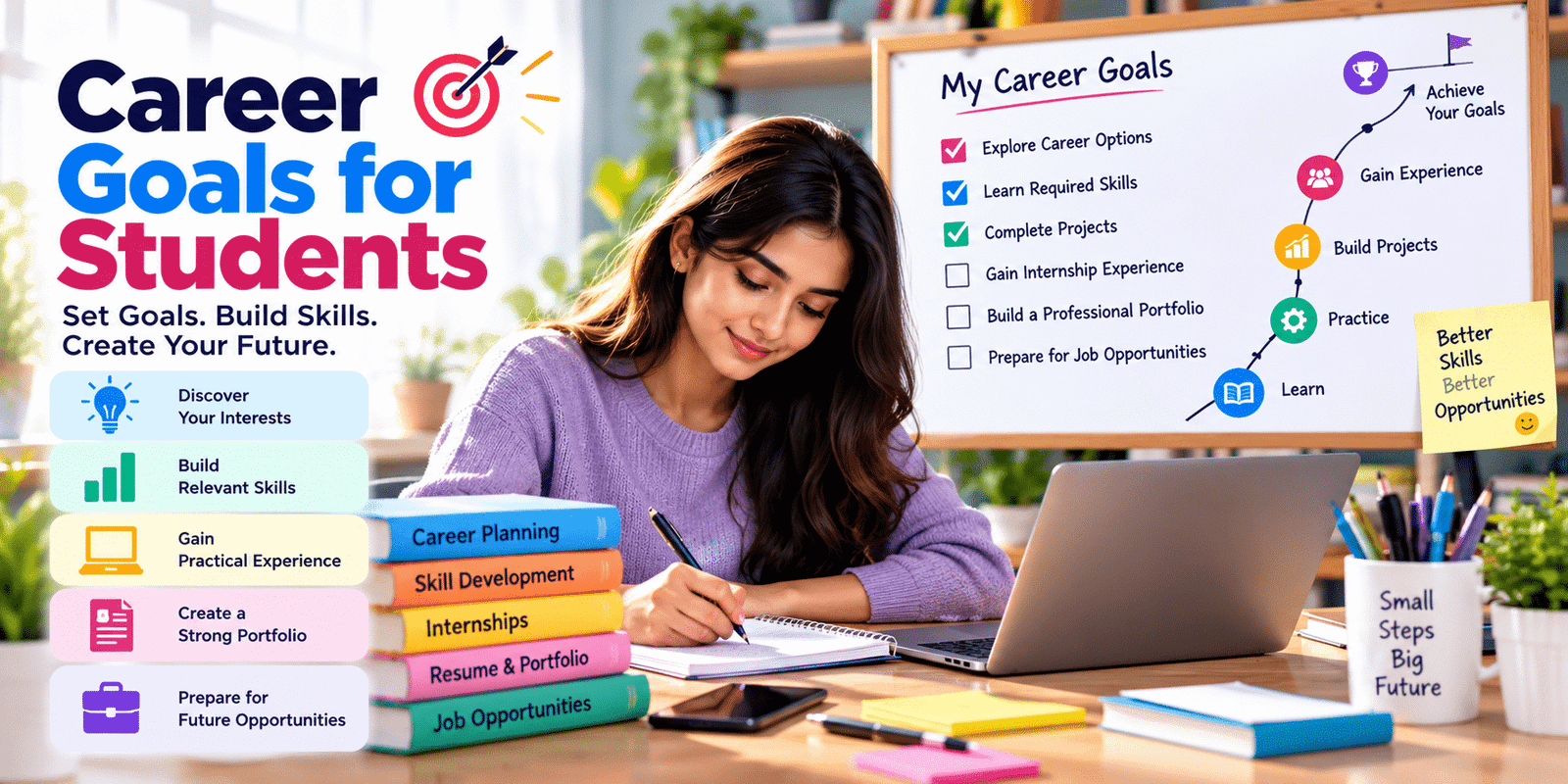
Career Goals for Students: A Guide Before Graduation
Career goals for students provide direction for learners who are exploring their interests, strengths, and future opportunities. With many courses, industries, and job options available, deciding what to pursue after graduation can be challenging. Setting clear goals helps students plan their education, develop relevant skills, and prepare for future employment.
Career goals for students provide direction and help learners make informed decisions about their education, skill development, internships, and future employment. Setting goals does not mean having every detail of your future decided. It means understanding what you want to work toward and identifying practical steps to move forward.
In this article, we will explore why career goals matter, how students can identify suitable goals, and how to turn those goals into an actionable plan before graduation.
1. Why Career Goals for Students Matter
Career goals help students connect their current efforts with their future ambitions. Instead of choosing activities without a clear purpose, students can focus on learning and experiences that support their professional development.
For example, a student interested in web development can set goals to learn programming fundamentals, build practical projects, create a portfolio, and apply for internships.
Having a direction can also make decision-making easier. When students understand what they want to achieve, they can evaluate courses, projects, and opportunities based on how well they support their goals.
Career goals for students also encourage consistency. Progress may take time, but having clear objectives helps learners stay focused and measure their improvement.
2. What Are Career Goals?
Career goals are specific outcomes that a person wants to achieve in their professional life. They may relate to acquiring skills, entering a particular industry, gaining experience, securing a job, or progressing into a specialized role.
For students, career goals can begin with small and achievable objectives. These might include completing an online course, participating in a project, improving communication skills, or preparing a professional resume.
Career goals generally fall into two categories.
Short-Term Career Goals
Short-term goals focus on achievements that can be completed within a relatively short period.
Examples include:
- Completing a course related to a chosen career.
- Building a project to demonstrate practical skills.
- Preparing a resume and professional portfolio.
- Practicing interview questions.
- Applying for internships or entry-level opportunities.
Long-Term Career Goals
Long-term goals focus on broader ambitions that may take several years to achieve.
Examples include becoming a software engineer, developing expertise in a particular field, leading a team, starting a business, or pursuing an advanced qualification.
Short-term goals help students make progress toward long-term ambitions. Both are useful when they are realistic and regularly reviewed.
3. Why Students Feel Confused About Their Future
Many students struggle to identify a career direction because they have limited exposure to different professions. They may understand a subject academically but have little experience applying it in a real workplace.
Family expectations, peer pressure, salary comparisons, and rapidly changing job requirements can also influence career decisions.
Some students choose a career because their friends are pursuing it. Others focus only on current job trends without considering their interests or the skills required for the role.
To overcome this confusion, students should explore different career paths, research job responsibilities, speak with experienced professionals, and try practical projects.
It is also important to remember that career goals can change. Discovering a new interest or learning more about an industry may lead to a different direction. Adjusting a goal based on new information is a sensible part of career planning.
4. How to Identify Your Interests, Strengths, and Skills
Before setting career goals, students should understand what they enjoy, what they do well, and what they want to improve.
Start by reflecting on subjects and activities that naturally attract your attention. Consider whether you enjoy solving technical problems, communicating with people, designing creative work, analyzing information, or organizing activities.
Next, identify your current strengths. These may include logical thinking, writing, teamwork, creativity, attention to detail, or technical knowledge.
Students should also identify skill gaps. For example, someone interested in data analysis may need to improve spreadsheet skills, statistics, programming, and data visualization.
Practical experience can help clarify these preferences. Participating in projects, internships, workshops, or volunteer activities allows students to discover which tasks they enjoy and where they perform well.
The goal is not to find a perfect career immediately. It is to gather enough information to make a thoughtful next decision.
5. How Students Can Set Realistic Career Goals
Effective career goals should be clear, achievable, and connected to a meaningful outcome. Vague statements such as “I want a good job” may provide motivation, but they do not explain what actions are needed.
Students can use the SMART goal framework to make their objectives more practical.
- Specific: Identify exactly what you want to achieve.
- Measurable: Decide how you will track progress.
- Achievable: Choose a goal that fits your current abilities and resources.
- Relevant: Ensure the goal supports your interests or career direction.
- Time-bound: Set a reasonable target date.
For example, instead of saying, “I want to improve my programming skills,” a student could set this goal: “I will complete a beginner programming course and build two small projects within the next three months.”
This goal gives the student a clear outcome and a timeframe for evaluating progress.
Students should avoid setting too many goals at once. Choosing a few important priorities makes it easier to focus and maintain consistent progress.
6. Turning Career Goals Into an Action Plan
A goal becomes more useful when it is supported by a practical action plan. Students should identify the steps required to achieve each objective and decide when to complete them.
For example, a student who wants to become a web developer could create the following plan:
Step 1: Learn the fundamentals. Study HTML, CSS, JavaScript, and the basic concepts of web development.
Step 2: Practice regularly. Complete small coding exercises and build simple web pages.
Step 3: Create practical projects. Develop projects that demonstrate the ability to apply technical knowledge.
Step 4: Build a portfolio. Organize completed projects and explain the skills used in each one.
Step 5: Prepare for opportunities. Practice interviews, improve the resume, and apply for internships or entry-level positions.
Breaking a goal into smaller actions makes it easier to understand what needs to be done next. It also helps students recognize progress even when the final objective is still far away.
Review your action plan regularly and adjust it when your priorities, interests, or circumstances change.
7. Why Skill Development Is Important for Career Goals
Career goals often require students to develop a combination of technical and professional skills. Technical skills provide the knowledge needed for a particular role, while professional skills support communication, collaboration, planning, and problem-solving.
For example, a student interested in software development may need programming knowledge, debugging experience, teamwork, and the ability to explain technical decisions.
Students should research the requirements of their chosen roles before deciding which skills to learn. Job descriptions, professional communities, and conversations with experienced people can help identify relevant requirements.
It is also useful to practice skills through real projects instead of relying only on theoretical learning.
Our guide on skills recruiters look for in freshers explains why employers consider practical abilities and professional qualities when evaluating candidates.
8. How Internships and Projects Support Career Goals
Internships and practical projects help students understand how their knowledge applies to real tasks. They can also reveal whether a particular role or industry matches their expectations.
An internship may introduce students to workplace communication, deadlines, collaboration, and professional responsibilities. Projects allow them to experiment, solve problems, and demonstrate what they can do.
Students who cannot immediately access internships can begin with academic projects, personal projects, open learning activities, or volunteer work that develops relevant skills.
The important point is to choose experiences that support a clear learning objective.
After completing a project or internship, reflect on what you learned, which skills improved, and what you would like to explore next. These observations can help refine your career goals.
9. Common Career Planning Mistakes to Avoid
Students can make better career decisions by recognizing common mistakes early.
Choosing a Career Only for Salary
Salary is an important consideration, but students should also research job responsibilities, required skills, working conditions, and opportunities for growth.
Following Friends Without Exploring Personal Interests
A career that suits one student may not suit another. Explore options based on your interests, abilities, and goals rather than choosing a path only because others are following it.
Setting Unrealistic Goals
Ambitious goals can be motivating, but they should be supported by practical steps. Break large ambitions into smaller milestones that can be achieved over time.
Ignoring Practical Experience
Completing courses can provide valuable knowledge, but projects and practical experience help students apply that knowledge and identify areas for improvement.
Refusing to Adjust a Goal
Career interests may change as students gain experience. Review your goals and update them when new information suggests a more suitable direction.
Comparing Progress With Others
Students develop skills and gain experience at different rates. Focus on your own progress and the actions that will help you move forward.
10. How to Review and Adjust Your Career Goals
Career planning should be an ongoing process rather than a one-time decision. Students can review their goals every month or at the end of each academic term.
During each review, consider the following questions:
- What progress have I made toward my current goals?
- Which skills have I improved?
- What challenges slowed my progress?
- Do my current goals still match my interests?
- What is the next practical step I can take?
Use your answers to update your action plan. If a goal is too broad, divide it into smaller tasks. If a particular approach is not working, explore another method.
Students should also celebrate meaningful progress. Completing a project, improving a skill, or receiving useful feedback can indicate that their efforts are producing results.
Consistent reviews help students stay flexible while maintaining a clear sense of direction.
11. How Continuous Learning Supports Career Growth
The skills needed for a career may change as industries, technologies, and workplace expectations evolve. Students should therefore view graduation as one stage of learning rather than the end of their development.
Continuous learning can include taking relevant courses, reading industry resources, practicing new tools, attending workshops, and learning from experienced professionals.
Students do not need to learn everything at once. They can identify one relevant skill, create a learning plan, and apply the knowledge through practical activities.
Our article on continuous learning and career growth explores how ongoing learning can support professional development over time.
Students can also document their work in a professional portfolio to showcase projects, skills, and progress as they prepare for employment opportunities.
12. Frequently Asked Questions
What are career goals for students?
Career goals for students are objectives that help learners prepare for future employment and professional development. They may include learning new skills, completing projects, gaining internship experience, or preparing for a particular role.
Why should students set career goals before graduation?
Setting career goals helps students make informed decisions about their learning, choose relevant experiences, identify skill gaps, and prepare for the transition from education to employment.
How can students choose the right career goal?
Students can explore their interests, evaluate their strengths, research different occupations, and gain practical experience. These activities can help them identify suitable options and set realistic goals.
What is an example of a short-term career goal?
A short-term goal could be completing a relevant course, building a project, improving interview skills, or applying for an internship within a defined period.
Should students change their career goals?
Yes. Students can revise their goals when they gain new knowledge, discover different interests, or learn more about career opportunities. Adjusting a goal can help them make better-informed decisions.
How can students track their career progress?
Students can maintain a list of goals, set deadlines, track completed tasks, record skills they have developed, and review their progress regularly.
Final Thoughts
Career planning does not require students to know exactly where they will be in ten years. It requires them to understand their current interests, explore opportunities, and take practical steps toward a meaningful future.
By setting career goals for students, learners can make better decisions about skill development, projects, internships, and job preparation. Clear goals also help them measure progress and adjust their plans as they gain experience.
Start by identifying one career direction that interests you. Research the skills it requires, choose a realistic short-term goal, and create an action plan to begin working toward it.
Small, consistent steps can help turn career ambitions into achievable milestones before graduation.
Outbound links
National Careers Service ane text ki ee URL hyperlink ga add cheyyi: