Why Continuous Learning Has Become Essential for Career Growth
The workplace is changing quickly as technology, business models, and job requirements continue to evolve. A qualification or a set of skills that is valuable today may not be enough to support long-term career growth. Continuous learning helps people stay relevant by improving existing abilities, learning new skills, and adapting to changing professional expectations.
The World Economic Forum reports that employers expect a significant share of workers’ existing skills to change by 2030, while skills such as technological literacy, creative thinking, resilience, flexibility, agility, curiosity, and lifelong learning are expected to become increasingly important.
Why Continuous Learning Matters for Career Growth
Continuous learning is not limited to taking courses or collecting certificates. It can include learning through projects, workplace experience, mentoring, professional training, reading, experimentation, and feedback.
For someone starting a career, continuous learning can help build a stronger foundation. For an experienced professional, it can provide a way to keep up with changes in technology, industry practices, and job responsibilities.
What Does Continuous Learning Really Mean?
Continuous learning means developing knowledge and skills throughout your career rather than treating education as something that ends after graduation.
For example, a software professional may learn a new development framework. A marketing professional may learn data analytics. A manager may improve leadership and communication skills. A researcher may learn a new analytical method.
The specific subject changes, but the approach remains the same: identify what needs to improve, learn it, practise it, and apply it.
Why a Degree Is No Longer the End of Learning
A degree can provide foundational knowledge, but professional environments often require people to continue developing their capabilities.
Industries change, new tools emerge, customer expectations evolve, and organisations introduce new ways of working. As a result, professionals may need to build on what they learned during formal education.
Continuous learning does not reduce the value of formal education. Instead, it extends learning beyond the classroom and connects it with changing workplace requirements.
How Technology Is Changing the Skills We Need
Technology is one of the major forces changing the labour market. The World Economic Forum identifies technological change as a major driver of workplace transformation and reports growing demand for AI and big data, networks and cybersecurity, and technological literacy.
This means professionals do not necessarily need to become experts in every new technology. However, they should understand which changes are relevant to their field and develop the skills required to work effectively with them.
The Role of AI in Continuous Learning
AI is changing how many professionals work and learn. It can support research, analysis, writing, coding, communication, and many other tasks.
However, learning how to use an AI tool is only one part of professional development. People also need to understand how to verify information, make decisions, solve problems, and apply technology responsibly.
The combination of technological skills and human capabilities is becoming increasingly important as workplaces adopt AI and other technologies.
Why Professionals Need to Keep Updating Their Skills
Skills can become less relevant when tools, processes, or customer expectations change.
For example, someone who has worked with one software platform for several years may eventually need to understand newer technologies. Similarly, a business professional may need to learn new analytics tools as organisations become more data-driven.
Updating skills does not always mean completely changing careers. Sometimes it simply means adding new capabilities to an existing area of expertise.
Learning New Skills vs Improving Existing Skills
Professional development can happen in two ways.
Learning new skills means developing capabilities that you did not previously have.
Improving existing skills means becoming better at something you already know.
For example, a developer may learn cloud technologies while also improving their existing system-design skills. A manager may learn data analysis while improving communication and leadership.
A balanced approach can make learning more useful because it combines new knowledge with existing experience.
How Continuous Learning Supports Career Mobility
Career paths are not always linear. People may move into new roles, take on additional responsibilities, change industries, or transition into leadership positions.
Continuous learning can make these transitions easier by helping professionals build capabilities relevant to their next role.
The World Economic Forum notes that reskilling and upskilling are becoming important workforce strategies as job and skill requirements evolve.
Why Employers Value a Learning Mindset
Employers need people who can adapt when processes, technologies, and business priorities change.
A person who is willing to learn can potentially take on new responsibilities more effectively than someone who depends only on the skills they already have.
This is why continuous learning can be valuable not only for individual career development but also for organisations trying to build adaptable teams.
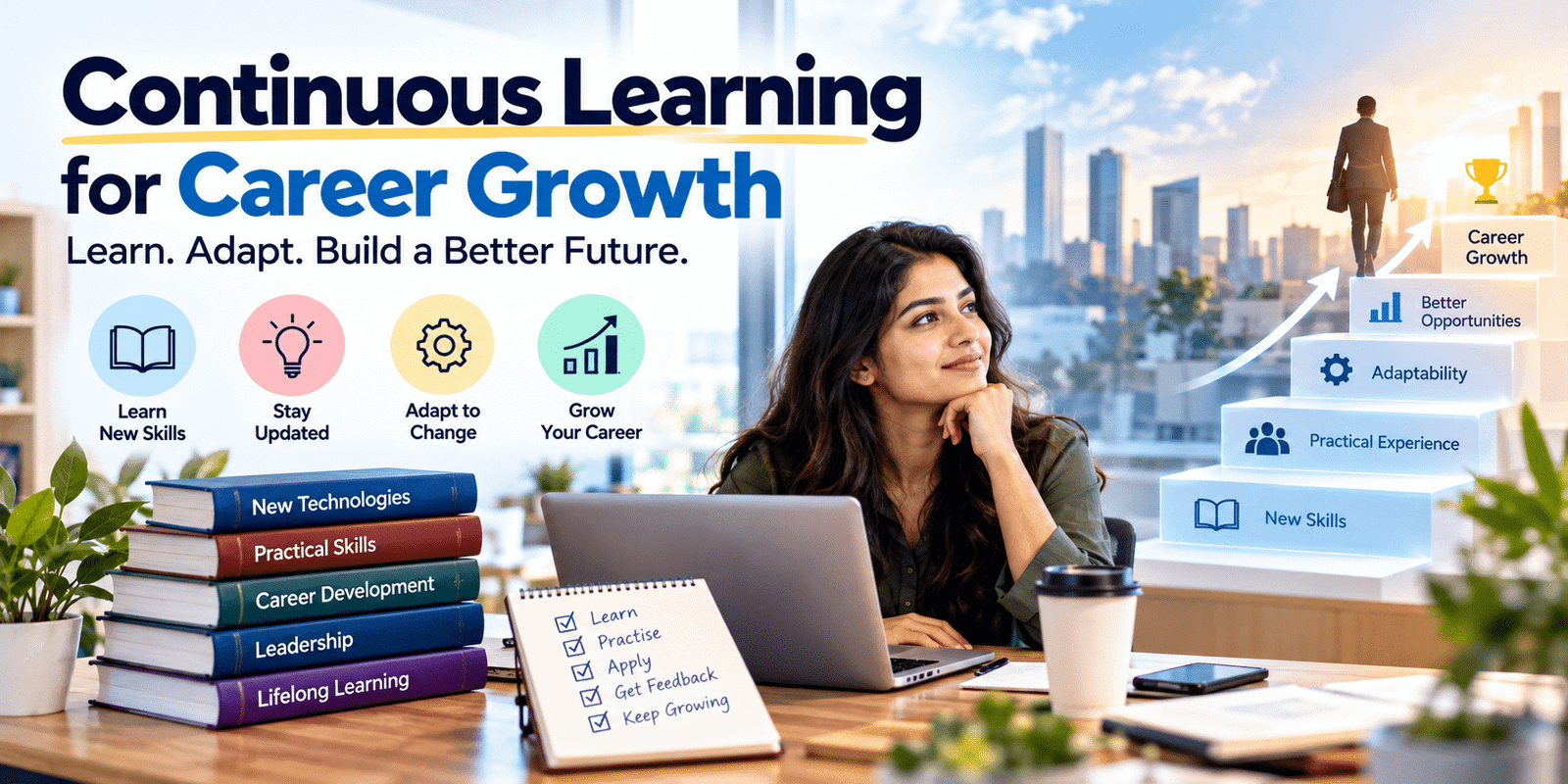
How to Build a Continuous Learning Habit
Continuous learning does not require spending several hours every day studying.
A practical approach could be:
- Choose one skill that is relevant to your career.
- Set a realistic weekly learning goal.
- Study through reliable resources.
- Apply what you learn to a practical task.
- Ask for feedback.
- Review your progress regularly.
- Move to the next skill when you have built sufficient confidence.
Small, consistent learning activities can become more sustainable than trying to learn everything at once.
Using Projects to Turn Learning Into Practical Skills
Learning becomes more valuable when it can be applied.
For example, someone learning data analysis could work with a small dataset. A developer could build a simple application. A marketing professional could analyse a campaign. A manager could apply a new planning framework to an actual team project.
Practical application helps connect knowledge with real problems.
How Certifications and Courses Fit Into Continuous Learning
Courses and certifications can provide structure and help people learn specific subjects. However, completing a course is only one part of professional development.
The stronger approach is to combine learning with practice and evidence of application.
Instead of simply saying, “I completed a course,” a professional can demonstrate how they used what they learned in a project, workplace assignment, research activity, or business problem.
Learning From Feedback and Workplace Experience
Some of the most useful learning happens through everyday work.
A project review, customer interaction, technical discussion, presentation, or performance conversation can reveal areas that need improvement.
Instead of viewing feedback only as criticism, professionals can use it to identify specific skills they should develop.
Common Mistakes People Make When Upskilling
One common mistake is trying to learn too many skills at the same time.
Another is choosing courses only because they are popular without considering whether the skills are relevant to a person’s career goals.
Some people also spend too much time consuming learning content without applying it.
A better approach is to connect every learning goal with a practical reason: What will I be able to do after learning this?
How Organizations Can Support Continuous Learning
Continuous learning is not only an individual’s responsibility. Organisations can also create opportunities for employees to develop.
Companies can support learning through internal training, mentoring, project rotations, professional development programmes, knowledge-sharing sessions, and opportunities to work with new technologies.
The World Economic Forum reports that many employers are planning to prioritise workforce upskilling as skill requirements evolve.
Creating a Personal Learning Plan for Career Growth
A simple learning plan can make professional development more manageable.
Step 1: Identify the skills required for your current or target role.
Step 2: Choose one or two priority areas.
Step 3: Select reliable learning resources.
Step 4: Set a weekly learning schedule.
Step 5: Apply the knowledge through practical work.
Step 6: Review your progress and adjust your plan.
This approach turns continuous learning from a vague goal into a regular professional habit.
Final Thoughts: Keep Learning, Keep Growing
Career growth is increasingly connected to the ability to learn, adapt, and apply new knowledge. Technology will continue to change jobs and the skills required to perform them, making continuous development an important part of professional life.
Continuous learning does not mean constantly collecting certificates or chasing every new trend. It means understanding where your career is going, identifying the skills you need, and consistently improving your ability to contribute.
Learning should not stop when education ends. It should become part of how you build your career.
Outbound Links
The World Economic Forum highlights lifelong learning, technological literacy, resilience, flexibility, and agility as important skills for the changing workplace. Read the Future of Jobs Report to explore how workforce skills are evolving.
Internal Links
Practical projects can help professionals turn new knowledge into real skills. You can also explore how project-based learning helps connect learning with practical experience.
Professionals can also strengthen their career preparation by developing the skills employers look for in freshers and early-career candidates.