Why Career Readiness for Students Matters Before Graduation
Career readiness for students should not begin after graduation. It is something students can gradually build during college through practical learning, projects, internships, communication, problem-solving, and professional preparation.
Today, having a degree is only one part of starting a career. Students also need to understand how their knowledge can be applied in real situations. Current education and internship initiatives in India increasingly emphasize project-based learning, industry interaction, internships, and experiential learning.
Starting early gives students more time to identify their strengths, improve weak areas, gain experience, and understand what employers expect.
What Does Career Readiness Really Mean?
Career readiness does not mean that a student needs to know everything before graduating.
Instead, it means being prepared to enter a professional environment and continue learning.
A career-ready student should gradually develop:
- Relevant technical or subject knowledge
- Communication skills
- Problem-solving ability
- Teamwork
- Time management
- Professional behaviour
- Practical experience
- Interview skills
- Resume and portfolio-building skills
- The ability to learn and adapt
For example, a computer science student may know Java or Python but still need experience working on projects, using Git, solving problems, explaining technical decisions, and collaborating with others.
Why Students Should Start Career Preparation Early
Many students begin serious career preparation only during their final semester.
By then, they may have limited time to build projects, complete internships, improve their resume, prepare for interviews, and develop communication skills.
Starting from the first or second year makes the process more manageable.
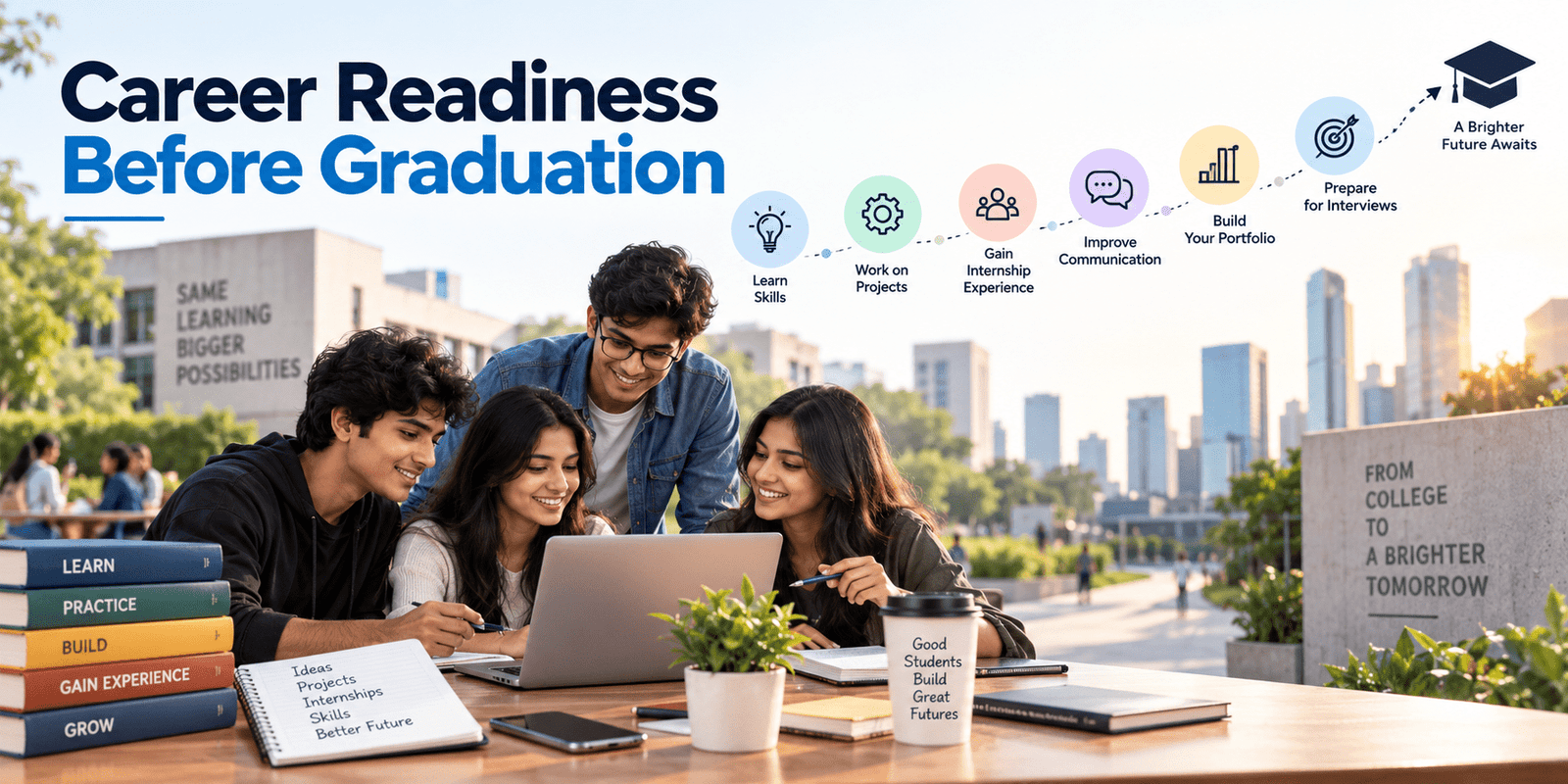
Students can gradually move from learning → practising → building → experiencing → applying.
This approach also gives them an opportunity to understand which career direction suits them before graduation.
Academic Knowledge vs Practical Career Skills
Academic learning provides an important foundation. However, students also need opportunities to apply what they learn.
For instance, knowing database concepts is different from designing a database for an actual application. Similarly, understanding programming concepts is different from developing, testing, and maintaining a working application.
This is why project-based learning and industry interaction are increasingly included in approaches that connect education with employment.
Students should therefore ask themselves:
“Where can I apply what I am learning?”
That question can change the way they approach college education.
How Projects Help Students Become Career Ready
Projects allow students to turn theoretical knowledge into something practical.
A project can demonstrate how a student:
- Understands a problem
- Plans a solution
- Chooses appropriate technologies
- Writes and improves code
- Tests the result
- Handles errors
- Works with others
- Explains the final outcome
A simple project completed properly can sometimes demonstrate more about a student’s practical ability than a list of technologies on a resume.
Students should focus on understanding their projects rather than simply collecting projects from tutorials.
Why Internships Provide Valuable Industry Exposure
Internships can help students understand how professional environments actually work.
During an internship, students may experience team meetings, deadlines, task management, workplace communication, tools, documentation, reviews, and real project requirements.
In April 2026, the Prime Minister’s Internship Scheme was expanded to include eligible final-year undergraduate and postgraduate students, specifically supporting hands-on industry exposure while students are still completing their education.
Students can also explore experiential learning opportunities that provide exposure beyond the classroom.
The Role of Communication in Career Readiness
Technical knowledge alone is not enough in most professional environments.
Students need to explain their ideas clearly, ask questions, participate in discussions, write professional messages, and communicate with teammates.
Consider two students who have similar technical knowledge.
One can clearly explain their project, discuss challenges, and respond to questions. The other struggles to explain what they built.
Their technical knowledge may be similar, but their ability to communicate that knowledge can be very different.
That is why students should practise communication alongside technical learning.
Why Problem-Solving Skills Matter in the Workplace
Work rarely provides perfectly defined questions with ready-made answers.
Students may encounter unclear requirements, technical errors, changing priorities, or unexpected problems.
Career readiness therefore includes learning how to:
- Understand a problem
- Break it into smaller parts
- Identify possible solutions
- Test different approaches
- Learn from mistakes
- Improve the solution
Students can develop these skills through coding problems, projects, case studies, research, competitions, and real-world activities.
How Students Can Build a Professional Portfolio
A portfolio gives students a place to demonstrate what they have actually done.
It can include:
- Academic or personal projects
- Internship experience
- Research work
- Technical skills
- Certifications
- Presentations
- Publications
- Volunteer work
- Achievements
- GitHub or other relevant work samples
Instead of simply writing “I know React”, a student can show a project where React was actually used.
That makes the student’s learning easier to understand.
How Students Can Prepare for Their First Interview
Interview preparation should also start before the final placement season.
Students can practise:
- Self-introductions
- Project explanations
- Technical questions
- Problem-solving questions
- Behavioural questions
- Resume-based questions
- Questions about internships
- Questions about career interests
Mock interviews can also help students become more comfortable explaining their knowledge under pressure.
Common Career Preparation Mistakes Students Should Avoid
Students often make career preparation harder by waiting until the last moment.
Some common mistakes include:
- Collecting certificates without practising skills
- Copying projects without understanding them
- Ignoring communication skills
- Preparing only when placements begin
- Applying randomly to every job
- Having an outdated resume
- Not building practical experience
- Avoiding internships because they seem difficult
- Focusing only on marks
- Not researching the roles they want
Career readiness is a continuous process rather than a final-semester activity.
A Simple Career Readiness Plan for College Students
Students can keep the process simple.
First Year
Focus on exploring different fields, building basic skills, and understanding career options.
Second Year
Start working on small projects, improving technical skills, and participating in practical activities.
Third Year
Focus more on internships, substantial projects, communication, resume development, and industry exposure.
Final Year
Strengthen interview preparation, portfolio quality, job applications, and role-specific skills.
This gradual approach can reduce the pressure that students often experience immediately before graduation.
How Vyasa Nexus Supports Career Readiness
Career readiness becomes more meaningful when students get opportunities to connect learning with practical work.
Vyasa Nexus focuses on practical learning, projects, internships, career preparation, and skill development that can help students move beyond classroom knowledge.
The goal is not simply to help students complete another course. It is to help them understand what they are learning, apply it through practical work, and gradually prepare for professional opportunities.
What Students Can Start Doing Today
Students do not need to completely change their routine overnight.
They can start with a few simple actions:
- Choose one skill to improve.
- Start one practical project.
- Research one career role.
- Update the resume.
- Create or improve a portfolio.
- Practise explaining one project.
- Look for relevant internship opportunities.
- Spend time improving communication.
- Ask for feedback from teachers, mentors, or professionals.
Small steps taken consistently can create meaningful progress before graduation.
Final Thoughts: Start Preparing Before Opportunity Arrives
Career readiness for students is not about becoming perfect before graduation.
It is about gradually developing the knowledge, practical experience, communication, confidence, and adaptability needed to enter the professional world.
Students who start early have more opportunities to experiment, make mistakes, learn from feedback, and improve.
The goal of college should not be only to graduate. It should also be to become prepared for what comes after graduation.
Outbound Links
Students can also explore official internship and experiential learning opportunities through the AICTE National Internship Portal. This can help students understand available internship opportunities and gain practical exposure.
Internal Links
Students can also learn more about internships for college students and understand how practical experience can support their career preparation.
Building a portfolio is also easier when students understand the skills recruiters look for in freshers and start developing those skills early.