
In today’s fast-paced professional world, networking is no longer optional—it’s essential. Whether you’re a student, job seeker, entrepreneur, or working professional, building the right connections can open doors to opportunities, knowledge, and growth.
This guide will walk you through practical and effective networking tips to help you build strong, lasting professional relationships.
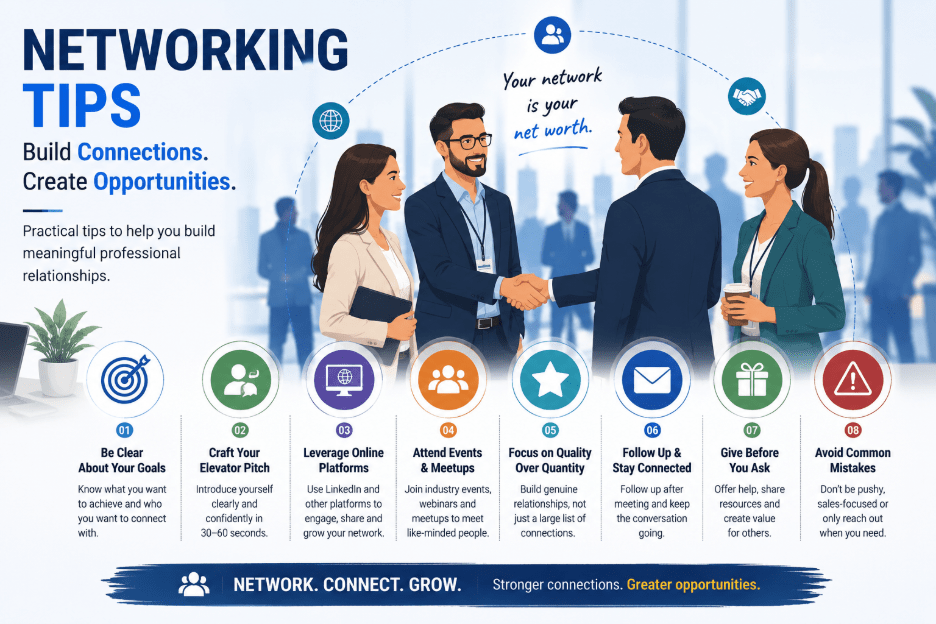
Why Networking Matters
Networking is more than exchanging business cards or adding connections on LinkedIn. It’s about building genuine relationships that can:
- Unlock career opportunities
- Provide mentorship and guidance
- Help you stay updated with industry trends
- Expand your knowledge and perspective
1. Be Clear About Your Goals
Before you start networking, ask yourself:
- What do I want to achieve?
- Who do I want to connect with?
- What value can I offer?
Having clarity will help you approach the right people with purpose and confidence.
2. Work on Your Elevator Pitch
An elevator pitch is a short introduction about yourself (30–60 seconds). It should include:
- Who you are
- What you do
- What you’re looking for
Example:
“Hi, I’m a Pega developer specializing in insurance applications, and I’m looking to connect with professionals working on large-scale digital transformation projects.”
3. Leverage Online Platforms
Use platforms like LinkedIn, Twitter, and professional forums to:
- Share your knowledge
- Engage with industry leaders
- Join relevant groups and discussions
Tip: Keep your profile updated and professional—it’s your digital first impression.
4. Attend Events and Meetups
Participate in:
- Industry conferences
- Webinars
- Local meetups
- Workshops
These are great places to meet like-minded people and expand your circle.
5. Focus on Quality Over Quantity
Having 500+ connections doesn’t matter if there’s no real engagement.
- Build meaningful relationships
- Stay in touch regularly
- Offer help when possible
Networking is about trust, not numbers.
6. Follow Up and Stay Connected
After meeting someone:
- Send a follow-up message
- Thank them for their time
- Mention something specific from your conversation
Consistency builds stronger relationships over time.
7. Give Before You Ask
One of the most powerful networking principles:
Offer value first.
- Share useful resources
- Recommend opportunities
- Help solve problems
People are more likely to support those who genuinely help others.
8. Avoid Common Networking Mistakes
- ❌ Being too pushy or sales-focused
- ❌ Only reaching out when you need something
- ❌ Not listening actively
- ❌ Ignoring follow-ups
Final Thoughts
Networking is not a one-time activity—it’s a continuous process of building and nurturing relationships. When done right, it can become one of the most powerful tools for personal and professional growth.
Start small, be genuine, and stay consistent. Over time, your network will become your biggest asset.