
Introduction
Leadership is not about titles or authority—it’s about influence, responsibility, and the ability to guide others toward a common goal. Whether you’re managing a team, leading a project, or simply taking initiative, understanding leadership basics can significantly impact your personal and professional growth.
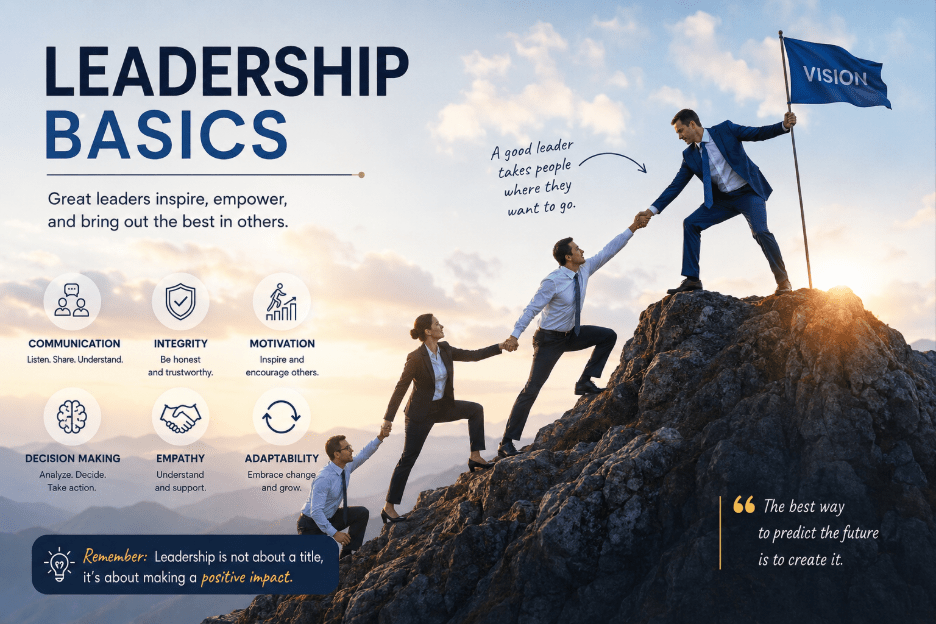
What is Leadership?
Leadership is the ability to inspire, motivate, and guide individuals or teams to achieve objectives effectively. A good leader creates vision, builds trust, and empowers others to perform at their best.
Key Characteristics of a Good Leader
1. Clear Communication
Effective leaders communicate their vision, expectations, and feedback clearly. They listen actively and ensure everyone is aligned.
2. Integrity and Trust
Trust is the foundation of leadership. Leaders who act with honesty and consistency earn respect and loyalty.
3. Decision-Making Ability
Leaders are often required to make quick yet informed decisions. Strong analytical thinking and confidence play a key role here.
4. Empathy
Understanding team members’ perspectives helps build stronger relationships and a positive work environment.
5. Adaptability
Change is constant. Great leaders remain flexible and guide their teams through uncertainty.
Types of Leadership Styles:-
1. Autocratic Leadership
Leaders make decisions independently with little input from others. Best suited for quick decision-making scenarios.
2. Democratic Leadership
Encourages team participation in decision-making. Builds engagement and creativity.
3. Transformational Leadership
Focuses on inspiring and motivating change. Ideal for innovation-driven environments.
4. Servant Leadership
Prioritizes the needs of the team. Leaders act as supporters rather than commanders.
Essential Leadership Skills to Develop
- Emotional Intelligence (EQ): Understand and manage your emotions and others’.
- Problem-Solving Skills: Address challenges effectively and creatively.
- Time Management: Prioritize tasks and manage responsibilities efficiently.
- Conflict Resolution: Handle disagreements professionally and constructively.
- Delegation: Assign tasks appropriately to maximize team productivity.
Common Leadership Mistakes to Avoid
- Lack of communication
- Micromanaging team members
- Ignoring feedback
- Avoiding accountability
- Resistance to change
Tips to Become a Better Leader
- Lead by Example – Demonstrate the behavior you expect from others.
- Keep Learning – Read, observe, and improve continuously.
- Build Relationships – Invest time in understanding your team.
- Encourage Innovation – Create an environment where ideas are welcomed.
- Stay Positive and Resilient – Your attitude influences your team.
Conclusion
Leadership is a skill that can be developed with practice and self-awareness. By focusing on communication, empathy, and continuous improvement, anyone can become an effective leader. Start small, stay consistent, and grow into a leader who inspires and drives success.