
Artificial Intelligence (AI) is no longer a futuristic concept—it has become an essential part of modern education. From personalized learning experiences to AI-powered tutors, educational institutions around the world are adopting artificial intelligence to improve teaching methods, increase student engagement, and prepare learners for the future.
As technology continues to evolve, AI is reshaping the way students learn, teachers teach, and schools operate. Whether you’re a student, educator, or parent, understanding the role of AI in education is essential for staying ahead in today’s digital world.
What Is Artificial Intelligence in Education?
Artificial Intelligence in Education (AIEd) refers to the use of intelligent technologies and machine learning systems to enhance teaching, learning, and educational management. AI-powered tools can analyze learning patterns, provide personalized recommendations, automate administrative tasks, and offer real-time feedback to students.
Unlike traditional learning systems, AI adapts to individual learning styles, helping every student progress at their own pace.
Why Artificial Intelligence Is Important in Education
Education has traditionally followed a one-size-fits-all approach. However, every student has unique strengths, weaknesses, and learning preferences. AI bridges this gap by delivering customized learning experiences.
Some key reasons why AI is becoming indispensable include:
- Personalized learning pathways
- Faster assessment and grading
- 24/7 access to learning assistance
- Improved student engagement
- Data-driven insights for educators
- Better accessibility for learners with disabilities
These capabilities make education more inclusive, efficient, and student-centered.
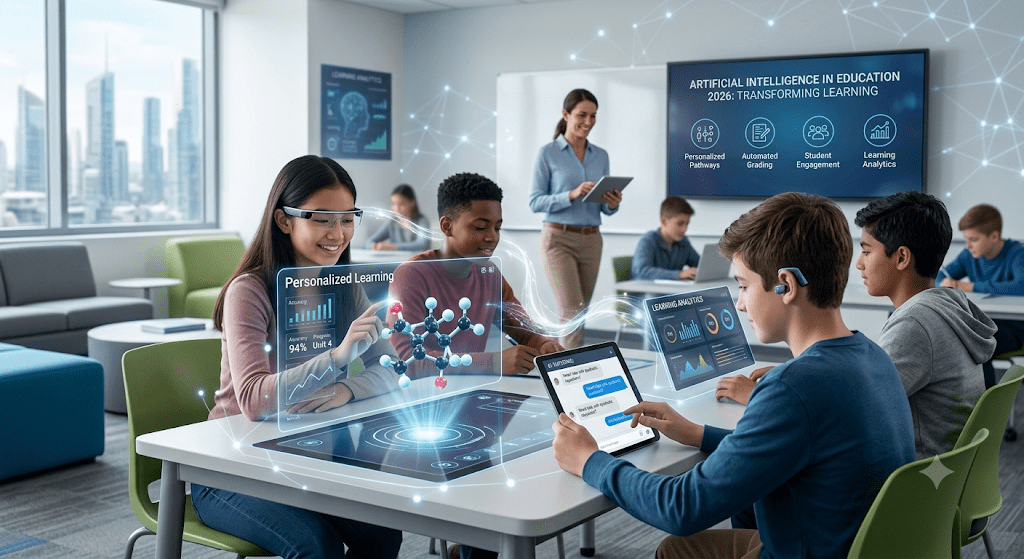
Top Benefits of Artificial Intelligence in Education
1. Personalized Learning
AI systems analyze each student’s performance and recommend lessons based on their individual needs. Students who require additional practice receive targeted exercises, while advanced learners can move ahead without unnecessary delays.
This personalized approach improves understanding, confidence, and academic performance.
2. Intelligent Tutoring Systems
AI-powered virtual tutors provide instant explanations, answer questions, and guide students through difficult concepts at any time of the day.
Students no longer have to wait for classroom hours to receive academic support.
3. Automated Grading
Teachers often spend significant time grading assignments and exams.
AI automates repetitive evaluation tasks, allowing educators to focus more on lesson planning, mentoring, and student interaction.
4. Better Student Engagement
Interactive AI applications, simulations, quizzes, and gamified learning experiences make education more engaging and enjoyable.
Students remain motivated through immediate feedback and personalized challenges.
5. Learning Analytics
AI collects and analyzes educational data to identify learning gaps, predict academic risks, and recommend interventions before students fall behind.
Educational institutions can make informed decisions using real-time insights.
Real-World Applications of AI in Education
Artificial Intelligence is already being used in various educational settings.
Smart Classrooms
AI enhances classroom experiences through intelligent presentations, attendance systems, and adaptive learning platforms.
Language Learning
AI-powered language applications improve pronunciation, vocabulary, grammar, and conversational skills using speech recognition technology.
Career Guidance
AI helps students explore career options by analyzing their interests, academic performance, and industry trends.
Accessibility
Students with visual, hearing, or learning disabilities benefit from AI-powered assistive technologies such as speech-to-text, text-to-speech, and real-time translation.
Challenges of Artificial Intelligence in Education
While AI offers tremendous opportunities, it also presents certain challenges.
Data Privacy
Educational institutions must ensure that student information is stored securely and used responsibly.
Digital Divide
Not all students have equal access to high-speed internet, modern devices, or AI-powered learning platforms.
Ethical Concerns
AI should support educators rather than replace human interaction. Maintaining transparency, fairness, and accountability remains essential.
Teacher Training
Educators need proper training to integrate AI tools effectively into classrooms and maximize their benefits.
Future Trends of AI in Education
Artificial Intelligence will continue to evolve rapidly over the coming years.
Emerging trends include:
- AI-powered virtual classrooms
- Emotion-aware learning systems
- Intelligent career counseling
- Adaptive digital textbooks
- AI-assisted research
- Multilingual education platforms
- Personalized lifelong learning
These innovations will make education more flexible, accessible, and globally connected.
Tips for Students to Use AI Responsibly
AI is most effective when used as a learning assistant rather than a shortcut.
Students should:
- Use AI to understand difficult concepts.
- Verify AI-generated information using trusted academic sources.
- Develop critical thinking and problem-solving skills.
- Avoid relying entirely on AI for assignments.
- Combine AI tools with traditional learning methods.
Responsible AI usage leads to deeper understanding and long-term academic success.
Conclusion
Artificial Intelligence is revolutionizing education by making learning more personalized, efficient, and accessible than ever before. From intelligent tutoring systems to automated assessments and predictive learning analytics, AI is helping educators create better learning experiences while empowering students to reach their full potential.
Although challenges such as privacy, accessibility, and ethical use remain, the future of AI in education is incredibly promising. As schools, colleges, and online learning platforms continue embracing AI-driven innovation, students who learn to use these technologies responsibly will be better prepared for academic success and future careers.
Artificial Intelligence is not replacing teachers—it is empowering them to teach smarter while enabling students to learn better. The future of education is intelligent, connected, and driven by innovation.