
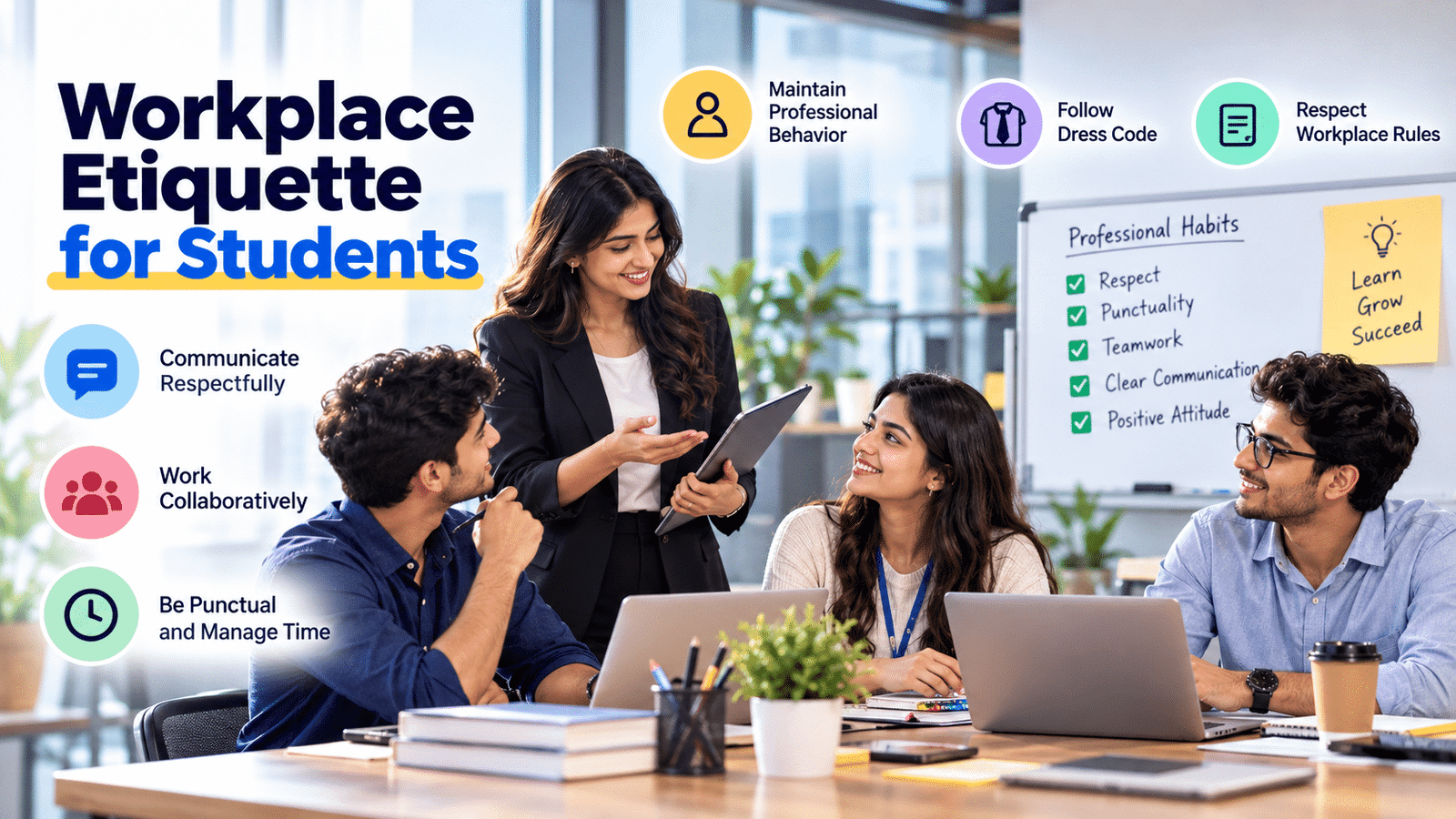
Workplace Etiquette for Students: A Complete Guide
Workplace etiquette for students is important for developing professional behavior before entering the workforce. It helps students understand how to communicate respectfully, work with colleagues, manage responsibilities, and follow professional expectations during internships and their first jobs.
Workplace etiquette for students refers to the professional habits, behaviors, and communication practices that help individuals interact respectfully and responsibly in a work environment.
Whether students are attending their first internship, joining a company, participating in meetings, or working with a team, understanding workplace etiquette can help them adjust to professional environments more confidently.
In this article, we will explore the importance of workplace etiquette, essential professional habits, common mistakes to avoid, and practical ways students can prepare for their first job.
1. Why Workplace Etiquette for Students Matters
Students may understand their subjects and possess relevant technical skills, but professional environments introduce different expectations. Employees are expected to communicate appropriately, respect others, manage responsibilities, and contribute positively to their teams.
For example, a student joining an internship may need to communicate with a manager, attend team meetings, complete assigned tasks, and ask questions when instructions are unclear.
Understanding workplace etiquette helps students approach these situations professionally.
It also supports positive working relationships. Simple habits such as listening carefully, arriving on time, respecting colleagues, and responding politely can make everyday workplace interactions smoother.
Learning these habits before graduation can help students transition from academic life to professional responsibilities.
2. What Is Workplace Etiquette?
Workplace etiquette refers to the accepted standards of professional behavior that guide how people communicate, interact, and perform their responsibilities at work.
It includes both verbal and non-verbal behavior, such as how employees speak to colleagues, participate in meetings, respond to feedback, and respect workplace boundaries.
Important elements of workplace etiquette include:
- Respect: Treating colleagues, managers, and other employees politely.
- Punctuality: Arriving on time and meeting agreed deadlines.
- Communication: Sharing information clearly and respectfully.
- Responsibility: Completing assigned work and communicating progress.
- Teamwork: Cooperating with others and respecting different opinions.
- Professionalism: Maintaining appropriate behavior in different workplace situations.
- Confidentiality: Protecting private company and employee information.
These practices help create an environment where people can work together effectively.
Workplace etiquette is not about following unnecessary formalities. It is about showing consideration, responsibility, and respect in everyday professional interactions.
3. Why Professional Behavior Matters in the Workplace
Professional behavior influences how employees interact with colleagues and approach their responsibilities.
A person may have strong technical knowledge, but poor communication, disrespectful behavior, or a lack of responsibility can make teamwork difficult.
For example, consider two employees working on the same project. One communicates progress regularly, listens to suggestions, and completes assigned tasks on time. The other frequently misses deadlines and ignores messages.
Even if both have similar technical abilities, their professional behavior creates different experiences for the team.
Professional behavior also helps build trust. Colleagues are more likely to depend on someone who communicates honestly, respects commitments, and handles responsibilities carefully.
Students should begin developing these habits during college projects, internships, workshops, and group activities.
4. How to Communicate Respectfully With Colleagues
Communication is an essential part of professional life. Employees interact with managers, teammates, customers, and people from different backgrounds.
Students entering the workplace should learn to communicate clearly without sounding disrespectful or unnecessarily informal.
Listen Before Responding
Give others time to explain their ideas. Avoid interrupting conversations or making assumptions before understanding the complete message.
Use Respectful Language
Choose appropriate words when speaking with colleagues and managers. A polite tone can help prevent misunderstandings.
Ask Questions When Necessary
If instructions are unclear, ask for clarification instead of guessing. Asking relevant questions shows that you want to understand the task properly.
Give Constructive Responses
When discussing problems or disagreements, focus on the issue rather than criticizing the person.
Communicate Updates Clearly
If a task is delayed or you face a challenge, inform the relevant person early. Clear communication helps teams plan their work more effectively.
These habits make professional interactions more respectful and productive.
5. The Importance of Punctuality and Time Management
Punctuality is an important professional habit because workplace activities often depend on schedules and agreed deadlines.
Arriving late to meetings, delaying assigned tasks, or repeatedly missing deadlines can affect other team members.
Students can practise punctuality by planning their daily routines, preparing necessary materials in advance, and allowing enough time for travel or unexpected delays.
Time management is equally important. Employees may need to balance multiple responsibilities, attend meetings, complete assignments, and respond to requests.
For example, an intern working on a project should understand the deadline, divide the work into smaller tasks, and communicate progress regularly.
Being punctual does not simply mean arriving at the office on time. It also means respecting other people’s time and keeping commitments.
6. Workplace Dress Code and Personal Presentation
Personal presentation is another part of workplace etiquette. Different organizations may have different dress codes depending on their industry, work environment, and responsibilities.
Some workplaces require formal clothing, while others allow business casual or comfortable everyday attire.
Students should understand the organization’s expectations before joining an internship or starting a new job.
Maintaining clean and appropriate clothing, personal hygiene, and a neat appearance helps demonstrate consideration for the workplace environment.
Personal presentation also includes digital communication. Using a suitable profile picture, a professional email address, and respectful language in work-related conversations can contribute to a positive professional impression.
The goal is not to follow expensive fashion trends. It is to present yourself appropriately and comfortably in the environment where you work.
7. How to Behave During Meetings
Meetings allow employees to share updates, discuss challenges, make decisions, and coordinate tasks.
Students attending their first workplace meeting may not know what to expect. Understanding a few basic practices can help them participate confidently.
Be on Time
Join meetings at the scheduled time. If the meeting is online, check your internet connection and audio settings beforehand.
Understand the Purpose
Read any shared agenda or preparation material so you understand the topics being discussed.
Listen Carefully
Pay attention to the speaker and avoid unrelated activities during the meeting.
Contribute When Relevant
Share useful information, ask questions, and provide updates when appropriate. You do not need to speak unnecessarily just to participate.
Respect Different Opinions
Colleagues may have different approaches or ideas. Listen to their reasoning before responding.
Follow Up on Assigned Actions
If you receive a task during the meeting, understand the expected outcome and deadline. Record important points when necessary.
These habits help students participate professionally and understand how workplace decisions are made.
8. How to Respect Workplace Rules and Boundaries
Every organization has policies and expectations that employees must follow. These may cover attendance, information security, communication, workplace facilities, and employee responsibilities.
Students joining an organization should take time to understand these rules.
Respecting workplace boundaries is equally important. Employees should understand that colleagues have different responsibilities, personal preferences, and working styles.
For example, repeatedly contacting a colleague outside working hours for a non-urgent matter may be inappropriate. Similarly, using another employee’s computer or accessing private information without permission can violate professional boundaries.
Students should also protect confidential information. Company documents, customer details, internal discussions, and project information should not be shared without authorization.
Respecting workplace rules demonstrates responsibility and helps maintain a safe and professional working environment.
9. Common Workplace Etiquette Mistakes to Avoid
Students entering professional environments may make mistakes simply because they are unfamiliar with workplace expectations.
Recognizing these mistakes can help them adjust more quickly.
Frequently Arriving Late
Repeatedly arriving late can affect meetings and team schedules. Plan your routine and communicate if an unexpected delay occurs.
Ignoring Messages
Failing to acknowledge important work-related communication can create confusion. Respond within a reasonable time when a response is required.
Interrupting Others
Interrupting colleagues during discussions can make communication difficult. Listen carefully and wait for an appropriate opportunity to contribute.
Taking Feedback Personally
Feedback is often provided to improve work quality. Listen carefully, ask questions when necessary, and identify how you can apply the suggestions.
Using Informal Language in Every Situation
Different workplace conversations require different communication styles. Use a professional tone when contacting managers, customers, and unfamiliar colleagues.
Sharing Confidential Information
Never share private company information, customer details, or internal documents without permission.
Avoiding Responsibility
If you make a mistake or cannot complete a task on time, communicate honestly rather than hiding the problem.
Learning from these mistakes helps students develop better professional habits.
10. How Students Can Prepare for Their First Workplace
Students do not need to wait until their first job to understand professional behavior. They can develop workplace habits through academic and extracurricular activities.
Participate in Group Projects
Group projects help students practise communication, cooperation, responsibility, and deadline management.
Attend Workshops and Professional Events
Workshops and seminars provide opportunities to observe professional interactions and learn how people communicate in formal environments.
Take Internship Opportunities Seriously
Internships help students understand workplace expectations, collaborate with colleagues, and receive practical feedback.
Practise Professional Communication
Learn how to write formal emails, ask questions, share updates, and communicate respectfully.
Develop Time Management Habits
Use schedules and task lists to manage responsibilities and complete work on time.
Learn to Accept Feedback
Listen to suggestions from teachers, mentors, and teammates. Use feedback to improve your work instead of treating every correction as criticism.
These experiences can help students become more comfortable with professional responsibilities before entering full-time employment.
11. How Workplace Etiquette Supports Career Growth
Workplace etiquette contributes to the way employees collaborate, communicate, and handle responsibilities.
Professionals who respect others, meet commitments, and communicate clearly can help create stronger working relationships.
For example, an employee who listens to feedback, provides timely updates, and supports colleagues may contribute positively to team performance.
These behaviors can also help managers understand that an employee takes responsibilities seriously.
However, professional etiquette alone does not guarantee career advancement. Technical knowledge, work quality, experience, decision-making, and other abilities are also important.
Students should develop professional behavior alongside practical skills and industry knowledge.
Read our guide on skills recruiters look for in freshers to understand other qualities that can support career readiness.
12. Frequently Asked Questions
What is workplace etiquette for students?
Workplace etiquette for students refers to professional habits such as respectful communication, punctuality, teamwork, responsibility, and following workplace rules.
Why should students learn workplace etiquette before graduation?
Learning workplace etiquette before graduation helps students understand professional expectations and prepare for internships, team activities, and their first jobs.
What are the most important workplace etiquette rules?
Important rules include arriving on time, communicating respectfully, listening to colleagues, meeting deadlines, respecting boundaries, and protecting confidential information.
How can students practise workplace etiquette in college?
Students can practise through group projects, presentations, internships, workshops, and respectful communication with teachers and classmates.
How should students behave during workplace meetings?
Students should arrive on time, listen carefully, participate when relevant, respect different opinions, and follow up on assigned tasks.
Does workplace etiquette affect career growth?
Professional behavior can support trust, teamwork, and positive working relationships. These qualities can contribute to professional development alongside skills, experience, and work performance.
What should students avoid in their first job?
Students should avoid repeated lateness, disrespectful communication, ignoring responsibilities, interrupting colleagues, and sharing confidential information without permission.
Final Thoughts
Workplace etiquette for students is an important part of preparing for professional life. It helps learners understand how to communicate respectfully, manage responsibilities, cooperate with colleagues, and follow workplace expectations.
Students do not need to learn every professional habit at once. They can begin with simple actions such as arriving on time, listening carefully, completing assigned work, and communicating clearly.
These small habits can make a meaningful difference when students move from classrooms into internships and full-time employment.
Start practising professional behavior during your academic journey. The habits you develop today can help you become a more responsible, confident, and dependable professional tomorrow.
Outbound Links
Students can explore Indeed Career Advice for additional guidance on professional behavior, workplace expectations, and career preparation.