
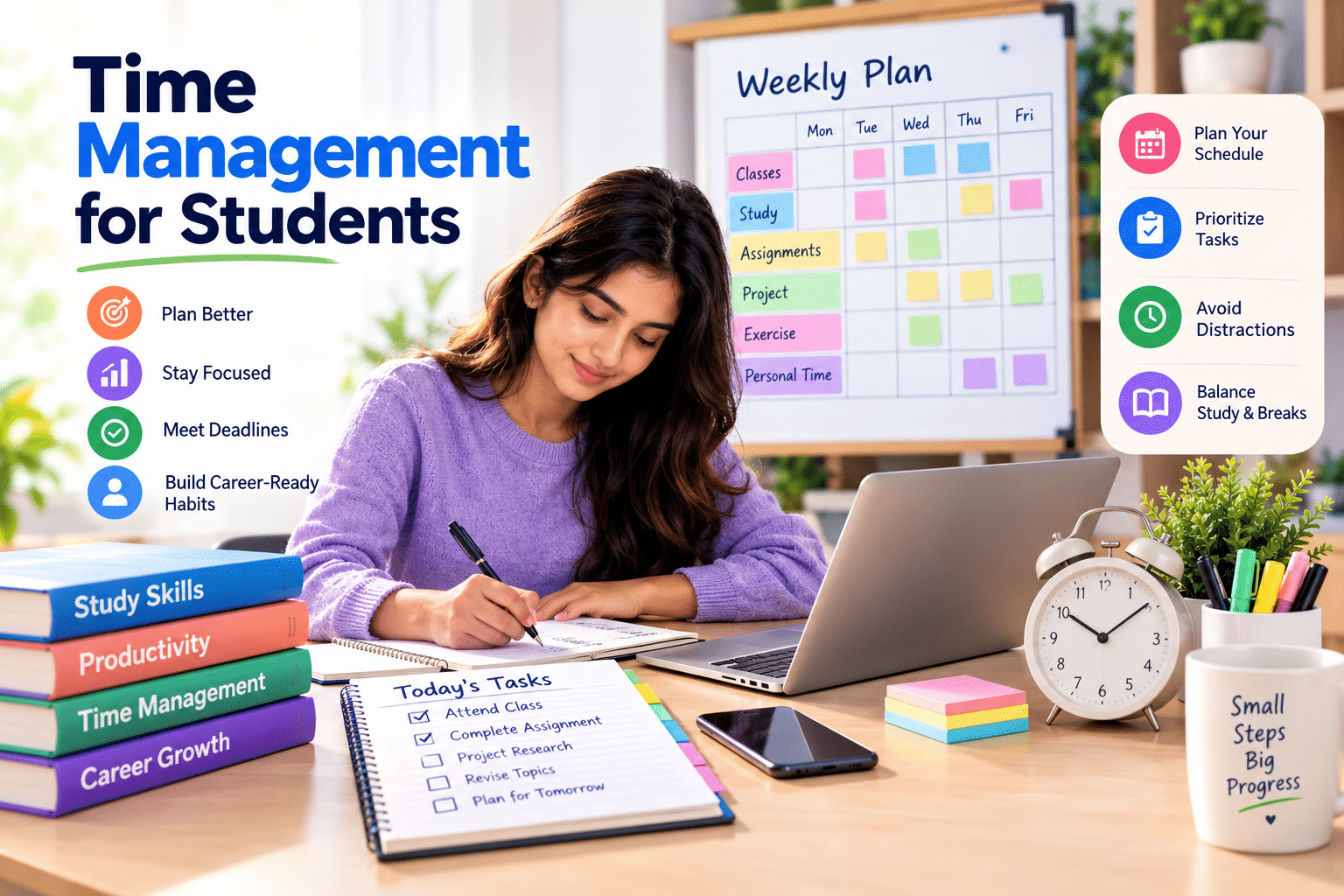
Time Management for Students: Why It Matters
Time management for students is essential for balancing classes, assignments, examinations, and personal responsibilities. By planning tasks and setting priorities, students can meet deadlines, reduce last-minute pressure, and make steady progress toward their academic goals. These habits can also prepare them for professional responsibilities after graduation.
Time management for students means planning and using available time wisely to complete important tasks, meet deadlines, and make consistent progress toward academic and personal goals. It does not mean staying busy every minute. It means understanding priorities and giving enough time to the activities that matter most.
Developing time management skills during college can also prepare students for professional life, where deadlines, teamwork, meetings, and multiple responsibilities are common.
In this article, we will explore why time management matters, practical techniques students can use, and how these habits support future career growth.
1. Why Time Management for Students Matters
Time management helps students organize their responsibilities and avoid unnecessary last-minute pressure. When students understand what needs to be completed and when it is due, they can plan their work more realistically.
For example, a student who has an examination, a group project, and an assignment in the same week can divide the work across several days instead of attempting everything at the last moment.
This approach creates more opportunities to review lessons, improve assignments, and ask questions when something is unclear.
Time management also encourages consistency. Small amounts of focused work completed regularly can be more effective than depending entirely on long study sessions before deadlines.
By developing these habits, students can improve their organization, become more reliable, and prepare for responsibilities beyond college.
2. What Is Time Management?
Time management is the process of planning, organizing, and prioritizing activities so that available time is used effectively.
It involves identifying important tasks, estimating how long they may take, setting deadlines, and reviewing progress. Effective time management also includes making adjustments when plans change.
For students, this may involve creating a weekly study schedule, reserving time for assignments, planning project milestones, and setting aside breaks.
For example, instead of writing an entire assignment on the day before submission, a student could spend one day researching, another preparing an outline, and a third writing and reviewing the work.
A useful schedule should be realistic and flexible. Students should allow extra time for difficult tasks and unexpected responsibilities rather than filling every hour with planned activities.
The goal is to make progress without creating an unnecessarily stressful routine.
3. Why Students Struggle to Manage Their Time
Students may struggle with time management for several reasons. They may underestimate how long assignments take, delay difficult tasks, or find it challenging to balance academic responsibilities with personal activities.
Digital distractions can also interrupt concentration. Frequent notifications, social media, and unrelated browsing may reduce the amount of time available for focused work.
Another challenge is trying to complete too many tasks at once. When students do not distinguish between urgent and important responsibilities, they may spend time on smaller activities while delaying work that requires greater attention.
Some students also create schedules that are too ambitious. A plan that leaves no time for breaks, travel, or unexpected tasks can quickly become difficult to maintain.
The first step toward improvement is identifying which habits cause the most difficulty. Students can then choose practical changes, such as setting clearer priorities, limiting distractions, or dividing large assignments into smaller tasks.
4. How Poor Time Management Affects Academic Performance
Poor time management can affect the quality of academic work. Students who delay assignments may have less time to research, organize ideas, review answers, or correct mistakes.
For example, completing a project in a hurry may lead to incomplete explanations, avoidable errors, or missed instructions.
Last-minute preparation can also make it harder to identify topics that require additional practice. Students may focus on finishing rather than developing a strong understanding of the material.
Poor planning can affect group projects as well. When one student delays their contribution, other team members may struggle to complete their responsibilities on time.
Effective time management helps students distribute their workload, prepare earlier, and review their work before submission. It cannot guarantee better grades, but it can create better conditions for focused learning and consistent performance.
5. Practical Time Management Techniques for Students
Students do not need complicated systems to manage their time. A few simple techniques can help them organize their daily activities.
Create a Daily To-Do List
At the beginning of the day, write down the tasks that need attention. Keep the list manageable and identify the most important activities.
For example, a student might prioritize preparing for an examination, completing a project section, and reviewing class notes.
Use a Weekly Schedule
A weekly schedule helps students see how classes, assignments, study sessions, and personal responsibilities fit together.
Review upcoming deadlines at the beginning of each week and reserve time for tasks that require additional effort.
Break Large Tasks Into Smaller Steps
Large assignments can feel overwhelming when treated as one activity. Divide them into smaller steps, such as research, planning, drafting, editing, and final submission.
Completing each step makes progress easier to track.
Try Focused Study Sessions
Choose a specific task, work on it without unnecessary interruptions, and take a short break afterward.
Some students find it helpful to work for 25 minutes and then take a 5-minute break. Others prefer longer sessions. Choose a pattern that supports your concentration.
Review Your Progress
At the end of the day, check which tasks are complete and which need more time. Move unfinished tasks into the next day’s plan when necessary.
Regular reviews help students recognize whether their schedules are realistic.
6. How to Prioritize Important Tasks
Not every task has the same level of importance or urgency. Learning to prioritize helps students decide where to focus their time first.
A simple method is to divide tasks into four groups:
- Urgent and important: Tasks with close deadlines or serious consequences if delayed.
- Important but not urgent: Long-term activities such as exam preparation, skill development, and project planning.
- Urgent but less important: Smaller requests that need attention but may not contribute significantly to long-term goals.
- Neither urgent nor important: Activities that can often be postponed or reduced.
For example, preparing for an examination scheduled tomorrow may take priority over organizing notes for a test several weeks away.
However, students should not ignore long-term tasks simply because they have no immediate deadline. Regular study and early project preparation can prevent important work from becoming urgent later.
Reviewing priorities every day helps students use their time more thoughtfully.
7. How to Avoid Procrastination and Distractions
Procrastination occurs when people delay tasks even when they know the work needs to be completed. Students may postpone difficult assignments because they feel uncertain, overwhelmed, or uninterested.
One useful strategy is to begin with a small action. Instead of planning to finish an entire project immediately, start by reading the instructions or writing the first few points.
Making the first step manageable can reduce the difficulty of getting started.
Students can also reduce distractions by keeping their phones away during focused work, turning off unnecessary notifications, and choosing a suitable study environment.
Another helpful approach is setting a clear goal for each study session. For example, decide to complete five practice questions rather than simply planning to study mathematics.
Students should also recognize that breaks are useful. Resting briefly after focused work can help maintain concentration over longer periods.
The goal is not to eliminate every distraction but to create routines that make productive work easier to begin and continue.
8. How Time Management Prepares Students for the Workplace
Time management is useful beyond academic life because many professional roles involve deadlines, meetings, project milestones, and multiple responsibilities.
Employees often need to plan tasks, communicate progress, coordinate with colleagues, and adjust when priorities change.
Students who practise these habits during college can become more comfortable organizing work and meeting commitments.
For example, completing a group project on schedule requires students to divide responsibilities, agree on deadlines, review progress, and communicate when problems arise.
These experiences help develop reliability and accountability, which are valuable in professional environments.
Time management does not mean accepting every task or working continuously. It also involves recognizing limitations, communicating realistic timelines, and asking for clarification when priorities conflict.
Developing these habits before graduation can help students transition more confidently into internships and entry-level roles.
9. Common Time Management Mistakes to Avoid
Students can improve their routines by recognizing common mistakes.
Creating Unrealistic Schedules
Planning too many activities into a single day can lead to frustration. Estimate task durations realistically and leave some flexibility.
Multitasking Too Often
Switching repeatedly between assignments, messages, and social media can interrupt concentration. Complete one important task at a time whenever possible.
Ignoring Breaks
Studying continuously without rest may make it difficult to maintain focus. Include reasonable breaks in your schedule.
Delaying Difficult Tasks
Putting off challenging work can make deadlines more stressful. Start early and divide the task into smaller steps.
Focusing Only on Urgent Work
Tasks with distant deadlines may seem less important, but postponing them can create unnecessary pressure later. Schedule time for long-term goals as well.
Never Reviewing the Plan
A schedule should change when circumstances change. Review progress regularly and adjust priorities when needed.
Avoiding these mistakes can make time management more practical and sustainable.
10. How to Build a Balanced Daily Routine
A balanced routine gives students time for learning, responsibilities, rest, and personal interests.
Start by identifying fixed commitments such as classes, travel, meals, and other essential activities. Then schedule focused study sessions around those commitments.
Place demanding tasks during the periods when you usually concentrate best. Use shorter periods for reviewing notes, organizing materials, or completing smaller tasks.
It is also important to protect time for sleep, physical activity, meals, and relaxation. A routine that depends on constant exhaustion is unlikely to remain effective over time.
For example, a student might review class notes after returning home, work on a project in the early evening, and prepare a short list of priorities for the next day.
The best routine is not necessarily the busiest one. It is the one that supports consistent progress while remaining realistic for your circumstances.
11. Frequently Asked Questions
Why is time management important for students?
Time management helps students organize responsibilities, meet deadlines, reduce last-minute pressure, and make time for regular learning and personal activities.
What is the best time management technique for students?
There is no single best technique for everyone. To-do lists, weekly schedules, task prioritization, and focused study sessions are useful starting points. Students should choose methods they can maintain consistently.
How can students stop procrastinating?
Students can begin with small steps, divide large tasks into manageable parts, set clear goals, and reduce distractions. Starting early can make difficult work feel less overwhelming.
How can students manage multiple assignments?
List all deadlines, estimate the time each assignment requires, prioritize urgent and important work, and divide larger assignments into smaller steps. Review progress regularly.
Does time management help with career preparation?
Yes. Planning tasks, meeting deadlines, communicating progress, and managing competing responsibilities are useful habits in many workplaces.
Should students schedule every minute of the day?
No. A useful schedule should leave room for breaks, rest, unexpected tasks, and changes in priorities. Flexibility helps students maintain their routines over time.
Final Thoughts
Time management for students is about making thoughtful decisions about how to use available time. By setting priorities, planning tasks, reducing distractions, and reviewing progress, students can develop habits that support learning and personal development.
These habits also help prepare students for professional responsibilities, where completing work reliably and communicating realistic timelines are important.
Start with one simple change: create a short list of your most important tasks for tomorrow and assign a realistic time to each one. Review what worked at the end of the day and adjust your plan.
Consistent small improvements can help students manage their responsibilities more confidently and prepare for future career opportunities.
Outbound Links
Students can explore Mind Tools for additional guidance on planning tasks, setting priorities, and improving productivity.