
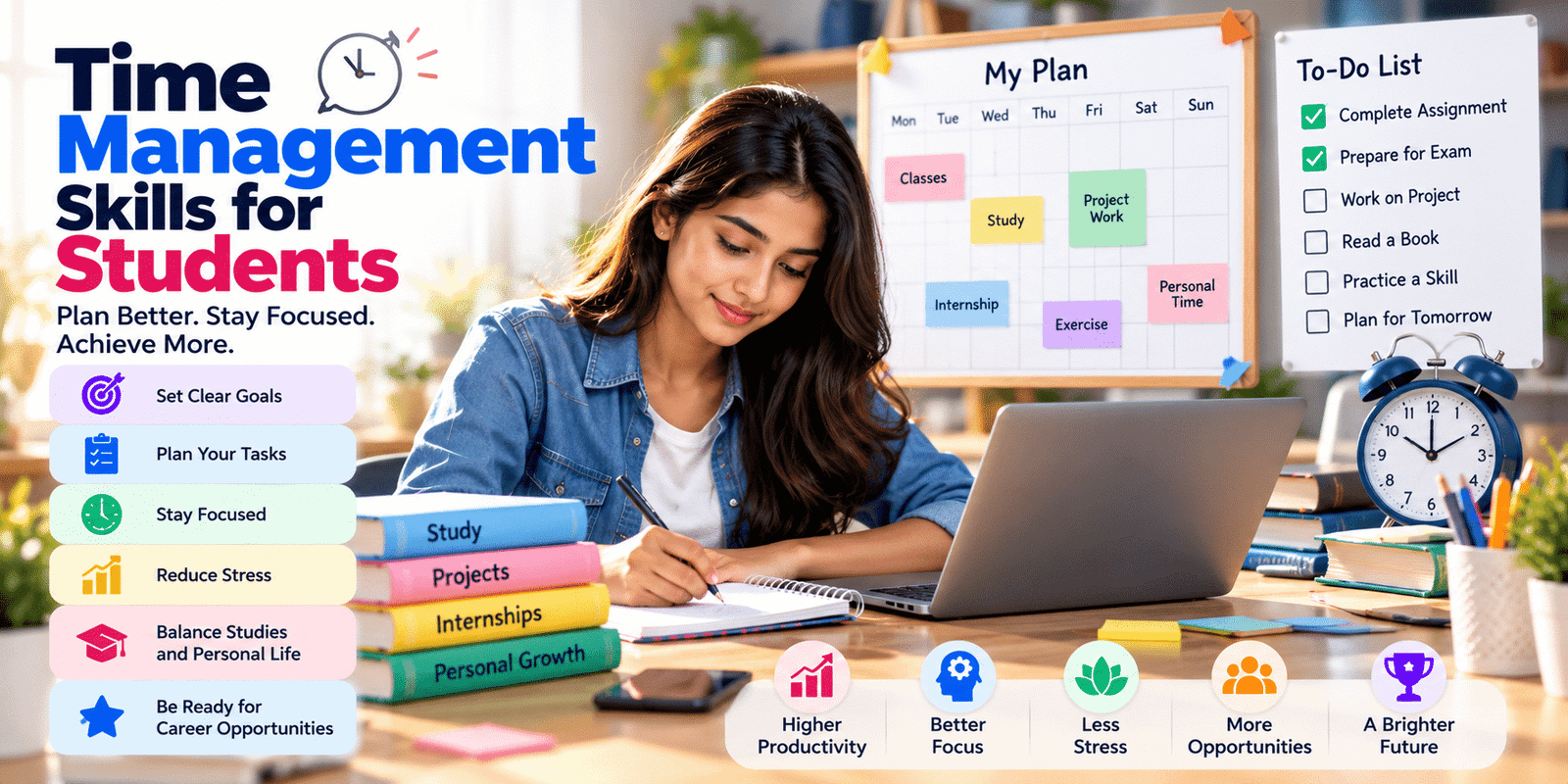
Time Management Skills for Students: Why They Matter
Time management skills for students are essential for academic success, personal development, and career growth. Students often need to balance classes, assignments, examinations, projects, internships, and personal responsibilities. Without proper planning, these activities can become overwhelming and affect productivity.
Time management skills for students help learners organize their daily activities, prioritize important tasks, meet deadlines, and make better use of their time. These skills also prepare students for professional environments where completing work efficiently and managing multiple responsibilities are important.
In this article, we will explore why time management matters, common challenges students face, practical techniques to manage time effectively, and ways to develop productive habits before starting a career.
1. Why Time Management Skills for Students Matter
Students have many responsibilities throughout their academic journey. They need to attend classes, complete assignments, prepare for examinations, develop practical skills, and participate in extracurricular activities.
Without a clear plan, students may spend too much time on less important activities and struggle to finish essential tasks. Effective time management helps them organize their schedules and focus on their priorities.
Developing time management skills for students can improve productivity, reduce unnecessary stress, and create more opportunities for learning. It also helps students build discipline and become more independent in managing their responsibilities.
2. What Is Time Management?
Time management is the process of planning and organizing how time is spent on different activities. It involves deciding which tasks need attention first, estimating how long they will take, and allocating enough time to complete them.
For students, time management may include preparing a study timetable, setting assignment deadlines, planning project work, and scheduling time for rest.
Good time management does not mean staying busy throughout the day. Instead, it means using available time wisely to achieve meaningful goals.
For example, a student who divides a large assignment into smaller tasks can complete it gradually instead of rushing to finish everything the night before submission.
3. Why Students Struggle to Manage Their Time
Many students understand the importance of time management but find it difficult to practice consistently. Several factors can affect their ability to organize their schedules.
Procrastination: Delaying important tasks can create unnecessary pressure when deadlines approach.
Digital distractions: Social media, online videos, gaming, and frequent notifications can interrupt concentration.
Poor planning: Students may underestimate how long assignments, examinations, or projects will take.
Unclear priorities: Trying to complete every task at once can make it difficult to identify what matters most.
Overcommitment: Participating in too many activities without considering available time can lead to exhaustion.
Recognizing these challenges is the first step toward improving time management. Students can then identify which habits waste the most time and make practical changes to their routines.
4. How Poor Time Management Affects Academic Performance
Poor time management can affect both the quality of learning and academic performance. Students who delay assignments may have less time to research, revise, and correct mistakes.
Last-minute studying can also make it harder to understand complex topics or remember important information. When students repeatedly miss deadlines, they may experience increased stress and reduced confidence.
In contrast, planning study sessions in advance allows students to review information regularly and identify areas that need additional attention.
A structured schedule also makes it easier to balance academic responsibilities with skill development, practical projects, and personal activities.
5. How Time Management Prepares Students for the Workplace
Time management is useful beyond academic life. In professional environments, employees are expected to complete assignments, attend meetings, communicate with teammates, and meet deadlines.
Students who learn to organize their time before graduation may find it easier to adjust to these expectations.
For example, an intern who plans daily tasks, tracks project progress, and communicates potential delays can contribute more effectively to a team.
Time management also supports accountability. When students estimate the time required for a task and make realistic commitments, they learn to take responsibility for their work.
You can also explore our guide on skills recruiters look for in freshers to understand other qualities that support career readiness.
6. Practical Time Management Techniques for Students
Students do not need complicated systems to manage their time. Simple techniques can make daily planning easier and more consistent.
Create a Daily To-Do List
Write down the tasks that need to be completed each day. Include assignments, study sessions, project activities, and important personal responsibilities.
Keep the list realistic. A manageable list is more useful than a long list that cannot be completed within the available time.
Prioritize Important Tasks
Not every task has the same level of urgency or importance. Identify activities that have approaching deadlines or contribute significantly to your learning goals.
Complete high-priority tasks before spending too much time on less important activities.
Break Large Tasks Into Smaller Steps
Large projects can feel difficult when viewed as a single activity. Divide them into smaller steps, such as research, planning, drafting, reviewing, and final submission.
This approach makes progress easier to track and helps prevent last-minute pressure.
Use a Calendar or Planner
A calendar can help students track examination dates, assignment deadlines, presentations, and project milestones.
Digital calendars and paper planners can both work well. The most important factor is choosing a system that is easy to maintain.
Review Your Progress
At the end of each day or week, review completed tasks and identify anything that needs more attention.
Regular reviews help students recognize unrealistic plans and make adjustments before small delays become larger problems.
7. How the Pomodoro Technique Can Improve Focus
The Pomodoro Technique is a time-management method that divides work into focused sessions followed by short breaks.
Students can begin by selecting one task, working on it for a set period, and taking a short break before starting the next session. A common starting point is 25 minutes of focused work followed by a five-minute break.
This method can help students reduce distractions and approach difficult tasks in manageable intervals.
For example, a student preparing for an examination might use one session to revise a topic, another to solve practice questions, and another to review mistakes.
The technique can be adjusted based on the student’s concentration level and the type of task. The goal is to create a sustainable routine rather than follow a rigid schedule.
8. How to Balance Studies, Projects, Internships, and Personal Life
Students often need to balance academic responsibilities with internships, extracurricular activities, family commitments, and personal interests.
Trying to give every activity equal time may not always be practical. Instead, students should identify their current priorities and allocate time according to their goals and deadlines.
For example, during examination periods, students may need to dedicate more time to revision. During an internship, they may need to organize their academic work around professional responsibilities.
It is also important to include breaks, sleep, exercise, and personal time in a schedule. A routine that leaves no time for rest can become difficult to maintain.
Effective time management is about creating a balanced routine that supports consistent progress without unnecessary exhaustion.
9. Common Time Management Mistakes to Avoid
Students can improve their productivity by recognizing and avoiding common mistakes.
Creating unrealistic schedules: Planning too many tasks for one day can lead to frustration. Allow enough time for each activity and unexpected delays.
Multitasking constantly: Switching between assignments, messages, and social media can make it harder to concentrate. Focus on one important task at a time whenever possible.
Ignoring breaks: Working continuously without rest can reduce concentration. Include short breaks in longer study sessions.
Waiting for motivation: Progress becomes more consistent when students follow a simple routine instead of waiting until they feel motivated.
Failing to review plans: A schedule should be flexible. Review it regularly and make changes when priorities or deadlines shift.
Ignoring distractions: Identify the activities that interrupt your work most often and reduce them during focused study periods.
Avoiding these mistakes can make time management more practical and sustainable.
10. How Students Can Build a Productive Daily Routine
Building a productive routine starts with understanding how time is currently being used.
Students can begin by tracking their activities for a few days. This can reveal how much time is spent studying, traveling, using digital devices, and completing personal responsibilities.
Next, choose a few habits to improve rather than changing everything at once.
For example, students can prepare a to-do list each morning, study at a consistent time, keep their phones away during focused sessions, and review their progress in the evening.
It is also useful to set specific goals. Instead of writing “study programming,” a student could set a goal to complete three practice problems or revise one concept.
Small, consistent improvements are often easier to maintain than sudden changes to an entire routine.
11. The Role of Continuous Learning in Time Management
Time management becomes more valuable when students use their available time to develop useful knowledge and practical skills.
Allocating regular time for reading, project work, technical practice, and career preparation can help students make steady progress beyond classroom learning.
However, students should avoid filling every free moment with another activity. Effective learning requires concentration, practice, review, and sufficient rest.
A balanced approach helps students build habits that support long-term development. Read our article on continuous learning and career growth to understand why regularly improving your knowledge matters throughout your career.
12. Frequently Asked Questions
What are time management skills for students?
Time management skills for students are the abilities needed to plan activities, prioritize tasks, meet deadlines, avoid unnecessary distractions, and use available time effectively.
Why is time management important for students?
Time management helps students organize their workload, improve study habits, reduce last-minute pressure, and balance academic responsibilities with personal activities.
What is the best time management technique for students?
There is no single technique that works for everyone. Daily to-do lists, calendars, task prioritization, and the Pomodoro Technique are useful starting points. Students should choose a method that fits their schedules and learning preferences.
How can students stop procrastinating?
Students can reduce procrastination by breaking large tasks into smaller steps, setting realistic deadlines, removing distractions, and starting with a short period of focused work.
How does time management help students get jobs?
Time management helps students develop reliability, accountability, planning, and deadline-management skills. These habits can support a smoother transition into internships and professional roles.
How can students balance studying and personal life?
Students can plan their main priorities, schedule study sessions in advance, limit unnecessary distractions, and include enough time for rest and personal responsibilities.
Final Thoughts
Time management is not about filling every hour with work. It is about making thoughtful decisions about how time is used and ensuring that important responsibilities receive the attention they need.
By developing time management skills for students, learners can improve their study habits, complete projects more effectively, reduce avoidable stress, and prepare for professional expectations.
Start with a simple daily plan, focus on the most important tasks, and review your progress regularly. Over time, these small habits can help you become more organized, productive, and prepared for future opportunities.
Outbound links
Students can also explore the National Careers Service for career planning guidance and resources to support their professional development.
National Careers Service ane text ki ee URL hyperlink ga add cheyyi: