
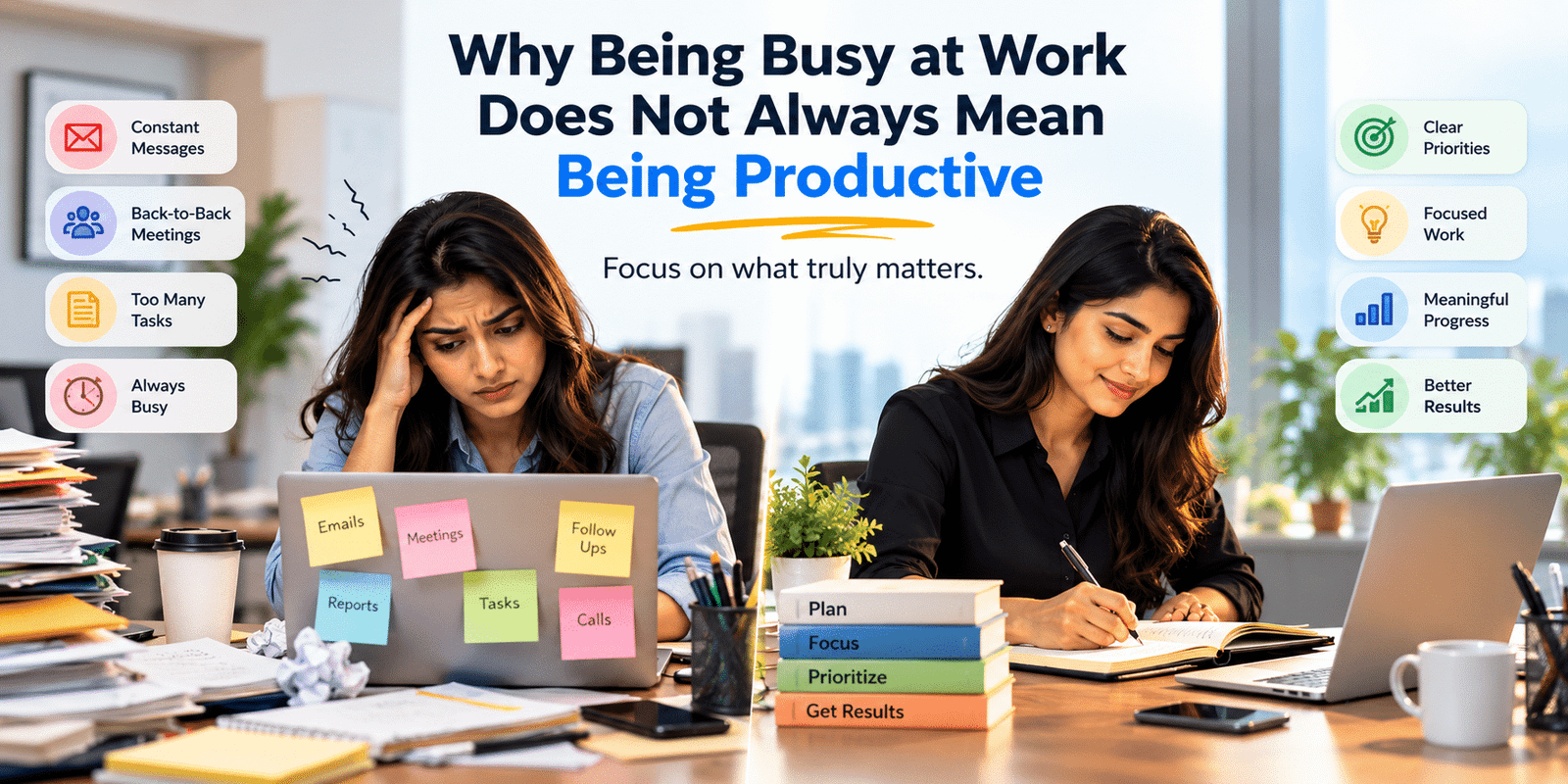
Being busy at work does not always mean being productive. Professionals can spend hours answering messages, attending meetings, switching between tasks, and completing small activities without making meaningful progress. Real productivity is about focusing on important work, managing priorities, solving problems, and creating useful results.
What Does Being Productive at Work Actually Mean?
Being productive at work means using your time and energy to complete work that contributes to meaningful outcomes. It is not simply about finishing the highest number of tasks.
Busy Work vs Meaningful Work productive at work
Not every task has the same value. Some activities keep professionals occupied, while others directly contribute to important goals. Understanding the difference can help people spend more time on work that actually matters.
Why Multitasking Can Reduce Productivity
Trying to handle several tasks at the same time can make it harder to concentrate. Constantly moving between tasks may reduce focus and increase the chances of mistakes.
The Problem With Constant Notifications
Emails, chat messages, and notifications can interrupt focused work throughout the day. Responding to every notification immediately can make it difficult to complete tasks that require deeper concentration.
Why Meetings Can Make People Feel Busy
Meetings can be useful for collaboration and decision-making. However, meetings without a clear purpose, agenda, or outcome can consume valuable working time without creating meaningful progress.
How Task Switching Affects Your Focus
Moving from one task to another repeatedly requires mental effort. As a result, professionals may take longer to complete important work and may need additional time to regain concentration.
Why Finishing More Tasks Does Not Always Mean Better Results
Completing ten small tasks may feel productive, but one important task can sometimes create more value than all ten combined. Productivity should therefore be measured by results, not just activity.
How to Identify High-Value Work productive at work
Professionals can identify high-value work by asking whether a task contributes directly to an important goal, solves a meaningful problem, improves a process, or supports customers and team members.
Why Priorities Matter More Than Long To-Do Lists productive at work
A long task list can create the feeling of progress while making it difficult to identify what deserves attention first. Clear priorities help professionals focus on the work that matters most.
How to Stay Productive at Work and Protect Your Focus
Professionals can protect their focus by reducing unnecessary interruptions, setting dedicated work periods, limiting unnecessary meetings, and completing important tasks before moving to lower-priority activities.
When Working Longer Hours Does Not Improve Results
Working longer does not automatically produce better results. Without clear priorities and sufficient focus, additional hours can simply create more activity rather than meaningful progress.
How AI Can Help Professionals Stay Productive at Work
AI can help professionals with tasks such as research, drafting, summarizing information, analysing data, and automating repetitive work. However, professionals still need to decide where AI is useful and review its output carefully.
Why Productivity Also Requires Knowing What to Stop Doing
Improving productivity is not only about adding better habits. Sometimes professionals need to stop unnecessary meetings, repetitive processes, excessive multitasking, or activities that provide little value.
A Simple Framework for Becoming More Productive at Work
Professionals can use a simple approach: identify the most important task, set a clear outcome, protect focused time, complete the work, review the result, and then move to the next priority.
Common Productivity Mistakes Professionals Make
Some common mistakes include multitasking too often, checking notifications constantly, attending unnecessary meetings, maintaining unrealistic task lists, and confusing activity with actual results.
What Professionals Can Start Doing Today productive at work
Start by identifying one important task that will create meaningful progress. Complete it with focused attention before moving to less important activities. Over time, this simple habit can improve how you manage your working day.
Final Thoughts: Work on What Matters
Being busy can make a person feel productive, but meaningful productivity comes from creating useful results. Professionals who understand their priorities, protect their focus, use technology wisely, and spend their time on valuable work can achieve more without simply working longer hours.
Outbound Links
The World Economic Forum highlights how technology is changing workplace skills and the way professionals create value. Read the Future of Jobs Report to learn more.
Internal Links
Professionals can also improve their working habits by developing continuous learning practices that support long-term career growth.
Strong problem-solving skills can also help professionals identify important challenges and focus on meaningful solutions