
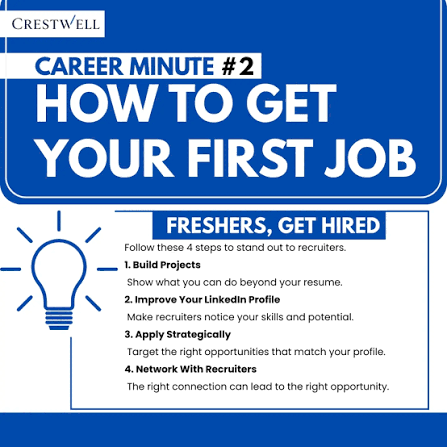
Graduates are increasingly finding that freshers are asked for experience even when applying for entry-level jobs. Some job descriptions mention two or three years of experience, creating a difficult situation for students entering the workforce for the first time. Why are companies asking for experience, and what can freshers do to build practical experience before getting their first full-time job?
So, why does this happen? What are companies actually looking for, and how can freshers compete when they don’t have years of professional experience?
Why Do Entry-Level Jobs Ask for Experience?
Companies often use experience requirements to find candidates who can contribute to a role with less initial training. However, “experience” does not always have to mean several years in a full-time job.
Employers may also value evidence of practical experience through internships, projects, freelance work, open-source contributions, hackathons, or other hands-on activities.
What Companies Want From Freshers
When companies hire fresh graduates, they may look beyond academic qualifications. They can be interested in whether a candidate can:
- Apply technical knowledge to practical problems
- Work with real tools and technologies
- Communicate ideas clearly
- Solve problems independently
- Work effectively with a team
- Learn unfamiliar technologies
- Complete projects from beginning to end
This is why simply listing skills on a resume may not always be enough.
The Experience Gap for Freshers
Freshers can face a difficult cycle: companies ask for experience, but candidates need a job to gain professional experience.
The practical way to address this gap is to create opportunities to demonstrate your abilities before getting your first full-time role.
Internships, personal projects, freelance assignments, college projects, open-source contributions, and volunteering can all help create evidence of practical work.
Why Projects Matter
A well-built project can demonstrate more than a list of technologies on a resume.
For example, instead of writing:
“I know Python.”
A candidate could showcase a Python project, explain the problem it solves, describe the technologies used, and demonstrate the final result.
This gives recruiters something concrete to evaluate.
Certificates Are Useful, But They Are Not Everything
Certifications can demonstrate that you have studied a particular subject. However, employers may also want to know whether you can apply that knowledge.
For example, completing a cybersecurity course is different from actually building a security project, analyzing a sample system, documenting vulnerabilities, or creating a practical security solution.
The combination of learning + practical application + proof of work can create a stronger profile.
How Freshers Can Build Experience Without a Job
Freshers can start building practical experience even before their first full-time position.
1. Build Real Projects
Create projects that solve specific problems instead of building projects only to add another technology to your resume.
2. Look for Internships
Internships can provide exposure to professional workflows, teamwork, deadlines, and real-world tools.
3. Create a Portfolio
A portfolio can bring your projects, skills, achievements, and practical work together in one place.
4. Contribute to Open Source
Open-source contributions can provide experience working with existing codebases, documentation, collaboration, and development workflows.
5. Document Your Work
Explain what you built, why you built it, what challenges you faced, and how you solved them. Documentation can make your practical skills easier for recruiters to understand.
What Should Freshers Put on Their Resume?
If you don’t have years of professional experience, your resume can highlight other forms of relevant experience.
Consider including:
- Internships
- Academic and personal projects
- Freelance work
- Open-source contributions
- Hackathons
- Technical skills
- Portfolio links
- Relevant certifications
- Achievements
- Practical coursework
The goal is to make your resume demonstrate capability, rather than simply listing qualifications.
Don’t Focus Only on the Number of Years
Seeing “2–3 years of experience required” can discourage freshers, but job descriptions are not always a perfect representation of every candidate a company may consider.
The more useful question is:
“How can I demonstrate that I can do this job?”
If you can show relevant projects, practical skills, internships, and evidence of problem-solving, you give employers more information to evaluate than a resume containing only a degree and certificates.
Final Thoughts
The experience requirement in entry-level jobs creates a genuine challenge for fresh graduates. But professional experience is not the only way to demonstrate your ability.
Freshers can start building proof of work through projects, internships, open-source contributions, freelance opportunities, and practical learning.
Your degree shows what you studied. Your projects and practical work can show what you can actually do.
For students entering today’s competitive job market, building skills is important—but showing those skills is equally important.
Internal Links
Why Do Students Have Certificates but Still Struggle to Get Jobs?
Why Students Need Proof of Work, Not Just Certificates
How to Build a Portfolio That Gets You Shortlisted Without Work Experience
Internships for College Students in 2026
Technical Interview Preparation: The Complete Guide
Outbound Links
U.S. Bureau of Labor Statistics — employment and labor-market information
U.S. Department of Labor — career and employment resources
National Association of Colleges and Employers — college-to-career and employer research