
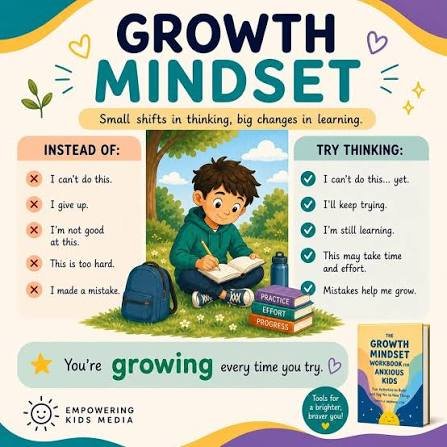
Many students give up learning skills after a few weeks, even when they start with strong motivation. They may begin learning coding, AI, communication, design, or another useful skill with excitement. However, when progress becomes slow or the topic gets difficult, staying motivated can become harder.
Why do students give up learning skills after a few weeks?
The problem is not always laziness. In many cases, students lose momentum because they choose unrealistic goals, expect quick results, consume too much content, or don’t have a clear reason for learning the skill.
Understanding these problems can make it easier to build a learning routine that lasts.
Why Do Students Give Up Learning Skills?
Students can start learning with strong motivation but struggle to maintain that motivation over time.
At the beginning, everything feels new. A student may watch videos about programming, cybersecurity, artificial intelligence, design, communication, or another skill and feel excited about the possibilities.
After several days, however, learning becomes more difficult.
The student may encounter confusing concepts, difficult assignments, errors in code, or topics that require repeated practice. The initial excitement disappears, and learning starts to feel like work.
This is where many students stop.
Students Often Expect Quick Results
One common reason students give up learning skills is the expectation of fast progress.
A student might think:
- “I will learn Python in one month.”
- “I can become good at AI after completing one course.”
- “I will get a job after earning this certificate.”
- “I should understand everything after watching the tutorials.”
Real skill development rarely works this way.
Learning usually involves understanding concepts, making mistakes, practicing, forgetting, reviewing, and applying knowledge repeatedly.
When progress feels slower than expected, students may assume they are not capable of learning the skill.
In reality, slow progress is often a normal part of learning.
Too Many Students Start With Too Much
Another problem is trying to learn several skills at the same time.
A student may decide to learn:
- Python
- Java
- Artificial intelligence
- Cloud computing
- Cybersecurity
- Data analytics
- Web development
all within the same semester.
The result can be shallow learning across many areas instead of meaningful progress in one.
Students don’t necessarily need to learn everything at once. Choosing one primary skill and developing a basic level of competence before moving to another area can make learning more manageable.
Watching Tutorials Is Not the Same as Learning
Students can spend hours watching courses and tutorials without actually practicing what they see.
This creates a feeling of progress.
A student watches someone build a website and thinks, “I understand this.”
But when asked to build something independently, they may not know where to start.
This is the difference between recognizing information and being able to use it.
Active practice is important because it forces students to retrieve information, solve problems, make decisions, and deal with mistakes.
Difficult Topics Can Destroy Motivation
Every skill has difficult stages.
In programming, it might be debugging.
mathematics, it could be solving unfamiliar problems.
cybersecurity, it might be understanding networking or security concepts.
communication, it could be speaking confidently in front of others.
When students reach these difficult areas, they may think they have chosen the wrong skill.
But difficulty does not necessarily mean failure.
Sometimes difficulty is evidence that the student has moved beyond the easiest introductory material.
Students Often Learn Without a Clear Goal
It is easier to continue learning when there is a clear reason behind it.
Compare these two goals:
“I want to learn Python.”
and
“I want to build a simple data-analysis project using Python before the end of this semester.”
The second goal gives the student something concrete to work toward.
A clear objective can make it easier to decide what to learn and what to ignore.
Trying to Learn Perfectly Can Become a Problem
Some students don’t want to move forward until they completely understand every topic.
This can create unnecessary delays.
For example, a student learning web development might spend weeks trying to understand every feature of JavaScript before building a small project.
Practical learning often works better when students learn enough to build something, discover what they don’t know, and then return to those concepts.
You don’t need to know everything before starting.
Students Can Lose Motivation When Learning Becomes Repetitive
The early stages of learning can feel exciting because every new concept feels interesting.
Eventually, progress requires repetition.
You may need to solve similar problems, write similar code, revise vocabulary, practice communication, or repeat the same technical process.
This part is less exciting but extremely important.
Skill development is often less about constantly discovering something new and more about becoming better at something through repeated practice.
Social Media Can Make Progress Look Faster Than It Really Is
Students also see other people sharing their achievements online.
Someone posts:
“Learned AI in 30 days.”
Another person posts:
“Built my first startup at 20.”
Someone else posts:
“Got a six-figure job after completing one course.”
These posts usually show the result, not the complete process behind it.
Comparing your ordinary learning days with someone else’s highlight reel can make your own progress feel slow.
Learning should be measured against your previous ability, not someone else’s social-media post.
How Can Students Continue Learning Skills?
Students don’t necessarily need more motivation. They often need a learning system that is easier to maintain.
Set Smaller Learning Goals
Instead of saying:
“I will master cybersecurity.”
try:
“I will understand basic network security this week.”
Smaller goals make progress easier to see.
Build Something
Apply what you learn.
If you’re learning programming, build a small application.
you’re learning design, create a few designs.
and you’re learning data analysis, work with a dataset.
If you’re learning communication, practice explaining a topic aloud.
Practical work turns passive learning into active learning.
Track Progress
Keep a simple record of what you learn.
You can track:
- Topics completed
- Problems solved
- Projects built
- Mistakes discovered
- Concepts that need revision
Seeing progress over several weeks can help maintain consistency.
Accept Bad First Attempts
Your first project may be messy.
and Your first presentation may be uncomfortable.
Your first program may contain many errors.
That is normal.
The goal of the first attempt is not perfection. It is to create a starting point that can be improved.
Create a Sustainable Routine
A learning schedule should fit your actual life.
Studying for ten hours on one weekend and doing nothing for the next three weeks is usually harder to maintain than a realistic routine that you can repeat consistently.
Even a small amount of focused practice can become valuable when maintained over time.
What If a Student Loses Motivation?
Losing motivation does not automatically mean that the skill is wrong for you.
Before quitting, ask:
- Why did I start learning this?
- Am I trying to learn too much at once?
- Am I practicing enough?
- Am I expecting results too quickly?
- Have I actually built anything?
- Is my learning plan realistic?
- Do I need a short break or a completely different approach?
Sometimes the solution isn’t quitting the skill. It is changing the way you are learning it.
Learning a Skill Is a Long-Term Process
Students often focus on the excitement of starting a new skill but underestimate what happens after the first few weeks.
Real learning includes confusion, mistakes, repetition, slow progress, revision, and practice.
The students who continue are not necessarily motivated every single day. They build routines that allow them to keep going even when motivation is low.
The objective isn’t to learn everything quickly.
It is to keep improving consistently enough that your skills become useful in the real world.
Final Thoughts
Students give up learning skills for many different reasons. Unrealistic expectations, too many goals, passive learning, difficult topics, lack of practice, and comparison with others can all make it harder to continue.
Instead of constantly searching for a new course or a new skill, students can focus on choosing one useful skill, setting a realistic goal, practicing regularly, and building something with what they learn.
Starting is easy.
Continuing when the initial excitement disappears is where real skill development begins.
Internal Links
Active Recall and Spaced Repetition: The Study Techniques That Actually Work
The Science of Forgetting: How to Remember Anything You Study
Why Students Need Proof of Work, Not Just Certificates
How to Build a Portfolio That Gets You Shortlisted Without Work Experience
Why Do Students Have Certificates but Still Struggle to Get Jobs?
Outbound Links
Harvard Learning and Teaching resources
American Psychological Association
University of California San Diego – Learning resources