
What is Cloud Computing?
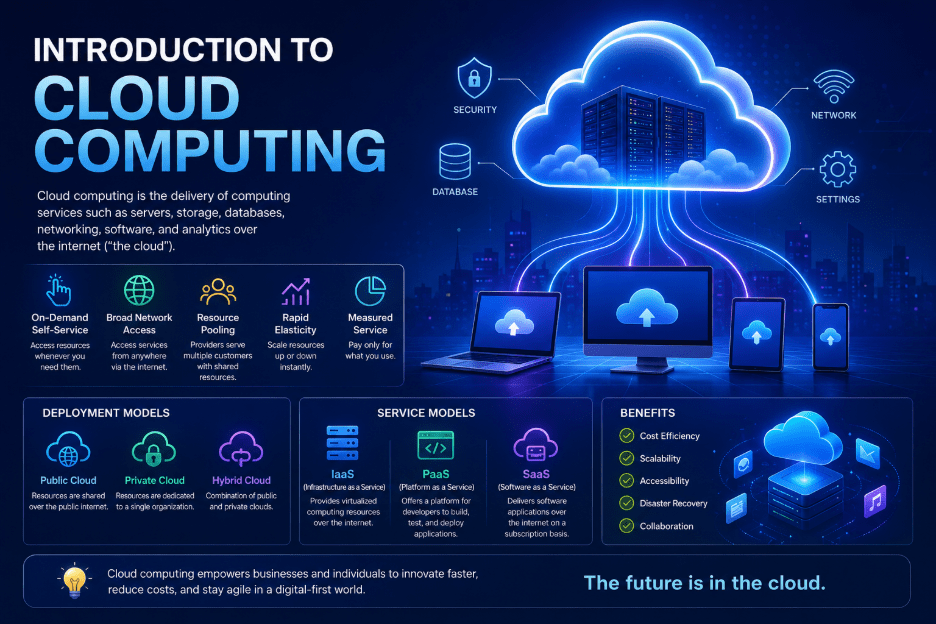
Cloud computing is the delivery of computing services—such as servers, storage, databases, networking, software, and analytics—over the internet (the “cloud”). Instead of owning and maintaining physical data centers or servers, businesses and individuals can access these resources on demand from cloud service providers.
In simple terms, cloud computing allows you to store and access data and applications online rather than on your computer’s hard drive.
Why Cloud Computing Matters
Cloud computing has transformed how organizations operate by offering flexibility, scalability, and cost efficiency. It eliminates the need for heavy upfront investments in hardware and infrastructure, making advanced technology accessible to startups and large enterprises alike.
Key Characteristics of Cloud Computing
1. On-Demand Self-Service
Users can access computing resources automatically without human intervention from the service provider.
2. Broad Network Access
Services are available over the internet and can be accessed from various devices like laptops, smartphones, and tablets.
3. Resource Pooling
Cloud providers pool their resources to serve multiple customers using a multi-tenant model.
4. Rapid Elasticity
Resources can be scaled up or down quickly based on demand.
5. Measured Service
Users pay only for what they use, similar to utility services like electricity or water.
Types of Cloud Deployment Models
1. Public Cloud
Services are delivered over the public internet and shared across multiple organizations.
2. Private Cloud
Cloud infrastructure is dedicated to a single organization, offering greater control and security.
3. Hybrid Cloud
A combination of public and private clouds, allowing data and applications to be shared between them.
Cloud Service Models
1. Infrastructure as a Service (IaaS)
Provides virtualized computing resources such as servers and storage.
2. Platform as a Service (PaaS)
Offers a platform for developers to build, test, and deploy applications.
3. Software as a Service (SaaS)
Delivers software applications over the internet on a subscription basis.
Benefits of Cloud Computing
- Cost Efficiency: No need for expensive hardware or maintenance
- Scalability: Easily scale resources based on demand
- Accessibility: Access data and applications from anywhere
- Disaster Recovery: Built-in backup and recovery solutions
- Collaboration: Teams can work together in real time
Challenges of Cloud Computing
- Security Concerns: Data stored online may be vulnerable if not properly secured
- Downtime: Service outages can impact operations
- Internet Dependency: Requires reliable internet connectivity
- Compliance Issues: Must adhere to regulations and data protection laws
Real-World Applications
Cloud computing is widely used in everyday life, including:
- Online storage services like Google Drive
- Streaming platforms like Netflix
- Business tools like CRM and ERP systems
- AI and machine learning applications
Future of Cloud Computing
The future of cloud computing is promising, with trends like serverless computing, edge computing, and AI integration shaping the next generation of digital transformation. As technology evolves, cloud computing will continue to drive innovation and efficiency across industries.
Conclusion
Cloud computing is no longer just an option—it’s a necessity in today’s digital world. By offering scalable, flexible, and cost-effective solutions, it empowers businesses and individuals to innovate faster and work smarter. Understanding the basics of cloud computing is the first step toward leveraging its full potential.
Start your cloud journey today and unlock endless possibilities!