
Procrastination isn’t just about being lazy—it’s often a mix of fear, overwhelm, lack of clarity, or low motivation. The good news? You can train yourself to overcome it with the right techniques and mindset shifts.
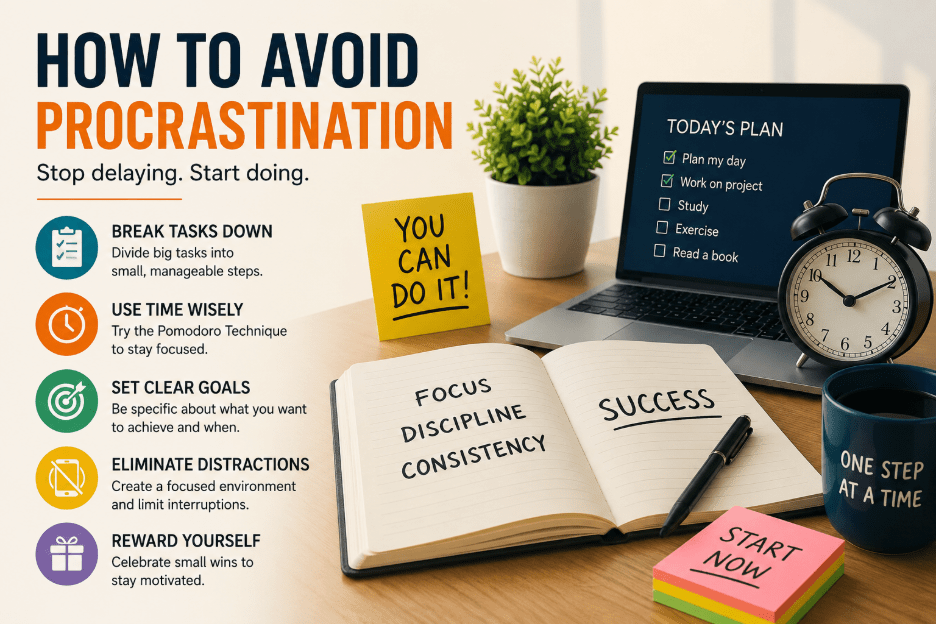
Why Do We Procrastinate?
Before fixing the problem, understand it. Common reasons include:
- Fear of failure – You delay tasks because you’re afraid of doing them poorly
- Perfectionism – Waiting for the “perfect moment” that never comes
- Overwhelm – Tasks feel too big or complicated
- Lack of motivation – No clear reason or reward to act
- Poor time management – No structured plan
1. Break Tasks into Smaller Steps
Big tasks feel intimidating. Divide them into small, manageable actions.
Example:
Instead of “Write a blog,” break it into:
- Choose topic
- Create outline
- Write introduction
- Draft sections
Small wins build momentum.
⏱️ 2. Use the Pomodoro Technique
Work in short, focused intervals:
- 25 minutes of work
- 5-minute break
Repeat 4 times, then take a longer break.
This keeps your brain fresh and reduces burnout.
3. Set Clear and Realistic Goals
Avoid vague goals like “I’ll study later.”
Instead, define:
- What: “Study JavaScript basics”
- When: “7 PM to 8 PM”
- Where: “At my desk”
Clarity eliminates excuses.
4. Remove Distractions
Your environment matters more than motivation.
- Turn off notifications
- Keep your phone away
- Use apps that block social media
- Create a clean workspace
Focus becomes easier when distractions are minimized.
5. Follow the “2-Minute Rule”
If a task takes less than 2 minutes, do it immediately.
If it’s bigger, start with just 2 minutes.
Starting is often the hardest part—once you begin, you’ll likely continue.
6. Reward Yourself
Give your brain a reason to act.
- Finish a task → Watch a short video
- Complete study session → Enjoy a snack
Positive reinforcement builds consistency.
7. Plan Your Day in Advance
At the end of each day, write down your top 3 tasks for tomorrow.
This helps you:
- Start quickly without confusion
- Stay focused on priorities
8. Build Discipline, Not Motivation
Motivation comes and goes. Discipline stays.
- Show up even when you don’t feel like it
- Focus on consistency over perfection
Success is built on habits, not mood.
9. Use Accountability
Tell someone your goals or work with a study partner.
When others are involved, you’re more likely to stay committed.
Final Thoughts
Procrastination isn’t something you eliminate overnight—but you can control it step by step. Start small, stay consistent, and focus on progress—not perfection.
Remember:
Action creates motivation, not the other way around.
Bonus Tip
Next time you feel like delaying something, ask yourself:
“What’s the smallest step I can take right now?”
Then just start.