
Introduction
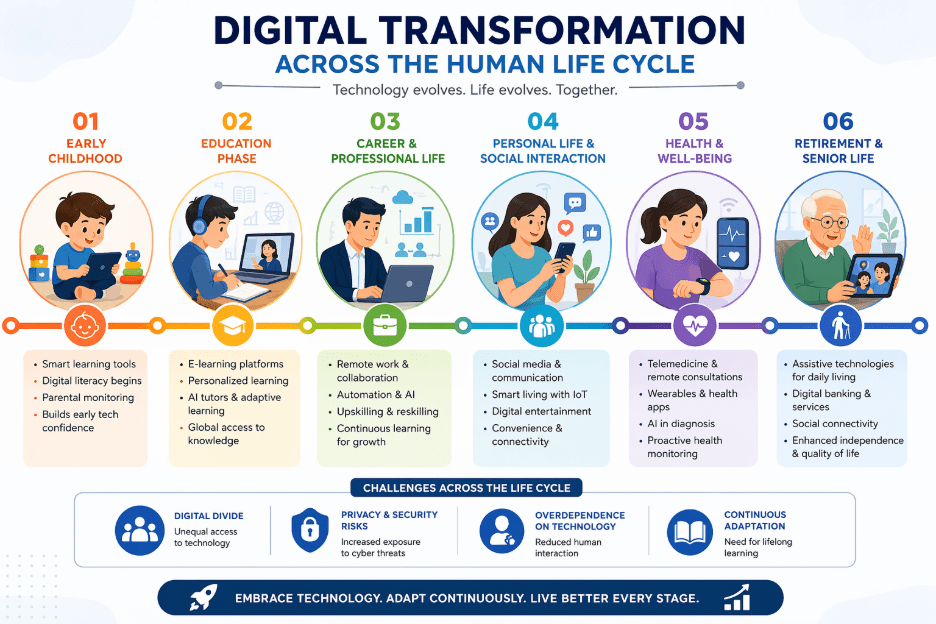
Digital transformation is no longer limited to businesses—it’s deeply embedded in every stage of human life. From early education to retirement, technology continuously reshapes how we learn, work, communicate, and live. Understanding how digital transformation impacts the human life cycle helps us adapt, grow, and make smarter decisions in an increasingly connected world.
1. Early Childhood: Digital Foundations
The journey begins in early childhood, where digital exposure starts earlier than ever before. Educational apps, smart devices, and interactive content are redefining how children learn.
- Smart Learning Tools: Interactive apps enhance cognitive development and creativity.
- Digital Literacy: Basic familiarity with devices builds early tech confidence.
- Parental Monitoring: Technology also enables parents to guide and monitor learning experiences.
Impact: Children today grow up as digital natives, comfortable with technology from the start.
2. Education Phase: Smart & Personalized Learning
During school and college years, digital transformation revolutionizes traditional education systems.
- E-learning Platforms: Online courses, virtual classrooms, and AI tutors provide flexible learning.
- Personalized Education: Adaptive learning systems tailor content based on student performance.
- Global Access: Students can access knowledge from anywhere in the world.
Impact: Learning becomes more accessible, flexible, and student-centric.
3. Career & Professional Life: Digital Workforce Evolution
In adulthood, digital transformation plays a crucial role in shaping careers and workplaces.
- Remote Work & Collaboration: Tools enable working from anywhere.
- Automation & AI: Routine tasks are automated, increasing efficiency.
- Upskilling & Reskilling: Continuous learning becomes essential to stay relevant.
Impact: Professionals must adapt quickly, embrace technology, and develop digital skills.
4. Personal Life & Social Interaction: Connected Living
Technology significantly influences how individuals interact and maintain relationships.
- Social Media & Communication: Instant connectivity across the globe.
- Smart Living: IoT devices improve convenience and efficiency at home.
- Digital Entertainment: Streaming, gaming, and content platforms redefine leisure.
Impact: Life becomes more connected, but also requires balance to avoid digital overload.
5. Health & Well-being: Digital Healthcare Revolution
Healthcare has seen massive transformation through digital innovations.
- Telemedicine: Remote consultations improve accessibility.
- Wearables & Health Apps: Real-time monitoring of fitness and health metrics.
- AI in Diagnosis: Faster and more accurate medical insights.
Impact: Individuals gain more control over their health with proactive monitoring.
6. Retirement & Senior Life: Technology for Comfort and Care
Digital transformation continues to support individuals in their later years.
- Assistive Technologies: Devices help with mobility and daily tasks.
- Digital Banking & Services: Simplifies financial management.
- Social Connectivity: Helps seniors stay connected with family and communities.
Impact: Enhances independence and quality of life for elderly individuals.
Challenges Across the Life Cycle
While digital transformation offers numerous benefits, it also presents challenges:
- Digital Divide: Unequal access to technology
- Privacy & Security Risks: Increased exposure to cyber threats
- Overdependence on Technology: Reduced human interaction
- Continuous Adaptation: Need for lifelong learning
Conclusion
Digital transformation is a lifelong journey that evolves with each stage of human life. It empowers individuals with knowledge, efficiency, and connectivity—but also demands responsibility, adaptability, and balance.
To truly benefit from this transformation, individuals must embrace technology thoughtfully, ensuring it enhances—not replace—the human experience.
Final Thought
“Digital transformation is not just about technology—it’s about transforming how we live, learn, and grow throughout our entire life cycle.”