
Introduction
In today’s fast-paced and interconnected world, individual brilliance alone is rarely enough to achieve meaningful success. Whether in corporate environments, startups, or academic settings, teamwork and collaboration have become essential skills. When people come together with shared goals, diverse perspectives, and mutual respect, they can accomplish far more than they could individually.
What is Teamwork?
Teamwork refers to the ability of individuals to work together efficiently toward a common objective. It involves coordination, trust, and accountability among team members.
Key aspects of teamwork include:
- Clear roles and responsibilities
- Mutual trust and respect
- Shared goals and vision
- Effective communication
What is Collaboration?
Collaboration goes a step further than teamwork. It emphasizes actively working together, sharing ideas, and co-creating solutions.
Collaboration focuses on:
- Open idea exchange
- Collective problem-solving
- Leveraging diverse skills
- Innovation through shared effort
Why Teamwork & Collaboration Matter
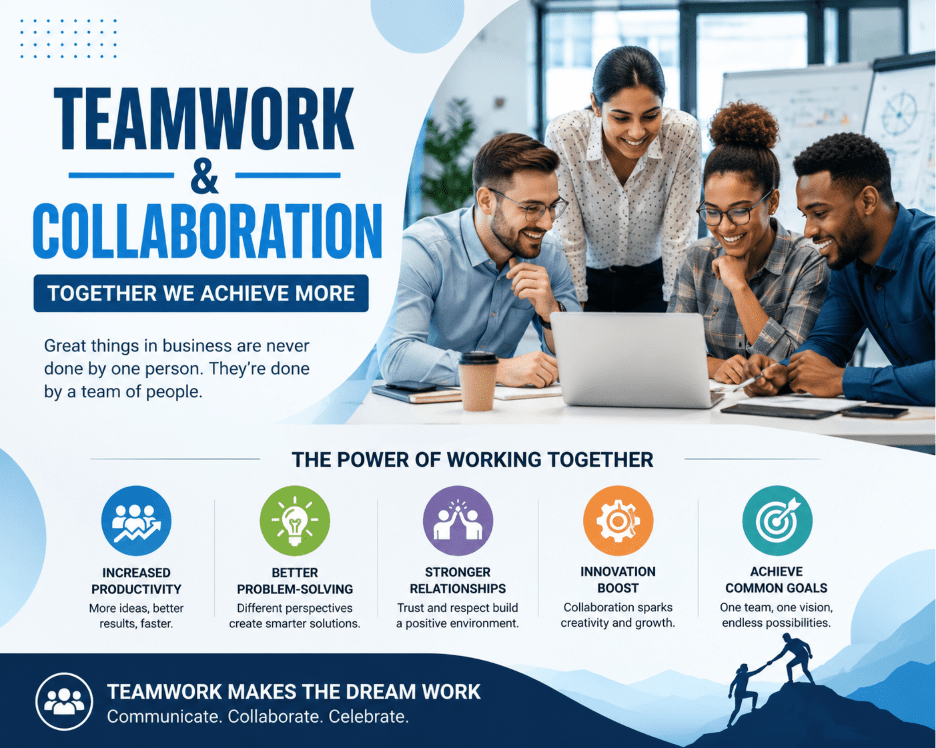
1. Increased Productivity
When tasks are divided among team members based on their strengths, work gets completed faster and more efficiently.
2. Better Problem-Solving
Different perspectives lead to more creative and effective solutions.
3. Enhanced Learning
Working with others allows individuals to learn new skills, tools, and approaches.
4. Stronger Relationships
Collaboration builds trust and improves interpersonal relationships within teams.
5. Innovation Boost
Great ideas often emerge when multiple minds brainstorm together.
Essential Skills for Effective Teamwork
Communication
Clear and open communication prevents misunderstandings and ensures everyone is aligned.
Adaptability
Being flexible helps teams adjust to changes and overcome challenges.
Accountability
Each team member should take responsibility for their tasks and contributions.
Conflict Resolution
Disagreements are natural. The key is to resolve them constructively.
Emotional Intelligence
Understanding others’ perspectives improves collaboration and teamwork.
Tools That Enhance Collaboration
Modern workplaces rely heavily on digital tools to support collaboration, especially in remote or hybrid environments.
Some popular tools include:
- Slack – For instant messaging and team communication
- Microsoft Teams – For meetings, chats, and file sharing
- Trello – For task and workflow management
- Zoom – For virtual meetings and webinars
Common Challenges in Teamwork
Lack of Communication
Poor communication can lead to confusion and missed deadlines.
Unequal Participation
Some members may contribute less, affecting overall performance.
Conflicts
Differences in opinions can create tension if not handled properly.
Lack of Clarity
Unclear goals and roles can derail team efforts.
Tips to Improve Teamwork & Collaboration
- Set clear goals and expectations
- Encourage open communication
- Promote inclusivity and respect
- Use collaboration tools effectively
- Provide regular feedback
- Celebrate team achievements
Conclusion
Teamwork and collaboration are not just workplace buzzwords—they are critical drivers of success in any field. By fostering a culture of trust, communication, and shared responsibility, teams can unlock their full potential and achieve remarkable outcomes.
In a world where complexity is increasing, the ability to work well with others is no longer optional—it’s essential.