
In today’s evolving job market, professionals are no longer limited to traditional 9-to-5 roles. The rise of the digital economy has made freelancing a viable and often attractive alternative to full-time employment. But which option is better? The answer depends on your lifestyle, financial goals, and personal preferences.
Let’s break it down.
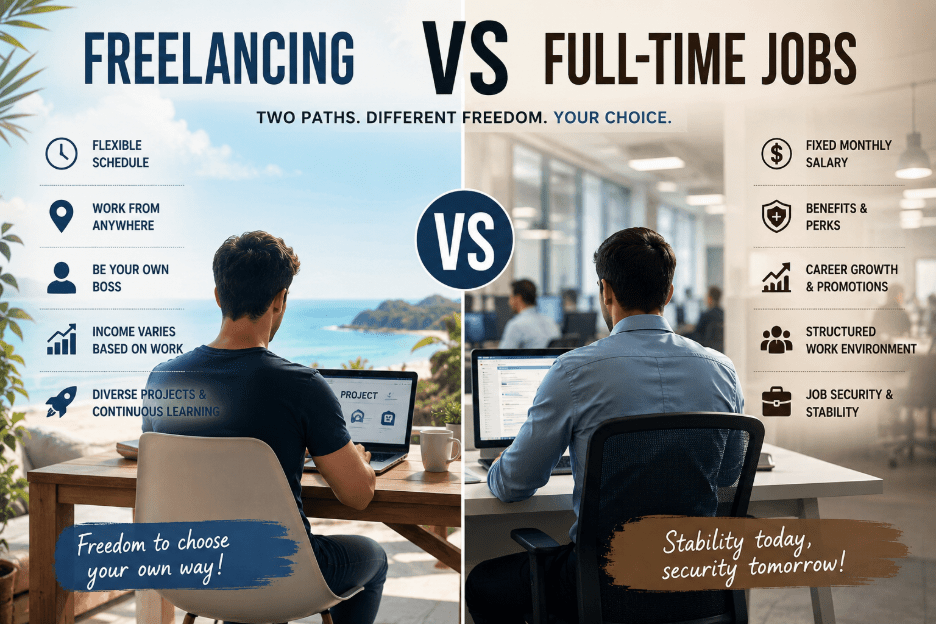
🔹 What is Freelancing?
Freelancing means working independently for multiple clients rather than being tied to a single employer. Freelancers often offer services like writing, design, programming, marketing, or consulting.
Key Features:
- Project-based work
- Flexible schedule
- Remote opportunities
- Income varies based on workload
🔹 What is a Full-Time Job?
A full-time job involves working for one organization with a fixed schedule, typically 40 hours per week, along with a stable salary and benefits.
Key Features:
- Fixed monthly income
- Structured work environment
- Employer-provided benefits
- Career growth within an organization
⚖️ Freelancing vs Full-Time Jobs: A Detailed Comparison
1. Flexibility
- Freelancing: You control your schedule. Work anytime, anywhere.
- Full-Time: Fixed working hours and limited flexibility.
If work-life balance and freedom matter most, freelancing has the edge.
2. Income Stability
- Freelancing: Income can fluctuate depending on clients and projects.
- Full-Time: Predictable monthly salary.
If financial security is a priority, full-time jobs are safer.
3. Work Variety
- Freelancing: Opportunity to work on diverse projects across industries.
- Full-Time: Focused role within one company.
Freelancing offers more variety and learning exposure.
4. Benefits & Perks
- Freelancing: No employer benefits (you manage insurance, taxes, etc.).
- Full-Time: Includes health insurance, paid leave, bonuses, retirement plans.
Full-time jobs provide better long-term security.
5. Career Growth
- Freelancing: Growth depends on personal branding, skills, and networking.
- Full-Time: Structured promotions and career ladders.
Full-time roles offer clearer career progression.
6. Job Security
- Freelancing: No guaranteed work; clients can come and go.
- Full-Time: More stable, though not immune to layoffs.
Full-time jobs generally feel more secure.
Which One Should You Choose?
Choose Freelancing if:
- You value independence and flexibility
- You’re comfortable with income uncertainty
- You have in-demand skills
- You enjoy working on varied projects
Choose Full-Time if:
- You prefer stability and routine
- You need consistent income
- You value benefits and job security
- You want a structured career path
Can You Do Both?
Yes — many professionals start with a full-time job and gradually transition into freelancing. Some even manage both (side hustling), combining stability with extra income.
Final Thoughts
There’s no one-size-fits-all answer. Freelancing offers freedom and creativity, while full-time jobs provide stability and security. The best choice depends on your current life stage, financial situation, and long-term goals.
In fact, the smartest approach might be to explore both paths at different phases of your career.
Pro Tip:
Start small. Try freelancing as a side hustle before making it your full-time career. This helps you test the waters without risking financial stability.