
A strong resume is more than just a list of your qualifications—it’s your personal marketing document. Whether you’re a fresher or an experienced professional, a well-crafted resume can significantly improve your chances of landing interviews. Here’s a practical guide to help you build a resume that stands out.
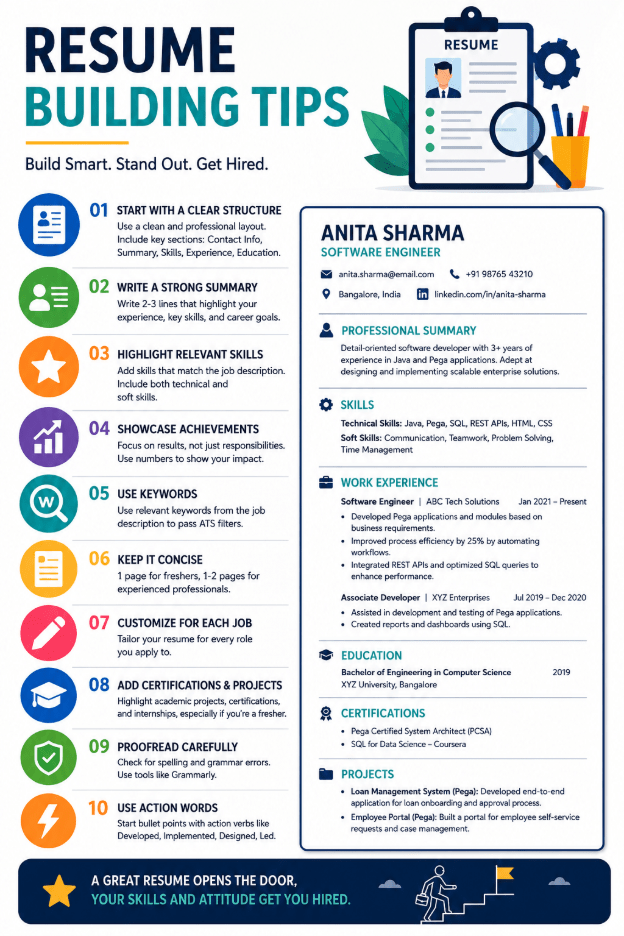
1. Start with a Clear Structure
A clean and professional layout makes your resume easy to read. Stick to a simple format with clearly defined sections:
- Contact Information
- Professional Summary
- Skills
- Work Experience
- Education
- Certifications (if any)
Use consistent fonts, bullet points, and spacing to maintain readability.
2. Write a Strong Professional Summary
Your summary is the first thing recruiters see, so make it count. Keep it short (2–3 lines) and highlight:
- Your experience level
- Key skills
- Career goals
Example:
“Detail-oriented software developer with 3+ years of experience in Java and Pega applications, seeking to build scalable enterprise solutions.”
3. Highlight Relevant Skills
Focus on skills that match the job you’re applying for. Divide them into:
- Technical Skills: SQL, Python, Pega, APIs
- Soft Skills: Communication, teamwork, problem-solving
Tailor this section for every job application.
4. Showcase Achievements, Not Just Responsibilities
Instead of listing duties, focus on what you accomplished.
Weak:
- Responsible for handling customer data
Strong:
- Improved data processing efficiency by 30% by optimizing SQL queries
Use numbers and results wherever possible.
5. Use Keywords from Job Descriptions
Many companies use Applicant Tracking Systems (ATS) to filter resumes. Include relevant keywords from the job posting to increase your chances of getting shortlisted.
6. Keep It Concise
- Freshers: 1 page
- Experienced professionals: 1–2 pages
Avoid unnecessary details like hobbies unless they add value.
7. Customize for Each Job
Don’t send the same resume everywhere. Modify your resume based on:
- Job role
- Company requirements
- Industry expectations
This shows effort and increases relevance.
8. Add Certifications and Projects
If you lack work experience, highlight:
- Academic projects
- Online certifications
- Internships
This is especially useful for freshers and career switchers.
9. Proofread Carefully
Spelling or grammar mistakes can create a bad impression. Double-check your resume or use tools like Grammarly.
10. Use Action Words
Start bullet points with strong action verbs like:
- Developed
- Implemented
- Optimized
- Led
- Designed
These make your resume more impactful.
Final Thoughts
A great resume is clear, concise, and tailored to the job. Focus on showcasing your value, not just your history. Keep updating your resume as you gain new skills and experience.