
In today’s data-driven world, Python has become one of the most popular programming languages for data analysis, machine learning, and automation. Whether you’re a student, developer, or aspiring data analyst, learning Python is a powerful first step into the world of data.
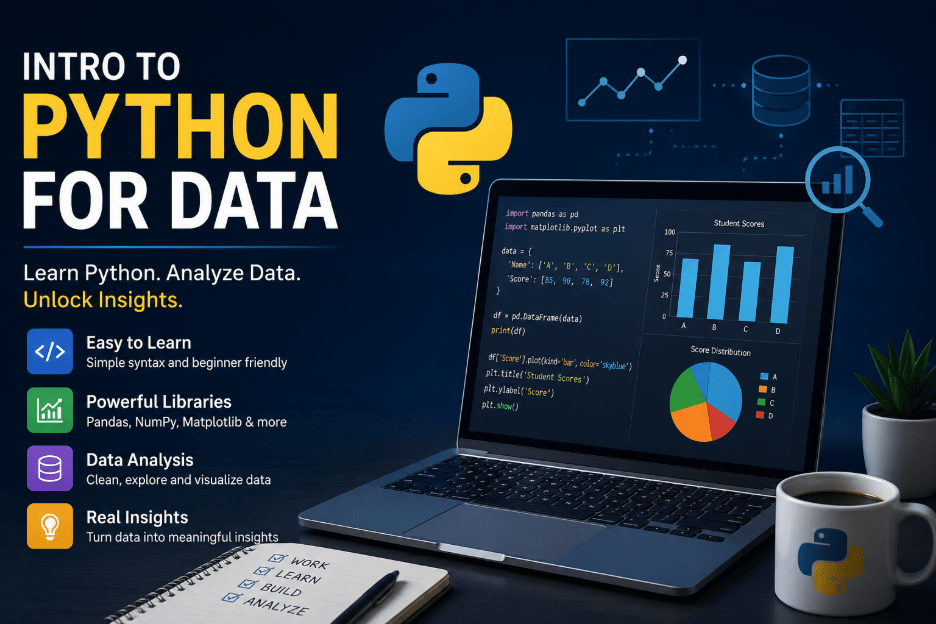
Why Python for Data?
Python is widely used in the data domain because it is:
- Easy to learn – Simple syntax, readable code
- Powerful – Handles everything from basic scripts to complex AI models
- Versatile – Works for data analysis, visualization, web apps, automation, and more
- Rich ecosystem – Thousands of libraries for data-related tasks
Key Concepts You Should Know
Before diving into data-specific tools, you need a basic understanding of Python fundamentals:
1. Variables & Data Types
Python supports different types of data:
- Numbers (int, float)
- Strings (str)
- Boolean (True/False)
- Lists, Tuples, Dictionaries
name = “Ramesh”
age = 25
skills = [“Python”, “SQL”, “Data Analysis”]
2. Control Statements
Used to make decisions and repeat actions:
if age > 18:
print(“Adult”)
for skill in skills:
print(skill)
3. Functions
Functions help reuse code:
def greet(name):
return f”Hello {name}”
print(greet(“Ramesh”))
Python for Data Analysis
Once you understand basics, you can start working with data using popular libraries:
🔹 NumPy
Used for numerical computing and working with arrays.
import numpy as np
arr = np.array([1, 2, 3, 4])
print(arr.mean())
🔹 Pandas
The most important library for data analysis.
import pandas as pd
data = {
“Name”: [“A”, “B”, “C”],
“Marks”: [85, 90, 78]
}
df = pd.DataFrame(data)
print(df.head())
🔹 Matplotlib & Seaborn
Used for data visualization.
import matplotlib.pyplot as plt
plt.plot([1,2,3], [4,5,6])
plt.show()
📈 Real-World Use Cases
Python is used in multiple data-related scenarios:
- Data Analysis & Reporting
- Machine Learning & AI
- Financial Forecasting
- Customer Behavior Analysis
- Healthcare Data Insights
Tools You’ll Use
- Jupyter Notebook – Interactive coding for data analysis
- Google Colab – Cloud-based Python environment
- VS Code / PyCharm – Code editors for development
Getting Started Tips
- Start with basic Python syntax
- Practice on platforms like LeetCode, HackerRank
- Work on small data projects
- Learn Pandas deeply (very important)
- Build a portfolio with real datasets
Simple Mini Project Idea
Analyze student marks dataset:
- Calculate average marks
- Find top performer
- Visualize results using charts
Conclusion
Python is the backbone of modern data science. With its simplicity and powerful libraries, anyone can start their journey into data analysis. The key is consistent practice and building real-world projects.
Start small, stay consistent, and soon you’ll be turning raw data into meaningful insights 🚀