
In today’s digital world, websites are everywhere—from personal blogs to large e-commerce platforms. But have you ever wondered how these websites are created? The answer starts with two fundamental technologies: HTML and CSS.
Let’s break them down in a simple way.
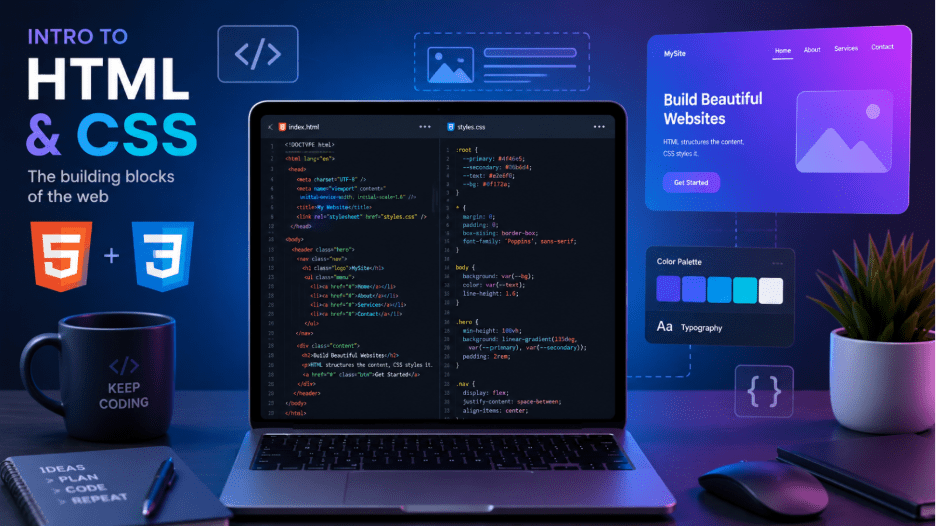
What is HTML?
HTML (HyperText Markup Language) is the standard language used to create the structure of a web page. Think of it as the skeleton of a website.
HTML defines elements like:
- Headings
- Paragraphs
- Images
- Links
- Forms
Basic HTML Example:
<!DOCTYPE html>
<html>
<head>
<title>My First Web Page</title>
</head>
<body>
<h1>Welcome to My Website</h1>
<p>This is my first HTML page.</p>
</body>
</html>
👉 In this example:
- <h1> is a heading
- <p> is a paragraph
- <title> defines the page title
What is CSS?
CSS (Cascading Style Sheets) is used to style and design your HTML content. If HTML is the skeleton, CSS is the skin and appearance.
With CSS, you can control:
- Colors
- Fonts
- Layouts
- Spacing
- Animations
Basic CSS Example:
body {
background-color: lightblue;
}
h1 {
color: darkblue;
text-align: center;
}
p {
font-size: 18px;
}
How HTML & CSS Work Together
HTML provides the structure, while CSS enhances the look.
Example Combined:
<!DOCTYPE html>
<html>
<head>
<title>Styled Page</title>
<style>
body {
background-color: lightgray;
}
h1 {
color: green;
}
</style>
</head>
<body>
<h1>Hello World!</h1>
<p>This page is styled with CSS.</p>
</body>
</html>
Why Learn HTML & CSS?
Learning HTML and CSS is the first step into web development. Here’s why it’s important:
- Easy to learn for beginners
- Required for all websites
- Helps you build your own projects
- Foundation for advanced technologies like JavaScript
Real-Life Uses
- Creating personal portfolios
- Building business websites
- Designing landing pages
- Customizing blogs
- Tips for Beginners
- Start with simple pages
- Practice daily
- Use online editors like CodePen
- Inspect websites using browser developer tools
Conclusion
HTML and CSS are the backbone of every website you see on the internet. Mastering these two technologies gives you the power to create and design your own web pages from scratch.
Start small, stay consistent, and keep building—your journey into web development begins here!