
College is often described as the best years of a person’s life, and for many students, it is. But it can also be one of the bHow to Balance College, Learning, and Personal Life
College is often called the best years of a person’s life, and for many students, it is. But it’s also one of the busiest and most demanding periods anyone will go through. Between lectures, assignments, part-time jobs, internships, and the simple need for a life outside school, finding a healthy balance isn’t always easy. It takes planning, honesty about your limits, and a willingness to adjust when things stop working.
This guide covers practical, tested ways to manage college life without burning out — habits that actually hold up under a real semester schedule.
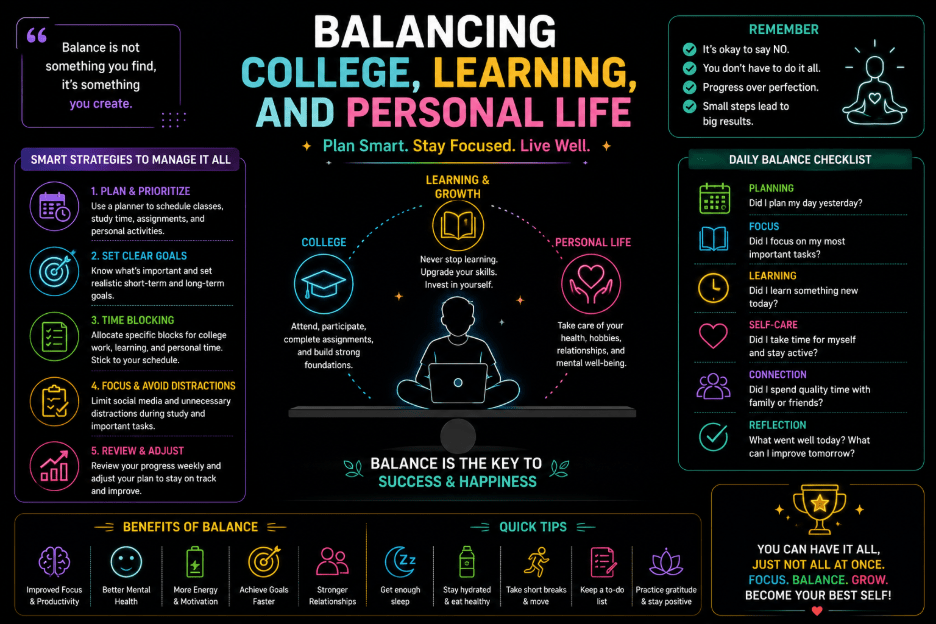
Why Balance Matters More Than Grades Alone
A student who studies sixteen hours a day and never sees a friend isn’t necessarily more successful than one who studies eight hours and takes care of their health. Grades matter, but so does sleep, so does friendship, and so does simply having time to think about something other than a syllabus.
Colleges rarely teach time management directly, yet it’s one of the most valuable skills a student can walk away with.
Learning how to balance college and personal life early on tends to pay off long after graduation — in the workplace and in everyday adult responsibilities.
Set Priorities Before You Set a Schedule
Before building a study schedule, sit down and figure out what actually matters to you this semester. Not everything can be a top priority at once. A few questions worth asking:
- Which classes need the most attention right now?
- Are there deadlines, exams, or projects coming up that deserve extra focus?
- What personal commitments — family, friendships, health — can’t be pushed aside?
- Where do you want to be, academically and personally, by the end of the term?
Once you know your priorities, the schedule almost builds itself. Skip this step, and most students end up reacting to whatever feels urgent instead of working toward what actually matters.
Build a Study Schedule You Can Actually Keep
A study schedule only works if it fits into real life. Overly ambitious plans tend to fall apart within a week, leaving students feeling like they failed before they even started. A few guidelines that hold up:
| Guideline | Why It Works |
|---|---|
| Study in blocks, not marathons | Sessions of 45–90 minutes, followed by a short break, produce better retention than long, unbroken hours at a desk |
| Protect your peak hours | Everyone has a stretch of the day when focus comes easier — put your hardest coursework there |
| Leave room for the unexpected | Assignments run long and life throws in surprises; a schedule packed to the minute can’t absorb any of that |
| Review weekly, not daily | Planning every single day from scratch usually wastes more time than it saves |
Time Management Basics That Actually Work
Time management for college students is less about fancy apps and more about consistent habits. A simple planner — paper or phone — beats a complicated system nobody keeps up with. Writing things down frees your brain from holding onto them, which opens up mental space for actual learning.
Batching similar tasks together also helps. Answering emails, running errands, or doing readings for multiple classes in one sitting cuts down on the mental cost of switching between different types of work.
It’s also worth being honest about how long tasks actually take. Students often underestimate how long an essay or problem set will take, which leads to late nights and rushed work. Tracking your time for a week or two, just to see where it goes, is often eye-opening.
Avoiding Burnout in College
Burnout doesn’t show up overnight. It builds slowly, through missed sleep, skipped meals, and constant low-grade stress. Left unchecked, it can affect grades, relationships, and physical health all at once.
Warning signs worth paying attention to:
- Feeling exhausted even after a full night’s sleep
- Losing interest in subjects you used to enjoy
- Withdrawing from friends or activities you normally look forward to
- Trouble concentrating, even on simple tasks
Avoiding burnout often comes down to small, boring habits done consistently: regular sleep, regular meals, some form of movement, and time away from screens. None of these are exciting, but they’re the foundation everything else stands on. College stress management isn’t about eliminating stress completely — some pressure is normal and even useful — but about keeping it at a level you can handle.
Making Room for a Personal Life
Study and work are only part of the college experience. Friendships, hobbies, and downtime aren’t distractions from success — they’re part of what makes the whole effort worthwhile. A rested, connected mind works better than an exhausted one.
Ways to keep your personal life intact during a demanding semester:
- Treat social time as an appointment. If it’s not on the calendar, it tends to get pushed aside.
- Say no without guilt. Not every club, event, or favor needs a yes.
- Keep one hobby that has nothing to do with your major. Music, sports, cooking, reading — anything that gives your mind a break from academic thinking.
Using the Right Tools and Support Systems
Modern students don’t have to figure everything out alone. Learning platforms, mentorship programs, and campus resources exist precisely because balancing coursework, career preparation, and wellbeing is genuinely difficult. Structured programs that combine academics with practical, real-world experience — such as those offered through Vyasa Nexus — can take the guesswork out of career planning, so students spend less time wondering what to focus on and more time actually doing the work.
For students who feel stretched thin between coursework and career preparation, career readiness bootcamps can help streamline that side of the equation with structured guidance instead of scattered self-study. When the pressure of college life starts to affect mental health, student mental health support programs are worth exploring rather than pushing through alone. And students juggling internship applications alongside coursework may find internship and project support useful for keeping that part of the balancing act manageable.
A Simple Weekly Routine to Try
| Day | Focus |
|---|---|
| Sunday | Plan the week ahead — review deadlines, block study sessions, pencil in personal time |
| Monday–Friday | Follow the study blocks set on Sunday, adjusting as needed; protect at least one evening for something unrelated to coursework |
| Saturday | Catch up on anything missed, but keep it light — rest is part of the plan, not a reward for finishing everything |
This is only a starting point. Every student’s ideal routine looks a little different, depending on class load, work commitments, and personal energy levels.