
In today’s fast-changing world, staying relevant means continuously learning new skills. Whether you’re a student, working professional, or someone looking to switch careers, upskilling is no longer optional—it’s essential.
This guide will help you take your first steps confidently and build a sustainable learning journey.
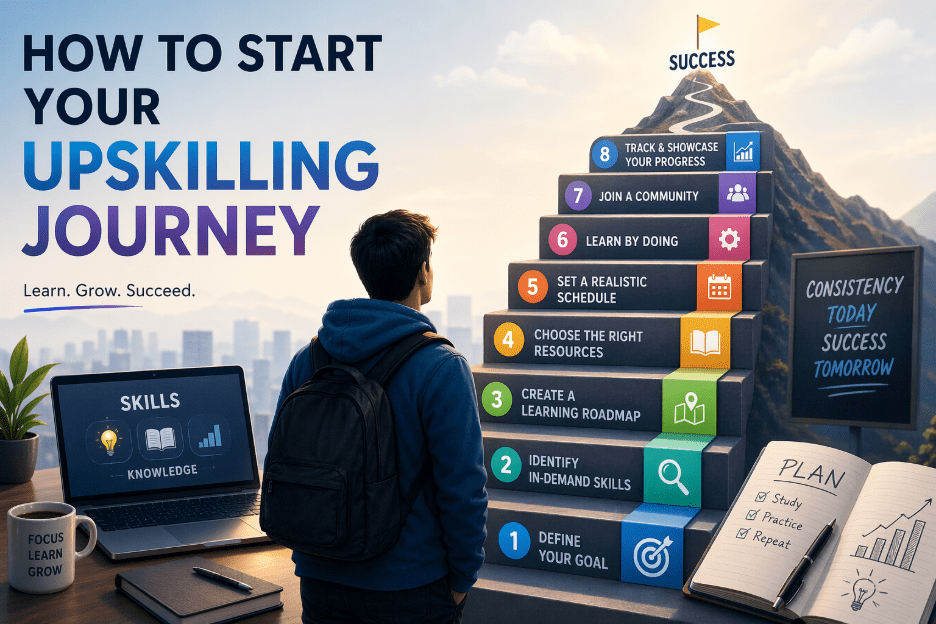
What is Upskilling?
Upskilling means learning new or improving existing skills to stay competitive in your field. It could be technical skills like coding or soft skills like communication and leadership.
Step 1: Define Your Goal
Before you start, get clear on why you want to upskill.
Ask yourself:
- Do I want a promotion?
- Am I planning a career switch?
- Do I want to stay updated in my current role?
Tip: Be specific. Instead of saying “I want to learn AI,” say “I want to learn Python for AI development.”
Step 2: Identify In-Demand Skills
Focus on skills that are relevant and future-proof. Some popular domains include:
- Artificial Intelligence & Machine Learning
- Cloud Computing
- Data Analytics
- Cybersecurity
- UI/UX Design
- Digital Marketing
You don’t need to learn everything—pick one area aligned with your goal.
Step 3: Create a Learning Roadmap
Break your goal into smaller, achievable milestones.
Example roadmap for learning Data Analytics:
- Basics of Excel
- SQL fundamentals
- Data visualization (Power BI/Tableau)
- Python for data analysis
This structured approach avoids overwhelm and keeps you focused.
Step 4: Choose the Right Learning Resources
There are many free and paid platforms available:
- Online courses (Coursera, Udemy, edX)
- YouTube tutorials
- Blogs and documentation
- Practice platforms (LeetCode, HackerRank)
Pro Tip: Don’t jump between too many resources. Pick 1–2 and stay consistent.
Step 5: Set a Realistic Schedule
Consistency beats intensity.
- Study 1–2 hours daily
- Set weekly goals
- Track your progress
Even 30 minutes a day can make a big difference over time.
🛠️ Step 6: Learn by Doing
Practical experience is key.
- Work on mini-projects
- Build a portfolio
- Contribute to open-source
- Solve real-world problems
Example: If you’re learning web development, build your own portfolio website.
Step 7: Join a Community
Learning becomes easier when you’re not alone.
- Join LinkedIn groups
- Participate in forums like Stack Overflow
- Engage in Discord/Telegram communities
You’ll gain insights, motivation, and support.
Step 8: Track and Showcase Your Progress
- Share your learning journey on LinkedIn
- Write blogs or posts
- Upload projects to GitHub
This not only boosts confidence but also increases visibility to recruiters.
Common Mistakes to Avoid
- ❌ Trying to learn everything at once
- ❌ Not practicing enough
- ❌ Giving up too early
- ❌ Ignoring fundamentals
Final Thoughts
Starting your upskilling journey may feel overwhelming, but the key is to start small and stay consistent. Over time, your efforts will compound into real expertise and open new opportunities.
Remember:
👉 You don’t need to be great to start, but you need to start to be great.